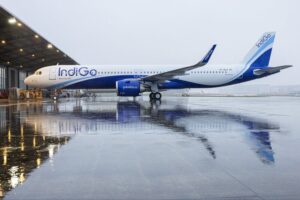

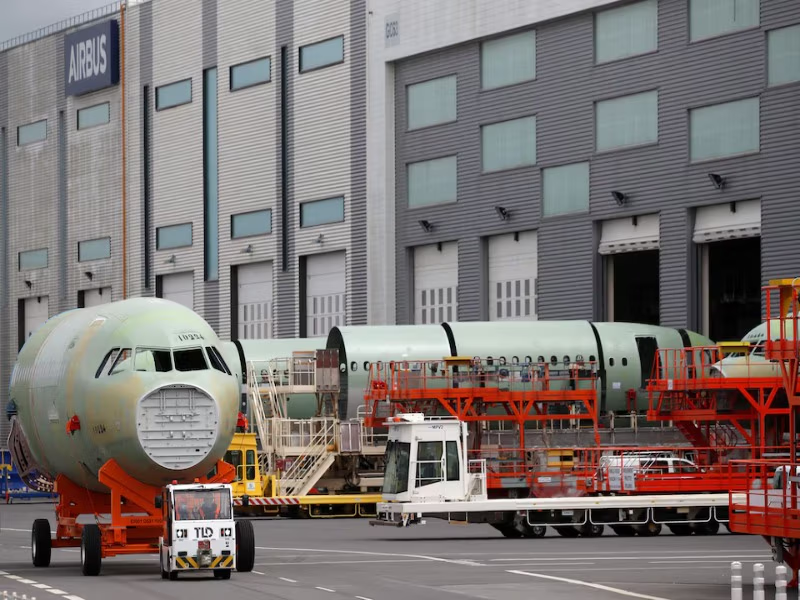
Airbus fleets were re-entering normal operations on Monday after the European planemaker rushed through sudden software changes at a higher-than-anticipated pace in its struggle with safety headlines that had long focused on its competitive Boeing.
Plenty of airlines from Asia to the United States reported that they had completed a snap software retrofit ordered by Airbus, and required by international regulators, following a weakness to solar flares in a mid-air incident on a JetBlue A320.
However, a few requirements require a longer process, and Colombia’s Avianca continued to halt bookings for dates until December 8.
Sources familiar with the matter stated that the unprecedented move to recall approximately half of the A320-family aircraft fleet, or 6,000 jets, was made soon after the potential yet unconfirmed connection to a decrease in altitude on the JetBlue jet surfaced late last week.
After negotiating with regulators, Airbus issued its 8-page warning to hundreds of operators on Friday in essentially calling for a temporary grounding by instructing them to repair prior to the next flight.
CEO of Saudi budget carrier Flyadeal, Steven Greenway, said that “The thing hit us about 9 p.m. (Jeddah time) and I was back in here about 9:30. I was actually quite surprised how quickly we got through it: there are always complexities.”
The recall was considered the largest emergency recall in the history of the company and immediately created fears of inconvenience to travel, especially over the U.S. Thanksgiving holiday week.
The industry sources indicated that the sweeping warning revealed that Airbus lacks complete real-time awareness of which software version is deployed in considering reporting delays.
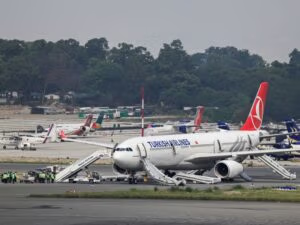
Initially, airlines had a hard time determining the effect, as the blanket alert did not have the serial numbers of the affected jets. A Finnair passenger reported that a flight had been held at the tarmac pending checks.
Therefore, over 24 hours, engineers zeroed in on individual jets. Many airlines amended higher estimates of the number of jets affected and hours required to do the job, which Airbus had originally estimated to take three hours a plane.
An industry source said on Sunday, citing the total number of aircraft affected reported that “It has come down a lot.” Airbus had not commented further on Friday’s statement.
The solution was to backtrack to a previous version of the software that controls the nose angle. It includes the uploading of the older version through a cable of a device known as a data loader, which is transported into the cockpit to avoid cyberattacks.
An executive speaking privately stated that at least one large carrier was delayed due to a lack of sufficient data loaders to process dozens of jets in that short time.
Nevertheless, a group of relatively older A320-family jets will continue to have question marks as they would require a new computer, not a simple software reformat.
Industry sources said the number of those involved was less than what had been originally estimated to be 1,000.
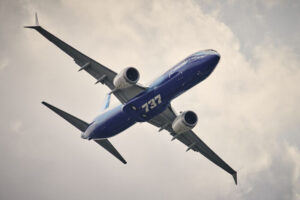
The industry executives indicated that the weekend furor underscored the playbook changes in the industry since the Boeing 737 MAX crisis, where the U.S. planemaker received much criticism regarding its response to fatal crashes that were attributed to a software design fault.
Meanwhile, this is the first crisis that Airbus has been forced to confront the global safety attention on this level since that crisis.
Guillaume Faury, the CEO, publicly apologized in a deliberate shift of tone for an industry where there is a steady stream of lawsuits and conservative public relations.
Chairman of New York-based 5W Public Relations, Ronn Torossian, added that “Is Airbus acting with the Boeing MAX crisis in mind? Absolutely — every company in the aviation sector is.”
Torossian further stated that “Boeing paid the reputational price for hesitation and opacity. Airbus clearly wants to show…a willingness to say, ‘We could have done better.’ That resonates with regulators, customers, and the flying public.”