
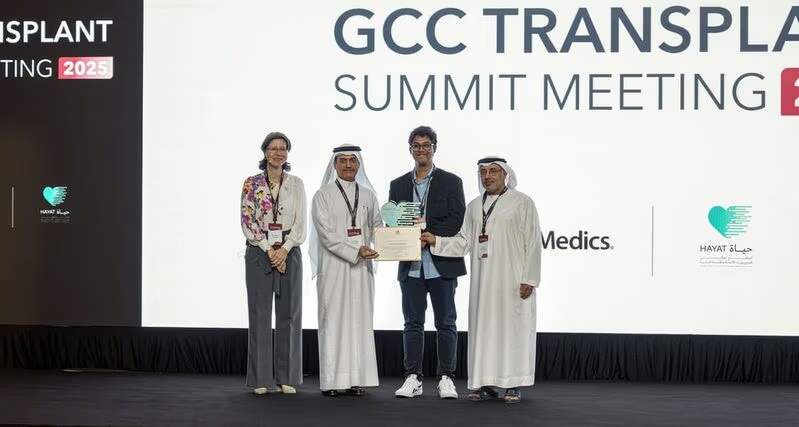
The Ministry of Health and Prevention (MoHAP) hosted the GCC Transplant Summit in Dubai, bringing together officials from the health ministries of GCC states alongside regional and international experts in organ donation and transplantation, in collaboration with global company TransMedics.
The summit formed part of MoHAP’s ongoing initiatives to advance the National Programme for Organ and Tissue Donation and Transplantation, “Hayat”, aiming to establish a sustainable ecosystem underpinned by unified regulations, modern digital infrastructure, and enhanced Gulf-wide integration in this critical field, aligned with global best practices.
Key attendees included Dr. Amin Al Amiri, Assistant Undersecretary for the Health Regulation Sector at MoHAP and Supervisor of the Hayat Programme; Dr. Waleed Hassanein, President and CEO of TransMedics; and Dr. Ali Abdulkarim Al Obaidli, Chairman of the UAE National Committee for Organ Donation and Transplantation.
Also present were Dr. Maria Gomez, Director of the National Centre for Donation and Transplantation of Human Organs and Tissues, along with representatives from national health authorities, and accredited government and private hospitals performing organ transplants.
The summit featured in-depth discussions on standardising criteria and sharing expertise, with a focus on building a unified regional system for organ donation and transplantation. This system would rely on legislative, technical, and logistical coordination among GCC member states.
Sessions highlighted the importance of harmonising medical and procedural standards and creating mechanisms for data and expertise exchange, ensuring rapid responses to urgent transplant cases and optimising the use of donated organs.
Participants also examined the potential for a joint GCC registry for donors and patients, alongside linking transplant centres through a unified digital network. This network would enable coordinated action among medical teams across Gulf nations.
Technical presentations covered the U.S. National Organ Care System (OCS) programme and discussed its potential adaptation for the Gulf region. Participants explored establishing a dedicated logistical network for organ transport and creating an integrated digital framework to support transplantation procedures and documentation, enhancing operational efficiency and improving organ utilisation rates.
The agenda further addressed the development of a unified infrastructure, integrating standardised legislation, technical regulations, and coordination mechanisms among health authorities. This approach aims to accelerate response times, improve service quality, and strengthen public trust in organ donation systems across the GCC.
Dr. Amin Al Amiri emphasised that the summit has provided a pivotal platform for shaping the future of organ transplantation in the Gulf. “Through the adoption of a unified regulatory and legislative framework, we can significantly enhance the efficiency of services and accelerate responses to critical cases,” Al Amiri stated.
He reaffirmed that the UAE is committed to collaborating with its Gulf partners to build a state-of-the-art model that strengthens community confidence and establishes the region as a global hub for organ donation and transplantation.
Al Amiri further said, “Through ‘Hayat programme’, the UAE is building an integrated operational model that aligns legislation with societal needs and leverages data and modern digital systems to enhance transparency and operational efficiency.”
He added that the standardised legislation, along with technical and logistical systems across the Gulf will certainly lead to the creation of a cohesive ecosystem capable of managing donation, transport, and transplantation processes in line with the highest global standards.
For his part, Dr. Ali Abdulkarim Al Obaidli stated, “The TransMedics GCC Transplant Summit provided a strategic framework for building a unified Gulf network for organ donation, driven by unified legislation, advanced digital systems, standardised criteria, and the exchange of expertise.”
“The event has been a step in the right direction towards accelerating performance and enhancing the readiness of medical teams across the Gulf states, ensuring the transfer and handling of organs under a unified system that guarantees the highest levels of efficiency and transparency. This would contribute to increasing donation rates, achieving the best clinical outcomes, and giving patients a real chance at a new life,” Al Obaidli added.
Dr. Maria Gomez emphasised that the “Hayat” programme has successfully increased organ donation rates, both in terms of public awareness and technical and logistical readiness.
“We will continue to accelerate our efforts with confidence towards building an integrated system supported by modern legislation, digital infrastructure, and Gulf and international cooperation,” she stated.
(Inputs from WAM)