
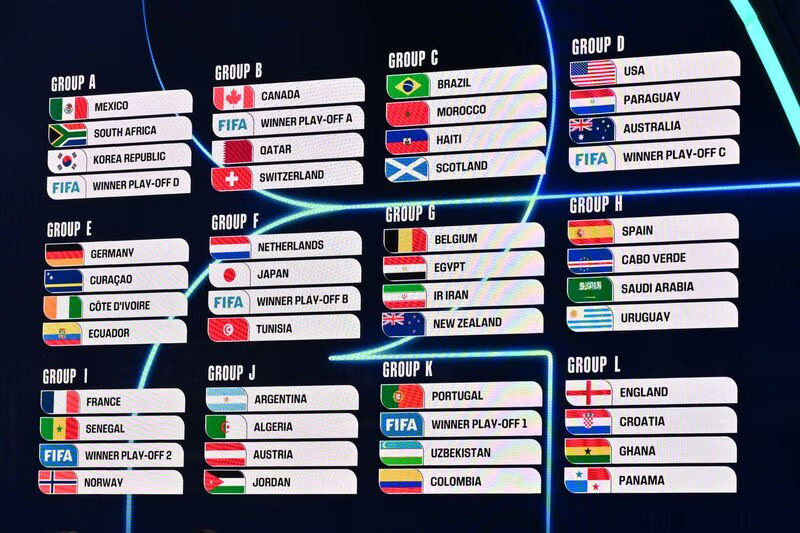
The 2026 FIFA World Cup draw has mapped out the group-stage landscape for the expanded 48-team tournament, placing a record six Arab nations in the finals. With Iraq still contesting an intercontinental play-off, Arab participation could rise to seven, marking the region’s highest representation in World Cup history.
The draw allocated 42 teams across 12 groups, with the remaining six slots to be filled through European and intercontinental play-offs in March 2026. The event was held at the John F. Kennedy Center for the Performing Arts in Washington, D.C., in the presence of U.S. President Donald Trump, as preparations continue for the World Cup jointly hosted by the United States, Canada, and Mexico.
Arab Teams Draw Diverse Group Challenges
The group outcomes set up a mix of balanced and high-difficulty paths for the Arab sides:
• Qatar has been drawn in Group B with Canada, Switzerland, and a European play-off qualifier.
• Morocco, among the strongest teams from the region, was placed in Group C with Brazil, Haiti, and Scotland.
• Tunisia enters Group F, where they will face the Netherlands, Japan, and a European play-off qualifier.
• Egypt joins Group G with Belgium, Iran, and New Zealand.
• Saudi Arabia faces a challenging path in Group H alongside Spain, Uruguay, and Cabo Verde.
• Algeria and Jordan were both drawn into Group J, joining Argentina and Austria in one of the only groups containing two Arab teams.
The expanded tournament, being staged across North America, marks the first time 48 nations will compete at a World Cup, increasing global representation and widening qualification opportunities for emerging football regions.
Remaining Qualification Slots To Be Decided in March 2026
Six of the 48 finalists remain undetermined. Four berths will come from the European play-offs, involving 16 competing nations. The final two places will be decided through intercontinental play-offs featuring Bolivia, the Democratic Republic of the Congo, Jamaica, New Caledonia, Suriname, and Iraq.
A successful qualification for Iraq would raise the total number of Arab nations in the finals to seven, extending the region’s already historic representation.
The draw sets the stage for an intense buildup period as teams prepare for the most extensive World Cup ever, one expected to attract record attendance and global viewership.
–Input WAM