
Gulf central banks reduced key interest rates by 25 basis points on Wednesday in the same direction that the U.S. Federal Reserve has cut interest rates by a quarter of a percentage point in another divided vote.
The Fed indicated that it is very likely to halt more reductions in borrowing costs with new estimates of the median opinion of the policymakers that it is only a one-quarter-percentage-point cut in 2026 and which is the same as it was in September.
Gulf Cooperation Council’s oil and gas exporters typically follow Fed direction on the interest rate move since most of the regional currencies have been pegged to the dollar. Therefore, the Kuwaiti dinar is the sole currency pegged to a basket of currencies, but it contains the dollar.
The largest economy of the region, Saudi Arabia, reduced its repurchase agreement (repo) rate by 25 bps to 4.25 percent and reverse repo rate to 3.75 percent.
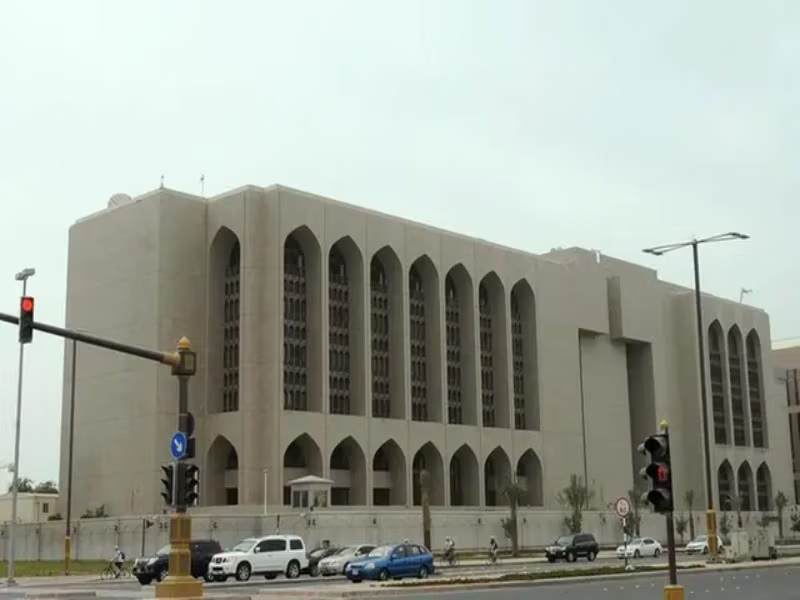
The central bank of the United Arab Emirates lowered the base rate to be charged on its overnight deposit facility to 3.65 percent, effective on Thursday.
Gulf economies are at different levels of their diversification efforts of the economies beyond hydrocarbons and are building up non-oil sectors such as real estate, tourism, and manufacturing that demand billions of financing and investment.
The reduced rates are expected to spur economic activity and bolster non-oil growth. Thus, the key rates were also lowered by the central banks of Qatar, Bahrain, Kuwait, and Oman by 25 basis points.