

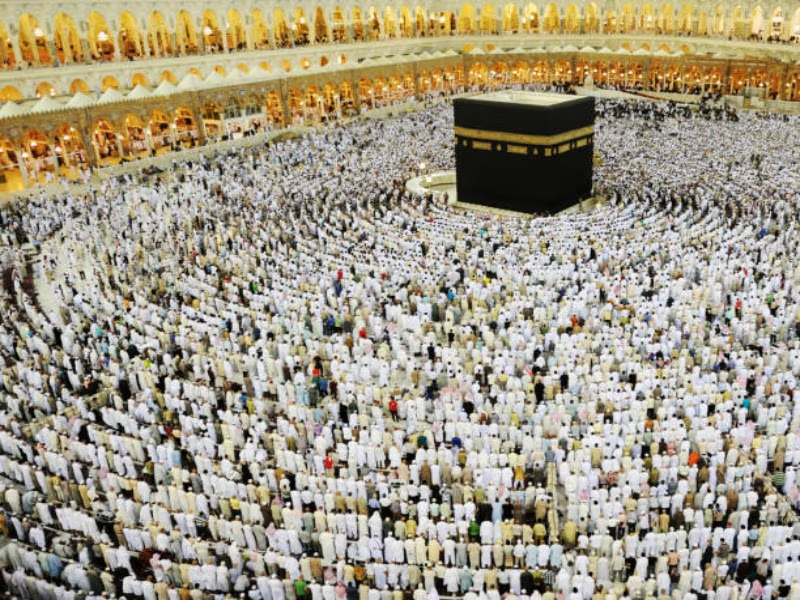
The Royal Commission of Makkah and the Holy Sites has released the draft rules, which regulate Hajj transportation activities, which is a major move to enhance oversight and operational standards of one of the most important seasonal sectors in the kingdom.
Based on the suggested framework, the breach of the regulations may lead to a variety of penalties. A Saudi Gazette report indicated that such fines are not less than SAR150 and up to SAR100,000; disqualification to be part of Hajj operations for at least one season and at most three seasons; or permanent revocation of operating permits, depending on the severity of the offense.
According to the draft regulations, service providers will not be permitted to run Hajj transportation services in the specified geographical location without acquiring an official permit. Permits will be provided by the guiding center, which is responsible for the transportation of pilgrims.
Any service provider who would like to take part during the Hajj season is required to apply, describing their desire to be part of the event.
The details that should be included in the application are the availability of the buses and the adherence to the specifications that the center gives, and being fully prepared to engage in the Hajj transportation services.
However, the applications will be received every year on the first day of Jumada Al Thani and will last 60 days. Every submission should be made electronically to the entity designated by the center.
Besides handing in applications, the service providers are expected to provide all the related data and documents concerning their involvement in the Hajj transportation. These materials should be in no later than Shawwal 15 every year.
The center has the right to limit this deadline to the end of Shawwal, if there is a necessity. The draft regulations also set strict standards of operation in the Hajj season. The service providers should provide an alternative transportation method instantly in case of a vehicle breakdown.
Replacement should be made within one hour within the cities and suburbs, and within two hours beyond the city boundaries. In case a provider does not meet this requirement, the appropriate authority will organize other forms of transport that satisfy the specifications accepted by the center, and all the associated costs will be incurred by the service provider.
The regulations also state that the service providers should ensure the deployment of adequate, qualified technicians to service buses during the Hajj transportation season. Thus, this requirement is intended to ensure efficient and continuous operations in line with standards set by the center.