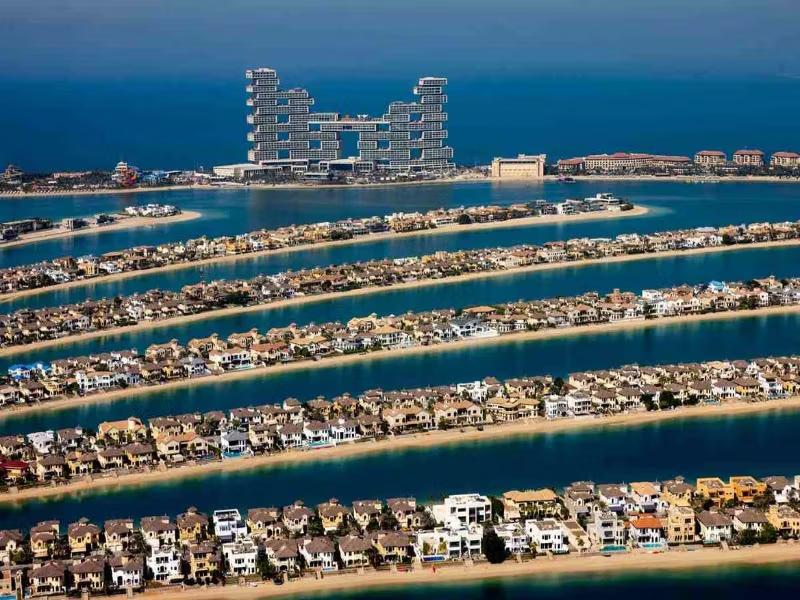
The UAE is becoming increasingly popular as an international destination for luxurious lifestyles and branded real estate. The great demand is fueled by excellent economic fundamentals, migration of international wealth, and the growth of a pipeline of branded projects in Dubai, Abu Dhabi, and Ras Al Khaimah.
Head of Research at CBRE MENA, Matthew Green, said that “Over the past five years, branded residences have transitioned from more of a niche offering to a defining feature of the UAE’s luxury real estate landscape. This growth reflects a convergence of global wealth migration, investor appetite for quality and security, and the UAE’s positioning as a hub for ultra-luxury living. With an unprecedented pipeline of projects, we expect this segment to play an increasingly influential role in shaping the region’s residential market.”
The most recent report by CBRE Middle East stated that the UAE economy has remained a strong background for real estate investment, with a forecast of 5.3 percent GDP growth in 2025 due to the diversification in non-oil industries and the confidence of the investors.
This strength has been accompanied by unprecedented inflows of high-net-worth individuals (HNWIs), making the UAE the number one wealth migration destination in the world.
These branded residences have become a preferred asset class for these investors, offering globally recognized quality, security, and convenience.
Another factor contributing to the growing significance of real estate is also the growing significance of the “Everyday Millionaire” (EMILLI) segment, which consists of assets of between $1 million and $5 million, and which is increasingly driving real estate expansion.
Both the HNWIs and EMILLIs in the UAE would find branded residences to be an appealing entry point, with their convenience and affiliation to reputable brands, in the UAE.
However, Dubai, Abu Dhabi, and Ras Al Khaimah have their own value propositions to attract these various wealth divisions and investment plans.
Dubai continues to be the epicenter of the UAE branded residences market, registering a 26 percent year-on-year growth of transaction volumes and a 51 percent increase in value over the first nine months of 2025.
The average premium that investors are paying on branded units is 64 percent more than what they are paying on non-branded properties. Dubai has a strong brand prestige, lifestyle integration, investor confidence, safe-haven status, and tax advantages as strengths.
Although the off-plan sales are predominant, ready-to-move units are few and are concentrated in well-established areas. The pipeline in the city is also very impressive and is projected to deliver more than 31, 000 units by the year 2030, which is 8 percent of all new residential supply.
Besides, Abu Dhabi is also quickly building itself as a powerhouse on its own, and the volume of transactions is skyrocketing, by 126 percent annually in 2025.
In the capital of the UAE, branded homes are expected to fetch an average of 87 percent of the value, which indicates scarcity as well as the popularity of highly known hospitality and lifestyle brands across the globe.
The portion of new supply deliveries in the segment is expected to attain 18 percent in 2029, accompanied by landmark projects on Saadiyat and Yas Islands.
The market share of branded residential has been increasing drastically due to the positive market dynamics, the increasing foreign investment, and the vast boost from major news announcements like the future establishment of Disneyland.
It is planned to launch over 2,700 branded units in more than 20 projects featuring a combination of hospitality and non-hospitality brands that will further boost the luxurious services in Abu Dhabi and increase the inflow of foreign investment.
Ras Al Khaimah (RAK) is fast emerging as one of the fastest-growing divisions in the branded residence market in the UAE, with recent economic expansion and a distinct tourism policy of tapping into adventure and the natural resources of the Emirate.
Meanwhile, the RAK has seen a significant change and transition into a luxury destination instead of a value-driven market. This change has been triggered by the Wynn Al Marjan resort announcement, which has brought about a powerful demand generator and construction boom.
The supply pipeline is surging as a result, and branded units are bound to contribute a large portion of the new supply. Among the main changes is the increased popularity of non-hospitality branded residences, an indicator of the maturation of the market and its attractiveness to various international investors.