
As the UAE real estate market continues to mature, Ras Al Khaimah (RAK) is emerging as a prime destination for investors and homebuyers. According to Ankit Gupta, Managing Director at Mantra Properties, “One of the most compelling trends is the continued rise of Ras Al Khaimah as a serious investment and lifestyle destination.”
With multiple projects in the pipeline and an array of constructions over the past three years, be it waterfront and lifestyle-led locations or luxury-led constructions, the emirate has seen a major capital appreciation driven by infrastructure investment and tourism growth. “That momentum is far from peaking,” Gupta added.
Market research from Knight Frank and CBRE also indicates that emerging emirates like RAK are well-positioned to outperform as new demand corridors develop.
Gupta further noted, “For investors and homebuyers, the window to enter at relatively early valuations is narrowing, making 2026 a critical period to participate in RAK’s long-term growth story.”

Branded Residences Command Premium
Another key trend for 2026 is the growing preference for branded residences. “Research from Savills and Knight Frank shows these assets command 20–40% price premiums over non-branded developments, supported by global brand recognition, stronger rental demand, and higher liquidity among international buyers,” Gupta noted.
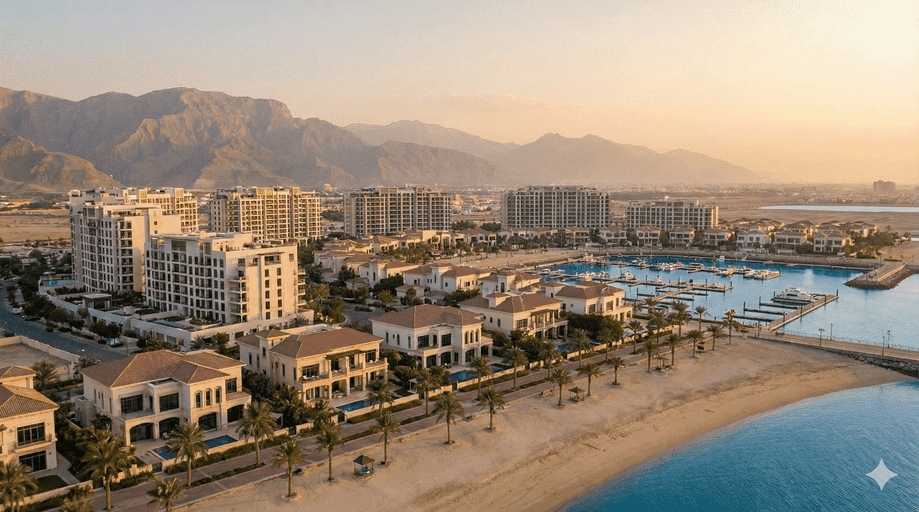
Developments in prime locations such as Al Marjan Island, which combine strong fundamentals with limited inventory, are expected to outperform in 2026 and beyond. This aligns with the broader global appetite for lifestyle-led, high-quality residential offerings.
According to a report, Ras Al Khaimah’s real estate market is showing rapid growth, with the ValuStrat Price Index (VPI) recording a 14.9% annual rise in freehold residential values, reaching 122.2 points in Q3 2025. Apartments are leading this surge, growing 15.5% year-on-year and 4.9% quarter-on-quarter, while villas saw slightly slower growth at 13.8% annually. Waterfront communities, especially Al Marjan Island, recorded the strongest gains, with apartment prices up 16.8% annually and 6.3% over the quarter.
More so, investor interest is heavily focused on new developments, with off-plan sales making up 84% of total transactions in the first nine months of 2025, generating over Dh8.2 billion across more than 4,100 units. The secondary market was steadier, with 776 ready homes sold, mostly apartments, totaling Dh909 million. Overall, freehold residential properties in RAK offer attractive returns, averaging a 5.4% gross rental yield.
The property boom is underpinned by strong macroeconomic fundamentals. S&P Global forecasts 4.2% annual GDP growth in RAK through 2027, supported by a stable sovereign credit rating. Foreign Direct Investment is increasing, with Dh700 million invested across six major projects in H1 2025. The RAK Economic Zone (RAKEZ) added 8,506 new companies in the first half of the year, a 43% increase compared to 2024, reflecting the emirate’s growing appeal as an investment destination.
Policy Reforms Fuel International Interest
Recent visa and property ownership reforms have significantly reshaped demand in the UAE. “Policy reforms have been a major catalyst in reshaping demand across the UAE real estate market, particularly among international buyers and globally mobile professionals. The ability to secure long-term UAE residency through property ownership, without the obligation to reside full-time in the country, has significantly expanded the investor base. Combined with 100% foreign ownership, a tax-free environment, and simplified transaction processes, the UAE has positioned itself as one of the most investor-friendly real estate markets globally,” Ankit explained.
He then added, “In Ras Al Khaimah, the majority of our buyers are overseas investors who view the emirate through a long-term lens, focusing on capital appreciation, lifestyle potential, and the growth trajectory of destinations such as Al Marjan Island. What’s particularly notable is that in our experience, many of our buyers today complete purchases remotely, without physically visiting RAK.”
“Their decisions are fast and confident, driven by macro fundamentals such as location connectivity, tourism-led demand, global brand partnerships, and projected returns. This shift reflects not only ease of ownership, but also the growing institutional trust in emerging emirates like RAK and in developers with strong delivery credentials.”
Young Buyers Transform The Market
The rise of first-time buyers aged 25–35 is reshaping the UAE real estate landscape, and according to Gupta, this is being driven by a combination of policy support, affordability, lifestyle considerations, and easier access to home financing with higher loan-to-value ratios and more flexible lending norms, making ownership achievable at an earlier stage than in many global cities. At the same time, rising rental costs across the UAE have made buying a more financially compelling alternative to long-term renting.
Beyond financial incentives, the UAE’s tax-free environment, high quality of life, and safety continue to attract a globally mobile workforce.
“As a result, this demographic is reshaping the market by prioritising well-located, lifestyle-led homes with strong long-term value, pushing developers to focus more on quality, design, and liveability rather than just scale,” he exclaimed further.
The Roadmap
With Ras Al Khaimah gaining momentum, branded residences commanding premiums, and a growing young professional segment entering the market, 2026 is poised to be a pivotal year for the UAE property sector. Investors and homebuyers should watch emerging destinations and lifestyle-led projects closely to capitalize on long-term growth opportunities.