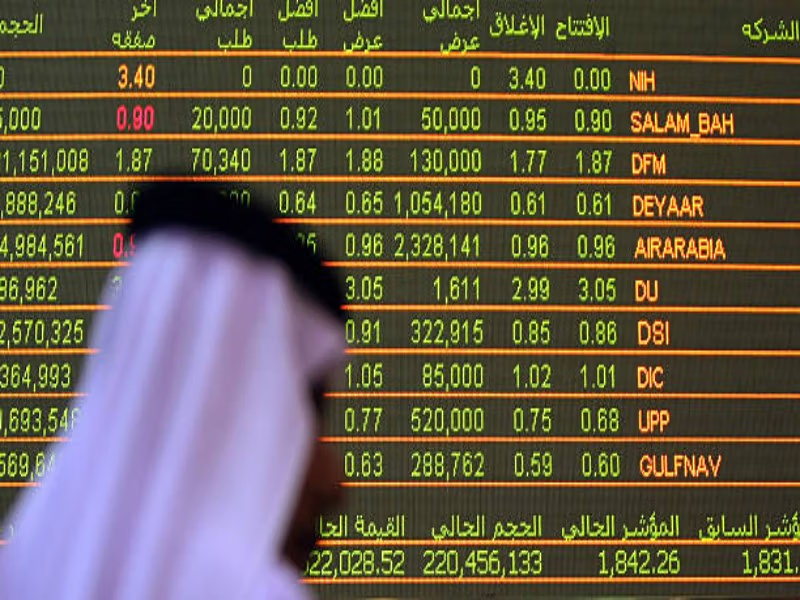
The majority of key Gulf markets started the week by falling in early trading on Tuesday, pressured by decreasing crude oil prices as various oversupply and slowing demand issues outweighed the increased geopolitical tension following the announcement by the U.S. that it could sell seized Venezuelan oil.
Oil prices, a driver of financial markets in the Gulf, fell as the traders considered geopolitical risks and weighed them against negative fundamentals.
The benchmark index of Saudi Arabia decreased by 0.1 percent, as it was affected by a 0.6 percent decline in the oil giant Saudi Aramco and a 0.1 percent drop in Al Rajhi Bank.
However, the main share index in Dubai fell 0.3 percent as 0.6 percent of toll operator Salik Co fell, and top lender Emirates NBD fell 0.5 percent. The Abu Dhabi index defied the trend and went up by 0.2 percent.
The reports stated that U.S. President Donald Trump may announce a new Federal Reserve chair as early as January. Trump said last week that the next Fed Chair will be an individual strongly supportive of significantly lower interest rates.
The markets are now pricing two interest rate cuts in the U.S. in the forthcoming year based on the expectation of a shift toward a more dovish monetary policy. The Gulf markets are affected by changes in monetary policy in the U.S., with the majority of the currencies being pegged against the dollar.
Thus, the Qatar index fell by 0.2 percent, and Qatar Islamic Bank dropped by 0.5 percent.