
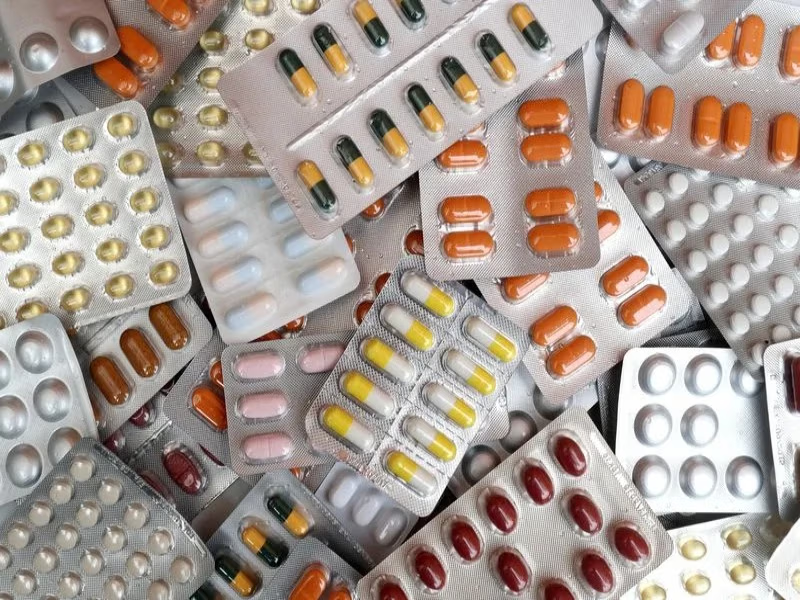
Drugmakers would increase U.S. prices on at least 350 branded drugs, including COVID-19, RSV vaccines, shingles vaccines, and blockbuster cancer treatment Ibrance, despite the Trump administration urging them to make price reductions, based on data released by healthcare research firm 3 Axis Advisors.
The price increases planned in 2026 are higher than they were last year, with drugmakers announcing increases on over 250 drugs. This year is anticipated to have a median price increase of approximately 4 percent, in line with 2025. The increases are not indicative of rebates to pharmacy benefit managers and other discounts.
Drugmakers are also intending to reduce the list prices on approximately nine drugs. That would be a greater than 40 percent reduction in the diabetes medication Jardiance by Boehringer Ingelheim and three associated treatments.
Boehringer Ingelheim and Eli Lilly, co-sellers of Jardiance, did not react immediately to inquiries as to the rationale behind the price reductions.
Jardiance is one of the 10 medications that the U.S. government has agreed to provide at a lower cost to the Medicare scheme in 2026 to individuals aged 65 years and above. Through such negotiations, Boehringer and Lilly cut the price of Jardiance by two-thirds.
The current payments for prescription medicines by U.S. patients are by far the highest among the developed countries, and pressure has been mounting on the drugmakers to reduce their prices to the level that patients in comparatively rich countries pay.
The rises on 350 medicines occurs in the context of Trump having reached agreements with 14 drugmakers on prices of a number of their medicines to the government Medicaid program of low-income Americans and to cash payers.
Pfizer, Sanofi, Boehringer Ingelheim, Novartis, and GSK are those companies as well and intend to increase the price of some of their drugs on January 1.
Dr. Benjamin Rome, a health policy researcher at Brigham and Women’s Hospital in Boston, said, “These deals are being announced as transformative when, in fact, they really just nibble around the margins in terms of what is really driving high prices for prescription drugs in the U.S.”
Rome claimed that the companies appear to be maximizing their price and negotiating discounts with health and drug insurance companies on the sly and then charging a different price to direct-to-consumer cash-pay sales.
Pfizer declared the highest list price increases on approximately 80 various medications, including cancer medication Ibrance, migraine pill Nurtec, and COVID treatment Paxlovid, and some of those given in hospitals, like morphine and hydromorphone.
Pfizer has raised most of its products by less than 10 percent, though the COVID vaccine Comirnaty increased 15 percent, and some of its relatively cheap hospital products increased more than four times.
The company stated that “The modest increase is necessary to support investments that allow us to continue to discover and deliver new medicines as well as address increased costs throughout our business.”
Therefore, the larger U.S. drug price increases were once far more common. Lawmakers and new government policies, including fining companies that raised their prices to the Medicare program at a rate exceeding inflation, have caused drugmakers to scale them back.
European drugmaker GSK, which intends to hike prices of approximately 20 drugs and vaccines by 2 to 8.9 percent. The drugmaker company claimed that it will adhere to fair prices and that the increases are necessary to fund scientific innovation.
Further price increases and reductions may be anticipated in early January, which is historically when drugmakers make the largest increases in prices.
The 3 Axis is a consulting company that deals with pharmacist groups, health plans, and certain groups associated with the pharmaceutical industry in matters of drug pricing and their supply chains. It is an affiliated organization and has some staff in common with the drug pricing non-profit 46brooklyn.