
After a whirlwind opening to President Donald Trump’s second term, the world is heading into 2026 facing a convergence of unresolved wars, fragile economies, and political survival battles. From Ukraine’s front lines to bond trading floors, from Jerusalem to Budapest, this year is shaping up less as a reset and more as a reckoning.
Here’s how the biggest forces are lining up.
Ukraine: Why Ending the War May Be Harder Than Prolonging It
Despite years of sanctions, battlefield losses, and economic strain, Russian President Vladimir Putin remains unmoved from his maximalist goals in Ukraine. Western hopes that pressure would force Moscow to compromise have so far failed to materialize.
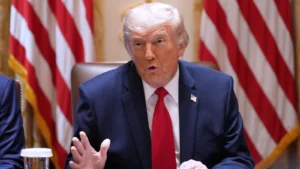
President Trump, however, believes a deal may still be possible. Following a summit in Alaska, he was overheard telling French President Emmanuel Macron that Putin genuinely wants “to make a deal,” even acknowledging how implausible that sounds. Trump’s confidence has fluctuated, at times giving way to frustration and suspicion that he may be being strung along, a concern reportedly shared by Melania Trump.
Putin’s strategy appears deliberate. He times engagement with Washington carefully, most notably through a two-hour phone call last month, just as Trump hinted at potentially supplying Ukraine with Tomahawk cruise missiles. Analysts argue that prolonging the war benefits the Kremlin. It strains already cash-strapped European governments, risks weakening NATO unity, and indirectly helps China by distracting the West as Beijing weighs its own strategic options regarding Taiwan.
On the battlefield, Ukraine faces severe constraints. With manpower shortages leaving some units able to deploy only a dozen soldiers per kilometer of front, the risk of a Russian breakthrough remains real. Putin may calculate that persistence could yield more territory, diluted Western security guarantees for Kyiv, and limits on Ukraine’s future military — conditions that would leave the door open for renewed Russian aggression later.
Still, there are limits. Russia’s economy is under pressure from high interest rates, labor shortages, rising borrowing costs, and mounting bad debt in the banking system. At the same time, Ukraine faces a perilous winter, with energy infrastructure under sustained attack and European allies struggling to maintain financial support. Neither side appears strong enough to force an outright resolution, making 2026 a decisive year.
When the Bond Market Draws the Line
If geopolitics is one source of instability in 2026, global bond markets may be another, and far more unforgiving one.
James Carville, former strategist to President Bill Clinton, once quipped that if reincarnation were possible, he would choose to come back as the bond market because “you can intimidate everybody.” That observation is proving prophetic.
Even Trump has shown deference to bond investors. Earlier this year, he paused his proposed “reciprocal tariffs” after rising yields signaled market unease. The lesson was clear: fiscal credibility still matters.
The bond market’s power was most dramatically demonstrated in 2022, when investors revolted against British Prime Minister Liz Truss’s poorly sequenced tax-cutting agenda. Her premiership collapsed in just 49 days, the shortest in British history.
Today, government finances across advanced economies are under strain. From the United States to Britain and Japan, high debt levels, weak growth, and sluggish productivity have pushed long-term borrowing costs toward multi-year highs. Institutional investors are growing wary of governments’ ability, or willingness, to rein in deficits.
Demand for sovereign bonds has cooled globally. Deutsche Bank CEO Christian Sewing reportedly warned in September that markets see a lack of credible economic reforms to address rising debt. France has emerged as a particular concern, with repeated failures to implement meaningful fiscal consolidation despite ballooning public liabilities. Britain is not far behind.
With elections looming, governments are reluctant to raise taxes or cut spending. But history suggests markets may force the issue. In 2026, fiscal indiscipline could carry swift political consequences.
Netanyahu’s Familiar Escape Act
Few political leaders have defied expectations as consistently as Israeli Prime Minister Benjamin Netanyahu.
Nicknamed “Bibi the Magician” since the 1990s, Netanyahu has repeatedly survived moments that appeared career-ending. That pattern has continued despite the catastrophic security failure of October 7, widely viewed as Israel’s worst since the 1973 Yom Kippur War.
Parliamentary elections must be held by October next year, though an earlier vote appears likely. Despite legal troubles and intense criticism, Netanyahu’s political standing has improved following military operations against Hezbollah and a ceasefire in Gaza—an agreement made politically feasible in part due to pressure from Trump.
Polling suggests no clear majority for either Netanyahu’s right-wing bloc or the opposition. While Likud may fall short of the 35 seats it won previously, it remains on track to emerge as the largest party, according to surveys including one published by Zman Yisrael.
Netanyahu’s opponents are attempting to unite behind former Prime Minister Naftali Bennett, who is courting ex–IDF chief Gadi Eisenkot to frame the election as a binary choice. But Netanyahu’s enduring strength lies not in overwhelming popularity – rather, in his ability to outlast fractured rivals.
Hungary: Orbán’s Toughest Test Yet
In April, Hungary heads into what may be its most consequential election in over a decade.
Prime Minister Viktor Orbán, derided by critics as “the Viktator,” has won the past three elections and remains a central figure in Europe’s nationalist movement. But this time, inflation, economic hardship, and corruption scandals have fueled growing opposition.
Orbán’s main challenger is Péter Magyar, a former Fidesz insider turned reformist, whose Tisza party is polling neck-and-neck with the ruling party. Political analyst Péter Krekó of the think tank Political Capital notes that with a quarter of voters still undecided, the race remains volatile.
Orbán is responding with familiar tactics, casting his opponent as an EU pawn, stoking culture wars, and warning of foreign interference. With allies emboldened by recent right-wing victories in Central Europe, Orbán is betting polarization will once again carry him through.
The Quiet Risk: Shadow Banking and Private Credit
Away from elections and battlefields, a quieter but potentially devastating risk is building inside global finance.
Private credit and shadow banking, dominated by hedge funds and private equity, now account for nearly half of the world’s financial assets, roughly $250 trillion, according to the U.S. Financial Stability Board. Bank of England Governor Andrew Bailey has warned of parallels with the conditions that preceded the 2008 financial crisis.
Unlike traditional banks, these institutions do not rely on consumer deposits, reducing the risk of sudden runs. But they are heavily exposed to illiquid assets and increasingly to artificial intelligence–linked investments.
If the private credit market is destabilized, the shock could ripple across the financial system. Unlike in 2008, governments, already heavily indebted, may lack the political or fiscal capacity to engineer large-scale bailouts. With populist anger already high, the consequences could be severe.
The U.S. Political Map: House vs. Senate
Finally, American politics.
History is stacked against Republicans retaining control of the House in the 2026 midterms. Since 1938, the president’s party has lost the House in all but two elections, according to Brookings Institution scholar William A. Galston, both under extraordinary circumstances.
Redistricting may blunt Democratic gains, but with Republicans holding only a slim majority and Trump’s approval ratings under pressure, Democrats are favored to reclaim the House. Recent gubernatorial victories in New Jersey and Virginia reinforce that outlook.
The Senate, however, tells a different story. Republicans hold a six-seat majority and are defending relatively safe ground. Only one GOP senator faces reelection in a state carried by Kamala Harris, while two Democrats must defend seats in Trump-won states. Barring a political wave, Republicans appear well positioned to retain control.
As 2026 begins, the global system continues to be under strain, from war and debt to democratic resilience and financial risk. None of these pressures exist in isolation. Together, they form a stress test for governments, markets, and institutions worldwide.
The question is no longer whether something gives, but where, and how hard.