

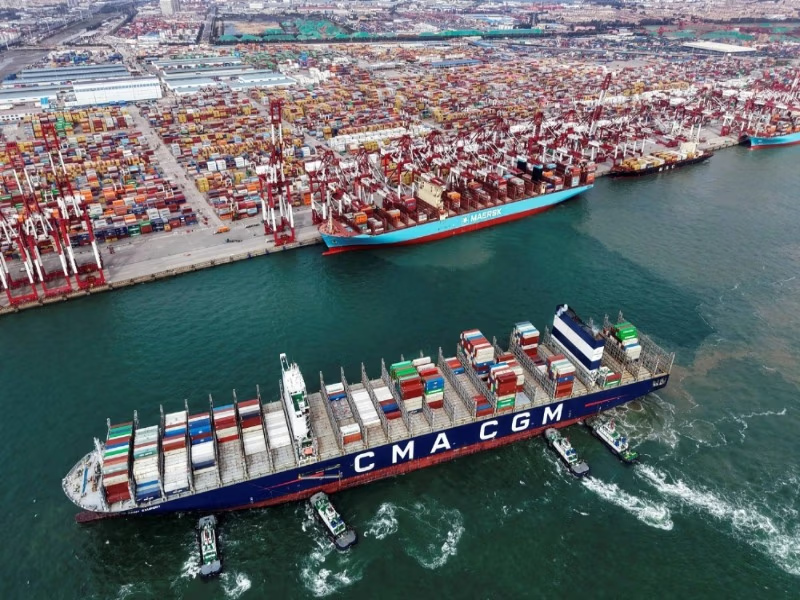
China’s export growth in December exceeded expectations by a wide margin, with the annual trade surplus hitting a record high, despite the imports increasing at the quickest pace in three months.
Chinese customs data indicated on Wednesday that U.S. dollar exports increased 6.6 percent last month compared to the previous year, outpacing analysts’ median projection of a 3 percent rise, and improving on a 5.9 percent increase in November.
According to LSEG data, imports in December surged 5.7 percent in a year compared to an expected growth of 0.9 percent, the highest since September last year, when imports were on the upswing by 7.4 percent.
The total exports of China in the entire year increased by 5.5 percent relative to 2024, and its imports remained constant, making Beijing’s trade surplus of $1.19 trillion.
Therefore, the trade tensions with the U.S. have resulted in a downward on Chinese shipments to the nation in the range of double-digit declines during most of the previous year.
The escalating trade imbalance due to increased exports by Chinese exporters to non-U.S. markets has raised concerns among leading trading partners, including the European Union.
In a press conference in December, International Monetary Fund Managing Director Kristalina Georgieva urged Beijing to stop relying on exports as a growth engine and accelerate its efforts to increase domestic consumption.
However, the Chinese leaders had committed to increasing imports and to striving towards a trade balance.
President and Chief Economist at Pinpoint Asset Management, Zhiwei Zhang, anticipates that Beijing will maintain the macro policy level at least in the first quarter, as the robust export growth is compensating for the weak domestic demand, and the trade tension between Beijing and the U.S. has been alleviated.
China and the U.S. signed an agreement in October to withdraw a sequence of export-control actions and greater tariffs in an annual commerce ceasefire, after a summit between the Chinese President Xi Jinping and his American peer Donald Trump.
Although the aggregate exports registered a strong growth in 2025, the trade tension with the U.S. had cost Chinese exports to the nation by double digits, except in a few instances in the last year.
China will publish its annual and fourth-quarter gross domestic product figures next Monday. In a poll by Reuters, economists forecast that the second-largest economy in the world would have grown 4.5 percent in the third quarter. Beijing had pegged its growth target at approximately 5 percent in 2025.
An almost $19 trillion economy has been fighting to shed deflationary pressure as a crashing real estate sector is dragging on household demand, and a poor job market is damaging consumer confidence.
The consumer prices in the country remained constant and failed to meet the official target of approximately 2 percent growth in 2025.