After years of stalled negotiations and renewed urgency amid rising global protectionism, India and the European Union are now on the brink of sealing one of the world’s most consequential trade agreements.
India’s Trade and Commerce Secretary Rajesh Aggarwal said New Delhi is close to finalising a long-awaited trade deal with the European Union later this month, with negotiations expected to conclude by January 26, a timeline that coincides with high-level diplomatic engagements between the two sides.
Speaking to reporters, Aggarwal said talks have been in their “last and most arduous leg” for the past three months, with 20 of the 24 chapters of the agreement already closed. The remaining issues are being negotiated through daily virtual discussions, underscoring the intensity of the final push.
“We are very close,” Aggarwal said, adding that both sides are exploring whether the deal can be wrapped up before EU leaders arrive in New Delhi later this month.
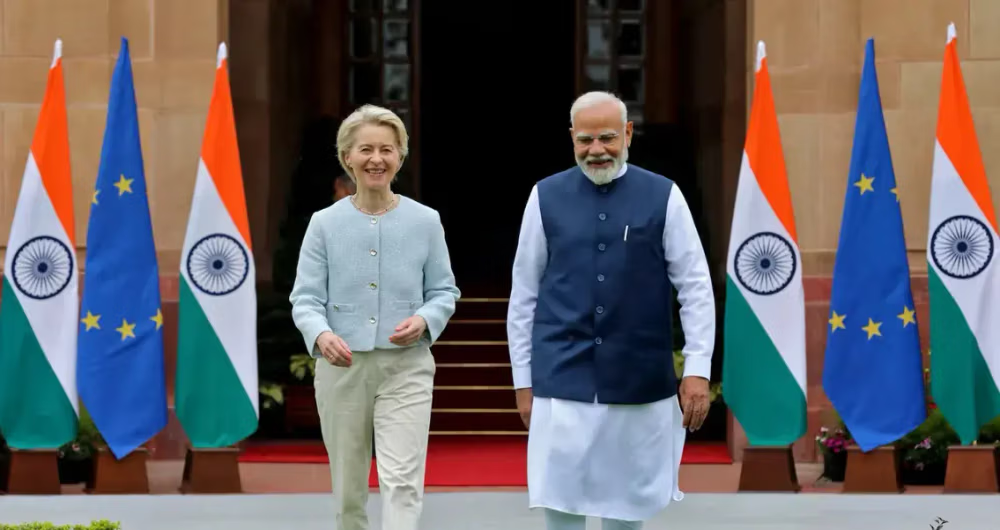
European Union leaders are scheduled to attend India’s Republic Day celebrations on January 26, followed by the India–EU Summit on January 27, giving the negotiations added political urgency.
Why the India–EU Trade Deal Matters
The proposed agreement would mark a breakthrough in talks that have stretched over more than a decade. Negotiations were revived in 2022 and gained momentum as global trade dynamics shifted sharply following tariff hikes imposed by US President Donald Trump on major trading partners, including India.
Both New Delhi and Brussels have since pushed to accelerate negotiations, particularly after European Commission President Ursula von der Leyen and Prime Minister Narendra Modi agreed to fast-track discussions with the goal of closing a deal in 2025.
If finalised, the pact would open India’s vast and historically protected consumer market — home to more than 1.4 billion people — to European goods and services, while granting Indian exporters greater access to the EU’s single market of nearly 450 million consumers.
Trade experts say the agreement could significantly reshape global trade flows at a time when multilateral trade frameworks are under strain and a US–India trade deal remains stalled.
What’s at Stake for Both Sides
For Europe, the deal promises improved access to one of the world’s fastest-growing major economies, particularly in sectors such as automobiles, clean energy technology, machinery and high-end consumer goods.
For India, the agreement offers a stable and high-value export destination for products including textiles, seafood, agricultural goods and pharmaceuticals — sectors that employ millions and are central to India’s export strategy.
The deal also aligns with India’s broader effort to diversify trade partnerships and reduce reliance on any single market amid geopolitical and economic volatility.
India’s Trade Picture: Growth Despite Global Uncertainty
Aggarwal said India’s export momentum remains resilient despite global headwinds.
According to the Ministry of Trade and Commerce’s latest data, India’s merchandise exports rose 1.87% year-on-year to $38.5 billion in December 2025. During the April–December period, exports increased 2.44% to $330.29 billion.
Aggarwal added that exports of goods and services are likely to cross $850 billion in the financial year 2026, reflecting sustained demand and diversification across markets.
Imports, however, also climbed, rising to $63.55 billion in December 2025 from $58.43 billion a year earlier. As a result, India’s trade deficit widened to $25 billion for the month.
A Strategic Deal at a Pivotal Moment
As protectionist pressures rise globally and traditional trade alliances are tested, the India–EU agreement is emerging as a strategic counterweight — one that could anchor long-term economic ties between two major economic blocs.
With most chapters already finalised and political momentum building ahead of January’s diplomatic engagements, negotiators on both sides appear closer than ever to delivering a deal that has been years in the making.
If signed, the agreement would not only deepen India–EU economic integration but also send a powerful signal about the future of global trade in an increasingly fragmented world.