
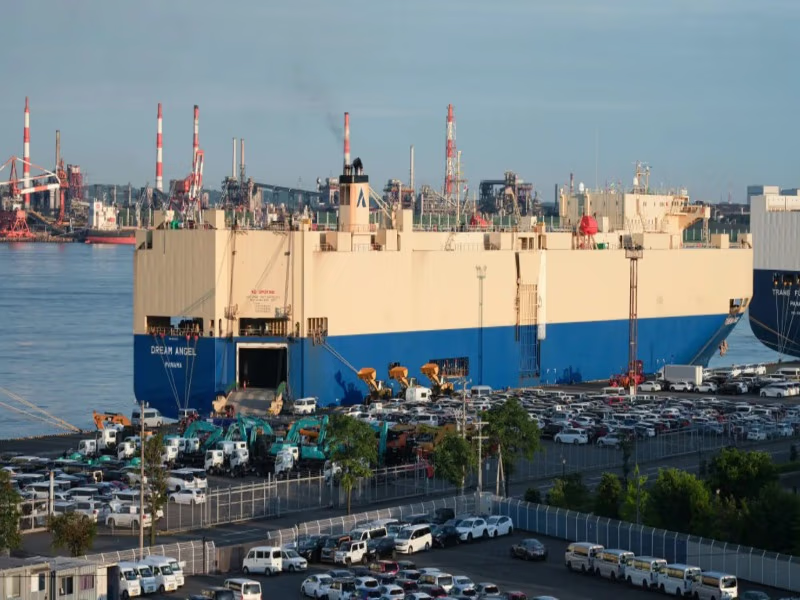
Japan’s export growth in the final month of 2025 fell short of analyst expectations, with an increase of 5.1 percent year-on-year, as shipments to the U.S. witnessed a double-digit decline.
Reuters-polled analysts had projected exports growth would remain unchanged from November at 6.1 percent. The Japanese exports declined in mid-2025 as a result of the U.S. tariff concerns, but recovered towards the end of the year as a trade agreement with the U.S. was reached, resulting in a 15 percent drop.
Therefore, the exports to the U.S. in December regained their decline, by plummeting 11.1 percent, following a surge of 8.8 percent in the previous month. The November gain was the first increase in exports to the U.S. since March.
The shipments to mainland China, the biggest Japanese trading partner, were up 5.6 percent, and exports to Hong Kong surged 31.1 percent compared to the previous year. Exports to the wider Asia region are up 10.2 percent.
Imports in December increased 5.1 percent year-on-year, sharply rising from the 1.3 percent rise witnessed in November, and exceeding Reuters estimations of a 3.6 percent rise.
However, for full-year 2025, Japan’s exports surged 3.1 percent, a softer increase compared to the 6.2 percent upward trend witnessed in 2024, as shipments to mainland China and the U.S., Tokyo’s two significant trading partners, had slipped 0.4 percent and 4.1 percent.
The exports to Hong Kong and Taiwan have grown 17.8 percent and 15.1 percent in the entire year, partly compensating for the falls in the U.S and China.
Stefan Angrick, head of Japan at Moody’s Analytics, reported that the front-loading of U.S. shipments before tariff increases, an artificial intelligence boom that has increased electronics and machinery shipments, and a weak yen contributed to the rise in total exports in 2025.
He said, “Although shipments are holding up for now, the outlook is fraught with risks.” He cautioned, citing the fact that tougher U.S. importation taxes and stiff competition in the international markets are taking their toll on industrial output and export levels.
Angrick added that trade threats by China are an added concern. Tensions between Tokyo and Beijing have deteriorated since November following remarks by Prime Minister Sanae Takaichi that Japan was prepared to step in militarily if China tried to forcibly annex Taiwan.
Therefore, China had suspended the import of seafood from Japan, and at the beginning of the year, it announced that it would restrict the export of dual-use goods to Japan.
The trade data is timed as Japan prepares snap elections on February 8, called by Prime Minister Sanae Takaichi, with its Lower House being dissolved on Friday.
Analysts reported that the victory for Takaichi will enable her to push her fiscal agenda through Japan’s parliament with little opposition. It might also include maintaining the yen at a low value, as it favors Japanese exports.
Thus, with the call of the elections, the Japanese markets are driven by the so-called “Takaichi trade,” which has seen stocks mainly increase, and the yen remains weak.