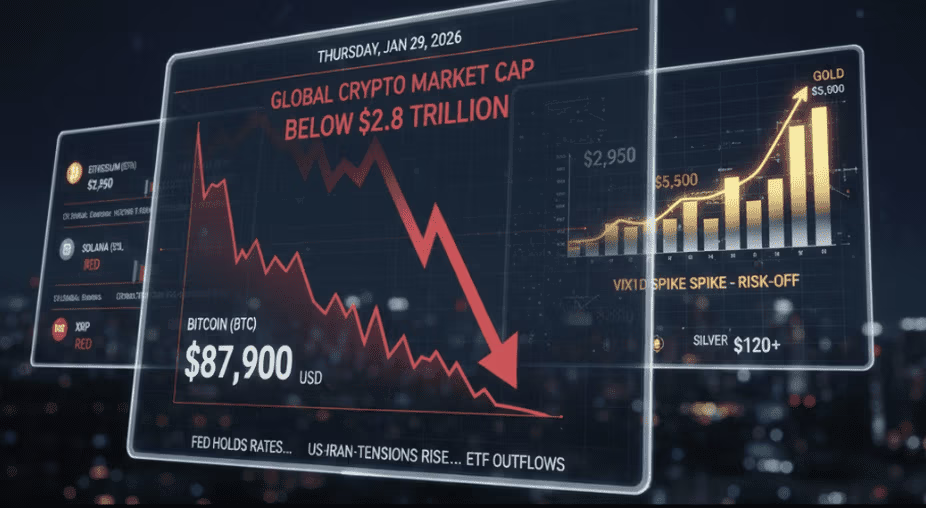
The global cryptocurrency market slid sharply on Thursday, January 29, as Bitcoin and the majority of altcoins fell into negative territory. Traders and investors fled risk assets, pushing the total valuation of digital currencies below a key psychological threshold at around $2.8 trillion.
The largest token, Bitcoin, dropped to roughly $87,000, down from recent year-to-date highs near $94,000. Ethereum slid below $3,000, trading around $2,930, while Binance Coin dipped to about $890.
Other digital assets also suffered. Tokens including Chiliz, River, Render, Mantle and LayerZero logged double-digit losses in the past 24 hours, each sliding more than 7 percent.
Risk Aversion Drives Market Down
Investors are increasingly treating Bitcoin and most cryptocurrencies as high-risk assets rather than safe havens. Traditional safe-haven assets such as gold and crude oil have seen strong price gains amid global uncertainty.
Prices for gold surged sharply on Thursday, touching record levels above $5,500 per ounce, as investors sought refuge from market volatility. Ongoing geopolitical tensions involving the United States and Iran have added to risk aversion. Some analysts say gold demand may remain strong if geopolitical risks persist.
At the same time, Brent crude oil surpassed $70 per barrel, reaching its highest point in months. Rising oil reflects concerns that conflict in the Middle East could disrupt supply, especially if Iran responds to escalating tensions in the region.
Geopolitical Fears Weigh Heavily
Data from prediction markets show a growing probability that the United States could take military action against Iran before the end of the year. On platforms such as Polymarket, odds have risen above 70 percent for an attack occurring, according to market signals.
Foreign policy shifts and conflict prospects have historically influenced global markets. Higher crude prices generally indicate rising risk premiums, while safe-haven assets like gold benefit from investor caution.
US President Donald Trump issued a statement this week urging Iran to enter negotiations to end its nuclear program. His remarks coincided with strong gains in gold and rising crude oil prices. Iran has warned it will retaliate against any US strikes, further fuelling market concern.
Not a Safe Haven
The sell-off in crypto highlights a key debate in financial markets. Some traders once viewed Bitcoin as “digital gold” and a hedge against instability. However, recent price action suggests that during periods of acute risk, investors still prefer traditional assets such as gold and major fiat currencies. Analysis from past market stress periods shows that Bitcoin tends to behave like a risk asset when uncertainty rises.
A bearish outlook in crypto comes even as other markets hold steady. On the same day, major US stock indexes traded with modest movement, with the S&P 500 flat and the Nasdaq and Dow showing small changes, according to market data. This suggests that crypto losses were driven more by risk-off sentiment than a broad sell-off across all asset classes.
Macro Conditions Add Pressure
Other factors are contributing to the crypto market slump. A cautious stance by the US Federal Reserve, which held interest rates steady in its latest policy meeting, is reinforcing a risk-off environment for crypto assets. With no near-term rate cuts expected, financial conditions remain less supportive of high-volatility assets.
Trading volumes in crypto markets have declined as prices fall. Analysts note that many tokens, including Bitcoin and Ethereum, are still trading within a broader consolidation range. Some market observers view this correction as a reset phase that may help the market find stability before future moves.
Where Markets Go From Here
As the crypto market digests recent losses, investors are watching key price levels for signs of support. Bitcoin’s course below the $90,000 mark has reinforced bearish sentiment, while bears continue to dominate trading activity across dozens of coins.
Whether cryptocurrencies can regain momentum will depend on broader economic signals, geopolitical developments, and shifts in investor risk appetite. For now, digital assets remain sensitive to headline risks and macroeconomic forces that favour traditional safe-haven instruments.