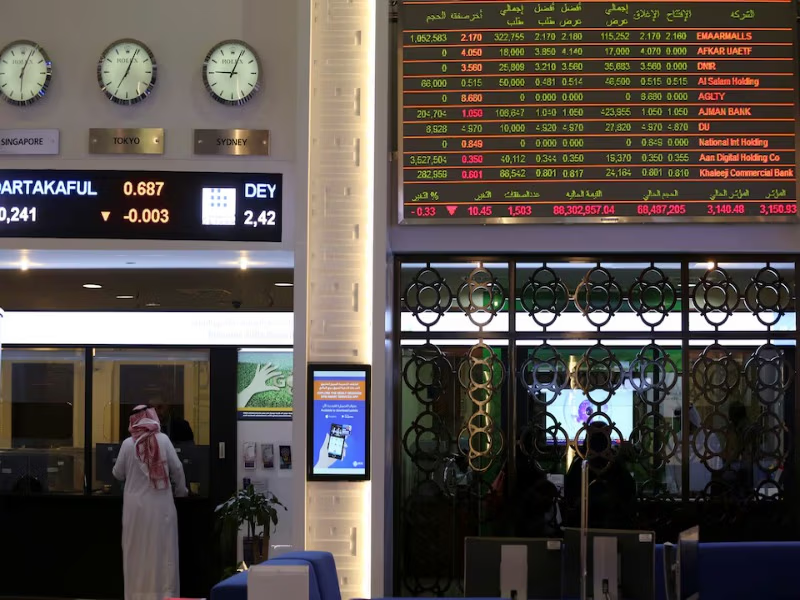
The GCC debt markets, headed by Saudi Arabia, started the year with their most optimistic opening ever by issuing over $30 billion in January, swatting off geopolitical confrontations.
Victor Mourad, Co-Head of CEEMEA Debt Financing at Citi, informed Zawya, “Ten issuers in Saudi Arabia have already tapped the market in January for what is the highest month of supply from the kingdom ever, at an average of almost a billion a day. The previous January record was $19 billion in 2025.”
Earlier in the month, in a four-part bond, Saudi Arabia previously raised $11.5 billion, encouraging others in the kingdom to visit the market early. PIF, Saudi Arabia’s $1 trillion sovereign wealth fund, accessed global debt capital markets for the first time this year with a $2 billion 10-year sukuk on January 21.
Therefore, order books have surpassed $11 billion. In addition, Saudi Aramco issued a $4-billion four-tranche bond last Monday. The book offering was more than $21 billion, which means that the investor appetite is strong. However, state-owned mining giant Maaden also issued sukuks worth $1 billion.
Mourad said, “While volumes from the kingdom increased in January, the issuer diversification amongst sectors and the split between sukuk and conventional bonds meant that investor diversification was maximized. Issuers also offered a variety of tenors, from 3-year to 30-year, which made a return this year. We already have more 30-year supply from the region than across the whole of 2025 combined.”
The last few weeks have seen once again the simmering of tensions between Iran and the US. Iran has warned to retaliate in case of US strikes. The flood of dealings at the outset is a very strong pointer that investors are putting aside geopolitical considerations.
Mourad added, “Investors are brushing aside almost every geopolitical concern. Volumes have gone up, and transactions are landing with no new-issue premium and with well‑diversified books that are heavily oversubscribed.”
According to Fitch, the DCM of Saudi Arabia is set to hit an outstanding of $600 billion in 2026. The plan of annual borrowing of the kingdom is to cover up to 50 percent of sovereign financing needs in the private markets, 25 percent to 30 percent in international DCM, and 20 percent to 30 percent in domestic DCM.
The debt market might pick up in the early days of Ramadan, which begins in some two weeks, before it may subside throughout the Holy Month. Ramadan is also set to begin in the month of February between 17 and 19.
Mourad stated, “The market started seeing transactions during Ramadan from 2019, so we expect supply windows to continue to be available in February and early March before they taper off towards Eid.”
Nevertheless, this January, bond markets were initiated with a borrower of all formats ramping up their financing activities.
He reported, “We expect all-in yields to remain range-bound in 2025, so transactions done in January are likely to end up pricing at similar levels to those later in the year. The heightened global risks mean there is little upside in waiting for later in the year to fund. The global pipeline, with record starts in Asia and Latin America, supports the view that issuers agree on current pricing levels in 2026.”
The global bond issuance has started to pick up vigorously in January, with part of it being fuelled by high issuance of bonds in Asia and Latin America. The corporations and governments in the US, Europe, and Asia have increased by about $245 billion in various currencies, a new record in the same year.