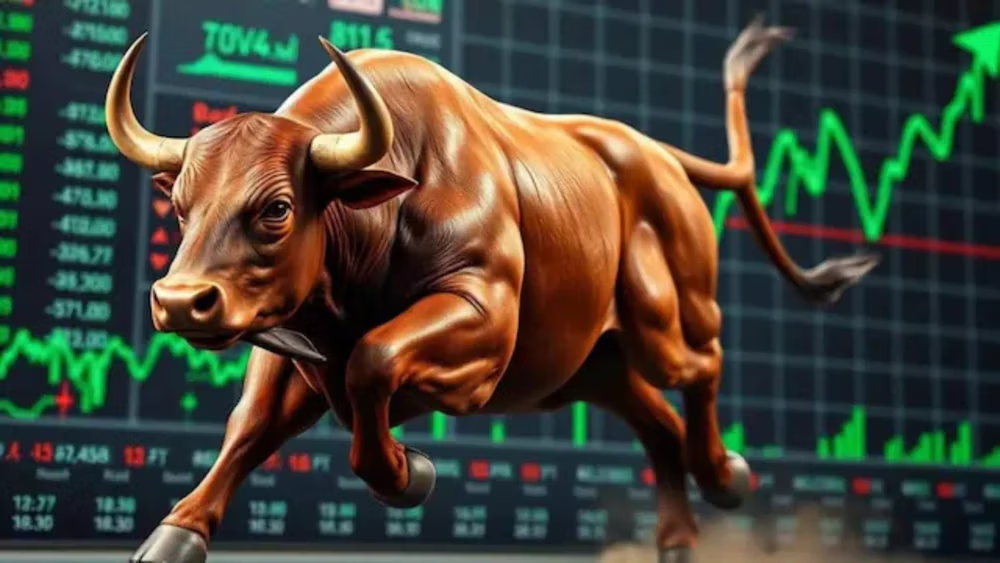
Indian equity markets rallied sharply as investor sentiment improved following the announcement of a trade agreement between India and the United States that reduces tariffs on Indian exports and eases recent trade tensions. This has positively impacted Indian Stocks.
The BSE Sensex rose more than 2.5 percent during intraday trade, while the NSE Nifty 50 climbed over 2.5 percent, supported by broad-based buying across sectors. Export-oriented stocks, banking shares, and heavyweight index constituents led the gains as markets reacted to expectations of improved trade flows and potential foreign capital inflows, particularly in Stocks.
The rally followed comments by U.S. President Donald Trump on an agreement that would lower U.S. tariffs on Indian goods from previously elevated levels. While detailed implementation timelines have yet to be disclosed, markets responded positively to the prospect of reduced trade barriers between the two countries, boosting investor interest in Stocks.
“Markets were clearly positioned for a relief rally after weeks of uncertainty around tariffs,” said Rohit Mehta, a Mumbai-based equity strategist. “The trade announcement removes a key overhang, even though details will take time to emerge.”
The Indian rupee also strengthened against the U.S. dollar, reflecting improved risk appetite and expectations of a renewed surge in foreign portfolio investor interest. Currency gains added to positive sentiment in equity markets, particularly in sectors sensitive to global trade and capital flows.
According to Sarah Williams, a portfolio manager at a Singapore-based investment firm, the market reaction highlights the importance of external factors for emerging markets. “For international investors, clarity on trade relations is often more important than short-term domestic data. This announcement has helped reset expectations,” she said.
Gains were not limited to large-cap stocks; mid- and small-cap indices also posted gains as risk appetite improved. Analysts noted that the rally came after a period of volatility triggered by domestic policy announcements and global macroeconomic concerns.
“The speed of the move shows how defensive positioning had become,” said Anil Verma, an independent market analyst. “Any positive global trigger was likely to result in a sharp rebound, and the trade deal provided that catalyst.”
Despite the strong market response, investors remain cautious about execution and follow-through. Details on tariff-reduction timelines, sector-specific concessions, and reciprocal commitments from India are still awaited, and market participants are expected to closely track official statements in the coming weeks.
Looking ahead, analysts say equity markets will continue to take cues from developments around the trade agreement, foreign fund flows, currency movements, and global commodity prices, as well as from domestic economic data and corporate earnings.