

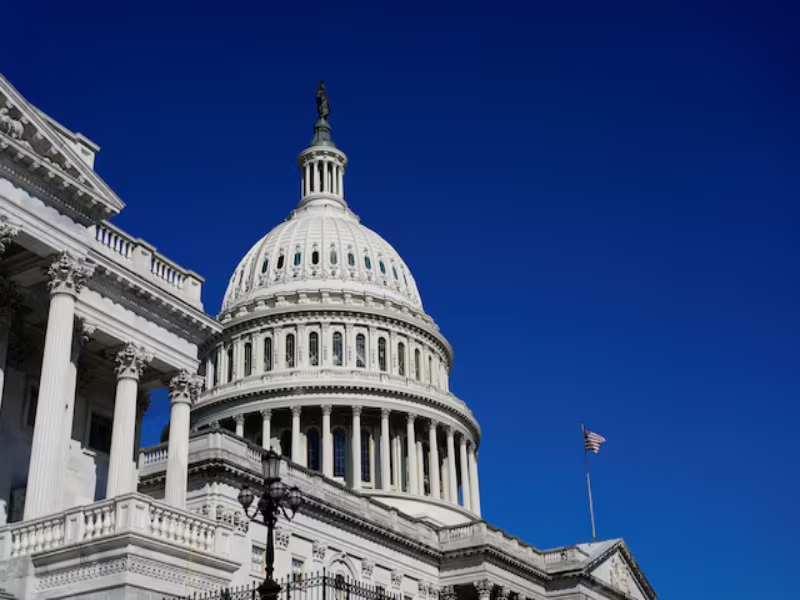
The U.S. House of Representatives, by a narrow vote on Tuesday, turned down a Republican leadership effort to fend off legislative efforts to challenge President Donald Trump’s tariffs, a step that might permit Democrats an attempt to unwind U.S. tariffs on Canada.
The vote was 217-214 to derail the proposal to impede tariff challenges until July 31, with three Republicans joining 214 Democrats in opposition. The ban formed part of a policy that sought to open up a discussion on three irrelevant bills.
Representative Don Bacon, one of the Republicans who rejected the ban, said, “I don’t like putting the important work of the House on pause, but Congress needs to be able to debate on tariffs.”
The Nebraska lawmaker wrote on X (formerly known as Twitter) that “Tariffs have been a ‘net negative’ for the economy and are a significant tax that American consumers, manufacturers, and farmers are paying.”
The outcome poses a significant threat to House Speaker Mike Johnson, who cannot afford to lose more than one vote from his 218-214 Republican majority on any measure opposed by Democrats.
Democrats are optimistic of bringing a vote to the House as early as Wednesday to end Trump’s use of a national emergency to impose punitive trade measures on Canadian goods. They also vote to reverse the Trump-imposed tariffs on Mexico and other nations.
Johnson had earlier in the day notified reporters that he considered the measure to pass the House, saying it was necessary to anticipate a Supreme Court ruling on the legality of the tariffs.
The rule prohibiting a challenge of tariffs was originally introduced by House Republicans last March and was later extended into January.
However, the rule was short-lived due to criticism by republicans who expressed concerns about the expenses to American families and US companies that are dependent on global trade.
According to the Yale Budget Lab last month, the average cost of tariffs per household in the United States per year is approximately $1,400.
In a report published last week, the Nonpartisan Tax Foundation estimated the cost would be $1,000 per household in 2025, and increased to $1,300 this year.