

India’s Reliance Industries has secured a licence from the United States government allowing it to import crude oil from Venezuela, according to a Reuters report citing industry sources. The approval enables Reliance to purchase Venezuelan crude without violating existing US sanctions, marking a significant shift in India’s evolving energy sourcing strategy.
The licence reportedly permits Reliance to buy and refine Venezuelan crude that has already been extracted, expanding its access to heavy oil supplies at a time when geopolitical considerations are reshaping global energy trade flows.
The development comes amid a gradual reduction in India’s purchases of Russian crude, which had surged in recent years following discounted pricing. However, changing global dynamics and diplomatic considerations have prompted Indian refiners to diversify their crude basket. Venezuelan oil, typically offered at competitive rates, may help fill part of that gap.
According to Reuters, Indian refiners have been recalibrating sourcing strategies in response to broader trade negotiations and shifts in sanctions enforcement. The US has eased certain restrictions on Venezuelan oil exports in recent months, allowing limited participation by select global players.
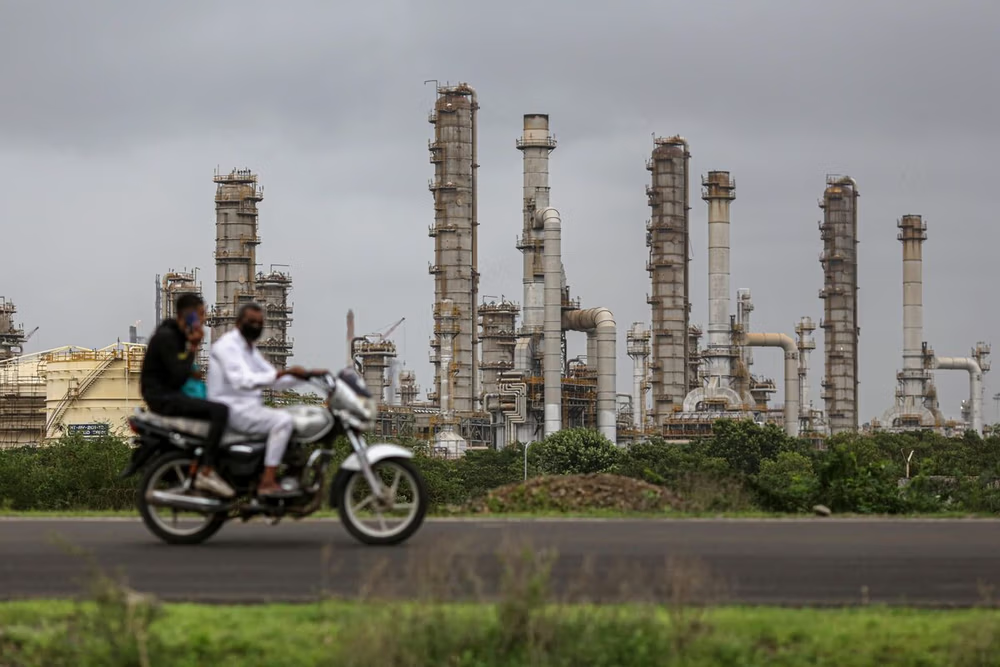
Reliance operates one of the world’s largest refining complexes, with a capacity of roughly 1.4 million barrels per day. Access to Venezuelan heavy crude could improve refining economics, given that the company’s facilities are configured to process such grades efficiently.
The move also reflects broader shifts in global oil diplomacy. As sanctions policies evolve, major energy consumers such as India are adjusting procurement channels to balance supply security, pricing efficiency, and geopolitical alignment.
Energy markets remain fluid, and refiners worldwide continue to adapt sourcing strategies in response to regulatory developments, demand trends, and shifting international relations.