
Four nations have become part of the Global Halal Mark alliance, a new project introduced by the Saudi Halal Center, after two agreements were signed with Indonesia and Thailand.
In an interview with Al-Eqtisadiah at the Makkah Halal Forum, Abdulaziz Al-Rushodi, the CEO of the Saudi Halal Center, indicated that the total number of countries joining the alliance will reach 10 by the end of the year.
He claimed the project will bring together the “Halal” marks throughout the world and the highest levels of credibility in the industry.
The second initiative that was announced during the forum is the Halal Academy, which is set to be established jointly with the Islamic University of Madinah to be able to act as a global scientific source that can contribute to the development of competencies and the halal ecosystem in an overall way.
Al-Rushodi further added that the center is in the process of developing the Global Halal Hub project, which is an integrated digital platform designed to harmonize halal certifications and streamline the processes of cross-border trading processes between different countries.
In the efforts to promote the local industry, the center, as reported by Al-Rushodi, was able to sign a memorandum of understanding with the Food Manufacturers Association, which consists of thousands of national factories, to empower Saudi products as well as qualify them to be exported to countries within the Islamic world through the awarding of a halal mark.
He stated that the partnership aims to motivate local manufacturers to make the mark a standard practice in the production of their products, which widen the world markets and enhance the presence of Saudi products in the global markets.
The Saudi Halal Center was founded in 2018, and it is managed by the Saudi Food and Drug Authority. The center issues halal certificates once they have met the Shariah and technical standards and requirements to ascertain the credibility of products carrying the Halal mark in the local and international markets, besides issuing the Saudi Halal mark.
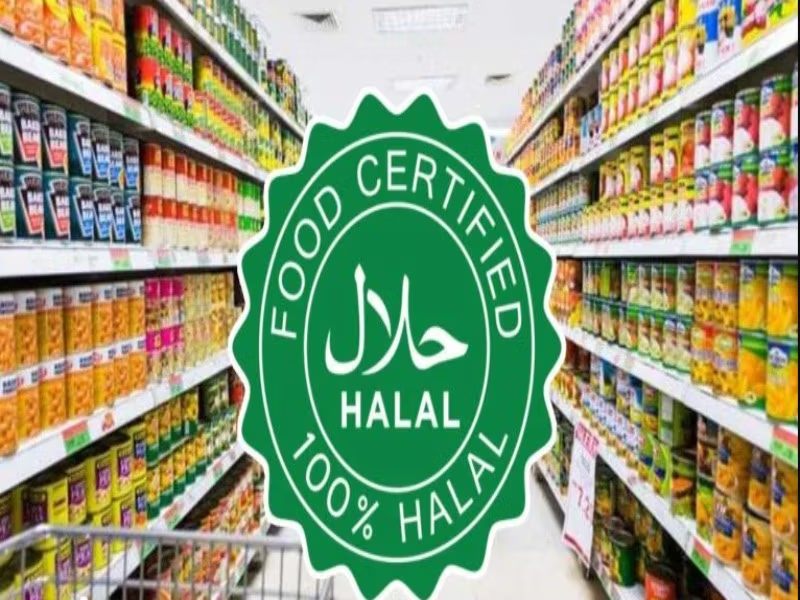
The center provides the right to use its trademark, which is a logo that is put on the products to show that the products are under supervision and under audit, and are compliant with Islamic law.
Yousef Khalawi, Secretary-General of the Islamic Chamber of Commerce and Development, told Al-Eqtisadiah that it is projected that the global halal market will be an estimated $7 trillion in 2025, and Saudi Arabia will be the first country to lead the pack of the largest investing countries in the sector, with a value of SR5.5 billion ($1.4 billion).
Khalawi believes that the halal market size will reach $10 trillion by 2030, as the global consumer demand increases faster and more investments are made in value chains associated with the halal industries.
Saudi Arabia is the world leader in the number of countries that have made the largest investments in the halal industry, since it has invested SR5.5 billion.
Malaysia follows closely with an investment of SR4.7 billion, which has the advantage of having a high ecosystem of global halal standards, and in the third position is Kuwait with investments of SR4.1 billion.
The UAE became the fourth-ranked country, investing about SR3.7 billion in food, tourism, and consumer product value chains, and Indonesia was ranked fifth with an investment of SR1.5 billion.