

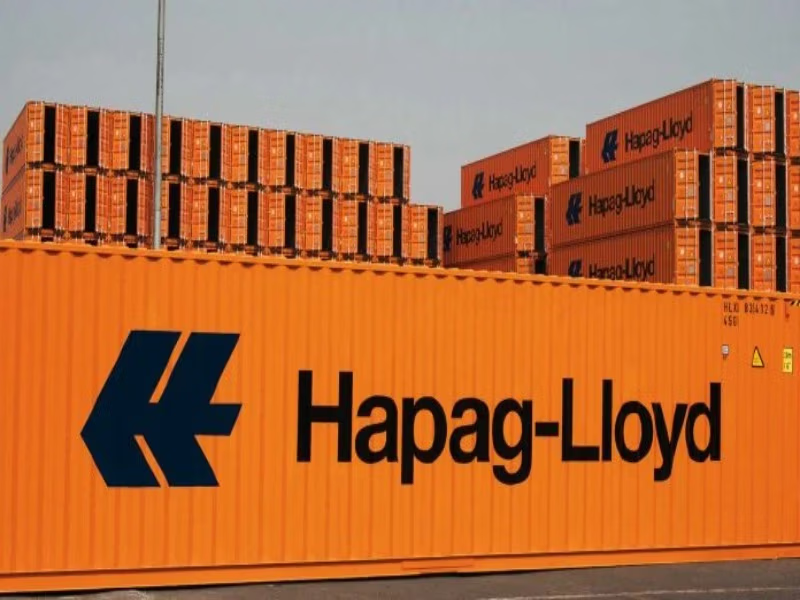
Hapag-Lloyd, a German shipping company, declared on Monday that it would acquire Israel’s ZIM for about $4.2 billion. This will solidify its status as the fifth-largest group in the world.
The agreement met with a backlash from Israelis, as ZIM workers at the Haifa headquarters went on strike, and the mayor of the city urged the Israeli government to disapprove the deal.
Hapag-Lloyd affirmed the agreement on Friday, a day after Hapag-Lloyd stated that it was in the process of reaching advanced talks in acquiring ZIM.
The share price of Hapag-Lloyd declined by 8 percent following the news about the ZIM agreement. The company reported that it would fund this agreement with its cash reserves as well as external financing of up to $2.5 billion.
According to the company, the merger would promote Hapag-Lloyd as the fifth-largest shipping line in the world having a fleet of modern vessels amounting to a total of over 400. ZIM’s website added that it operates in 90 countries and serves 300 ports globally.
Similarly, Israeli private equity fund FIMI will buy an Israeli ZIM business with 16 vessels and will guarantee Israel direct global maritime connections.
FIMI, Hapag-Lloyd, and Hapag-Lloyd have not specified the financial conditions for this agreement, whereby a “golden-share” which grants Israel special ownership rights over ZIM will be transferred to FIMI’s dedicated Israeli container-line, which is to be named “New ZIM.”
ZIM announced that the price agreed with Hapag-Lloyd reflected a 126 percent premium on its stock price before preliminary announcements of takeover interest on August 8.
ZIM stated that the ZIM workers went on strike on Sunday at their Haifa headquarters concerning the so-called deal, and the management was engaged in consultations with their union to ensure that no adverse effects were experienced, and the strike continues.
Therefore, Yona Yahav is the mayor of Haifa, Israel’s largest port. He said that the deal “undermines national security”. He indicated that the transfer of ownership to foreigners, even with an Israeli investment fund in between, was problematic.
Hapag-Lloyd’s CEO Rolf Habben Jansen said he was aware of the issues, but the agreement he had negotiated was a good one. The Competition Authority of Israel indicated that it would investigate a takeover.
According to the statements of JPMorgan analysts, the deal would enable HapagLloyd to expand its global percentage from 7 percent to less than 9 percent without needing to invest in a long-drawn-out process.
ZIM was valued at $2.7 billion by Friday’s closing. It announced in November that, having been presented with a non-binding acquisition proposal, it had taken several months to assess its strategic alternatives.