
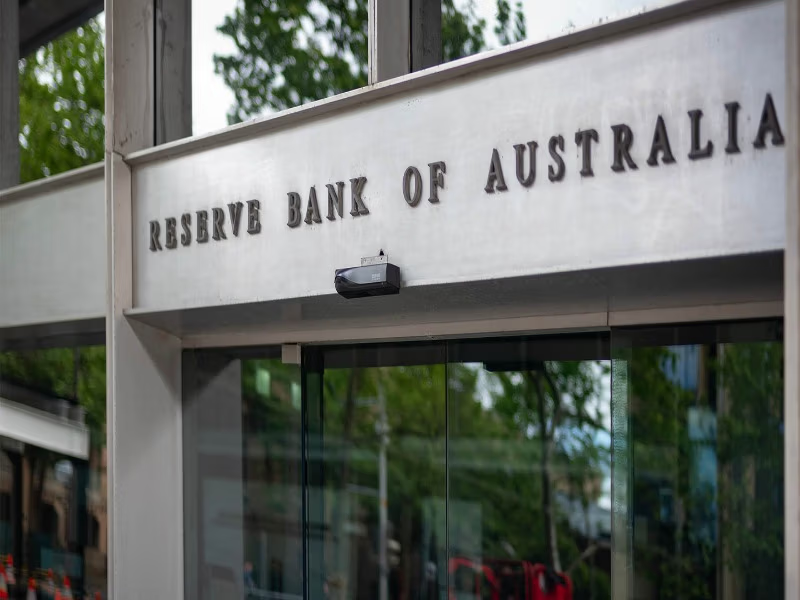
The central bank of Australia ended inflation might remain high, if it had not surged interest rates as it did this month, and was not sure if further tightening would be necessary.
Minutes of a board meeting of the Reserve Bank of Australia published on Tuesday revealed that the members were concerned that the risks to its inflation and employment targets had “shifted materially,” and the case to increase the stronger one was made.
The minutes indicated, “Members agreed that the data received since the previous meeting had strengthened their concern that, without a policy response, inflation would remain persistently above target for too long.”
Consequently, the board voted unanimously to increase the cash rate by 25 basis points to 3.85 percent, thereby revisiting one of the three reductions in 2025. Markets are wagering that inflation is also likely to be stubborn enough this quarter that the board would again increase to 4.10 percent by its May meeting.
Consumer price data for the first quarter will be released in late April, and analysts expect core inflation to remain near 3.4 percent, well above the RBA’s target range of 2 percent to 3 percent. The core inflation being predicted by the central bank is at 3.7 percent mid-year and 3.2 percent by Christmas.
The minutes reported that the board perceived risks on both sides in terms of inflation and economic activity, and would depend on forthcoming data to arrive at a policy judgment.
The minutes stated, “Members agreed that the prevailing uncertainties meant it was not possible to have a high degree of confidence in any particular path for the cash rate.”
Minutes added that although some of the pickup in inflation would probably be transient, the increase had been broad-based and could be sustained without tightening of policy.
However, the board did agree that it was indeed to restore inflation to target in time and still achieve the large gains in employment that it had achieved in the past several years.
The board recorded that domestic demand had shocked with strength, whereas the speed of improvement in house prices and mortgage lending indicated that the financial environment was not as strict as had been thought earlier.
The labor market was sound, with unemployment dropping to 4.1 percent in December, such that the board judged “downside risks” to the labor market had abated. The world economy was also significantly more resistant to the U.S tariffs than was thought to be partially, due to the boom in AI-related investment and data centers.
The recent increase in the Australian dollar may remain tight in the financial conditions, but the board noted that part of that appreciation was in anticipation of higher rates.