

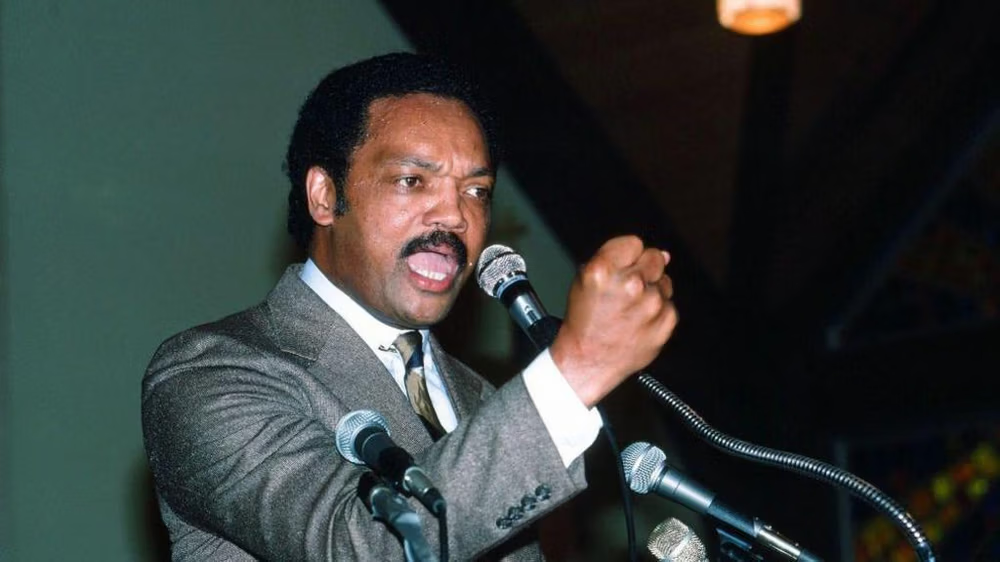
For nearly six decades, the name of Rev. Jesse Jackson moved in step with the struggle for civil and human rights. From Greenville, South Carolina, where he was born in 1941, to the streets and sanctuaries of Chicago, he carried a message that ordinary people mattered and that their dignity was non‑negotiable. With his passing at the age of 84, a mighty voice has fallen silent, but the echoes of his words and work still shape lives across the globe.
Outside the Rainbow PUSH Coalition headquarters on Chicago’s South Side, flowers and handwritten notes now mark the place where so many campaigns for justice began. For people like Afrika Porter, those halls were a second home. As a child, she watched Jackson prepare for marches, rallies and even a presidential run, learning early that politics could be a tool for change. To her and many others, he was not just an icon or a gentle giant, but a relentless fighter who refused to accept that any door was closed to Black children growing up in America.
A Life in the Struggle for Rights and Dignity
Jackson’s work began with the fight for equal rights for African Americans, but he never limited his vision to a single community. Mentored by Rev. Dr. Martin Luther King Jr., he absorbed the discipline of nonviolence and the conviction that moral pressure could move unjust systems. Those lessons fueled his later campaigns through Operation PUSH and the Rainbow Coalition, where he insisted that people of every color and background deserved a place in the national story.
In Chicago, his presence was constant. In 2013, he joined marches demanding justice for murdered teenager Hadiya Pendleton and called for federal intervention as violence scarred the city. For former gang member Wallace Bradley, Jackson was the rare leader who did not walk away when things grew complicated; he helped Bradley secure a pardon and rebuild his life. For Jeremy Young, who joined Rainbow PUSH as a teenager, Jackson’s message that “you are somebody” became a daily source of courage, something he now passes on to his own children.
Michelle and I were deeply saddened to hear about the passing of a true giant, the Reverend Jesse Jackson. We will always be grateful for Jesse's lifetime of service, and the friendship our families share. We stood on his shoulders. We send our deepest condolences to the Jackson… pic.twitter.com/Q68r4IJt9U
— Barack Obama (@BarackObama) February 17, 2026
Building a Rainbow in American Politics
Jackson’s reach stretched far beyond Chicago. Twice, in 1984 and 1988, he sought the Democratic presidential nomination, breaking barriers as one of the first Black candidates to mount a serious nationwide campaign. Former San Francisco Mayor Willie Brown, who chaired Jackson’s 1988 campaign, remembers those efforts as a turning point in how the party chose its leaders. Jackson spoke of America not as a single piece of cloth, but as a quilt of many colors and textures, held together by a shared commitment to justice.
That vision of a “Rainbow Coalition” pulled in Black, Latino and Asian American voters, labor unions, students, farmers and working‑class white communities. Political observers like Averi Harper still point to his campaigns as the early model for the diverse coalitions that define modern Democratic politics. Friends such as Rev. Amos Brown describe him as a servant leader who never lost sight of the basic demand to respect the worth and dignity of every person.
A Legacy That Demands Action
Tributes now arrive from every level of public life, including from President Donald Trump, who once called Jackson a “force of nature.” Yet the people who knew him best say the real measure of his life lies not only in what he said, but in what others do next. Programs like “I Am A Gentleman” in Chicago, whose name was inspired by Jackson’s affirmation, continue to mentor young men, teaching them that pride, discipline and service are not optional but essential.
Those who marched beside him, who heard him preach, who rode campaign buses or sat in cramped meeting rooms as strategies were drawn up, speak of a man who seemed always ready with the right words at the right time. The world he leaves behind is still imperfect, still unequal, still restless. But because Rev. Jesse Jackson walked through it, countless people now believe they are somebody, that they belong in every room they enter, and that their voice can bend history a little closer toward justice.