Source : WAM
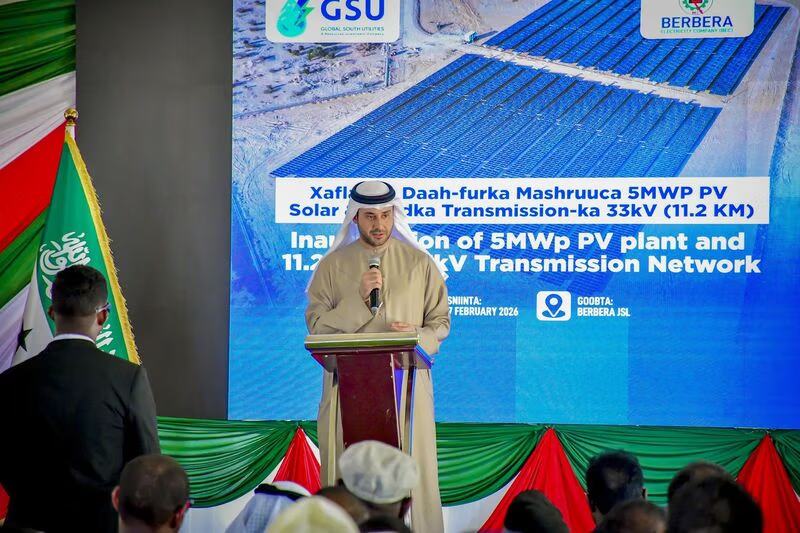
Abu Dhabi-based Global South Utilities (GSU), a Resources Investment company, has inaugurated a 5 MWp grid-connected solar photovoltaic (PV) power plant in Berbera and unveiled the Green Berbera Vision — a structured plan to transition the city’s electricity system from diesel reliance to renewable-powered generation supported by battery storage. The initiative positions Berbera as a model renewable energy transition hub in the Horn of Africa.
The newly launched solar facility, supported by 11.2 km of 33 kV transmission lines and related substations, serves as a key pillar of the Green Berbera Vision.
The project aligns with Somaliland’s National Electrification and Energy Sector Strategy, which seeks to expand reliable electricity access, reduce dependence on imported diesel, and move toward a cleaner, more resilient, and affordable power system.
With an annual generation capacity of approximately 10,000 MWh of clean electricity, the Berbera solar plant can supply power equivalent to nearly 28,000 households each year, significantly enhancing electricity reliability for residential, commercial, and institutional users.
By replacing diesel-based generation, the project is expected to cut around 6,890 metric tonnes of CO₂ emissions annually, contributing to climate action goals while strengthening energy security and lowering fuel costs.
Prior to the inauguration ceremony, Ali Alshimmari, CEO and Managing Director of GSU, attended BEC’s board meeting as Vice Chairman to review the company’s renewable expansion strategy and upcoming phases.
Alshimmari also announced the launch of the Green Berbera Vision, outlining a systematic shift from diesel dependence to a renewable-powered utility model supported by solar PV and battery energy storage systems (BESS).
The Green Berbera Vision represents a fundamental transformation in electricity generation and distribution across the city. Solar PV will serve as the primary source of daytime generation, battery storage will enhance grid stability and enable energy shifting, and diesel generation will transition to a backup role rather than acting as the main supply source.
Through its 45 percent ownership stake in BEC — the sole utility provider in Berbera — GSU is leading this transition in collaboration with local stakeholders. BEC currently operates 20.38 MW of solar capacity along with 2 MWh of battery storage, with plans to double renewable capacity by 2027.
As a strategic port city, Berbera holds a vital position in Somaliland’s trade and logistics network. Through the Green Berbera Vision, it is set to become a leading renewable energy transition hub in East Africa, integrating clean energy infrastructure with long-term economic resilience.
“Green Berbera positions the city not only as a cleaner power system, but as a more competitive regional port economy in the Horn of Africa. Reliable, cost-stable energy is fundamental to trade, logistics, and industrial growth,” Alshimmari said.
He added, “By transitioning from diesel dependency to a solar- and battery-backed utility model, Berbera is emerging as a practical example of how port cities in East Africa can modernise their energy systems while strengthening economic resilience.”