Saudi Arabia’s foreign reserves increased by 3 percent month-on-month to SR1.78 trillion in January, up SR58.7 billion ($15.6 billion) from December and indicating a six-year high.
According to data from the Saudi Central Bank, Argaam stated that the net foreign assets of the Saudi Central Bank increased by 10 percent on an annual basis, amounting to SR155.8 billion.
The reserve assets, which are a vital indicator of economic stability and external financial strength, consist of various key elements.
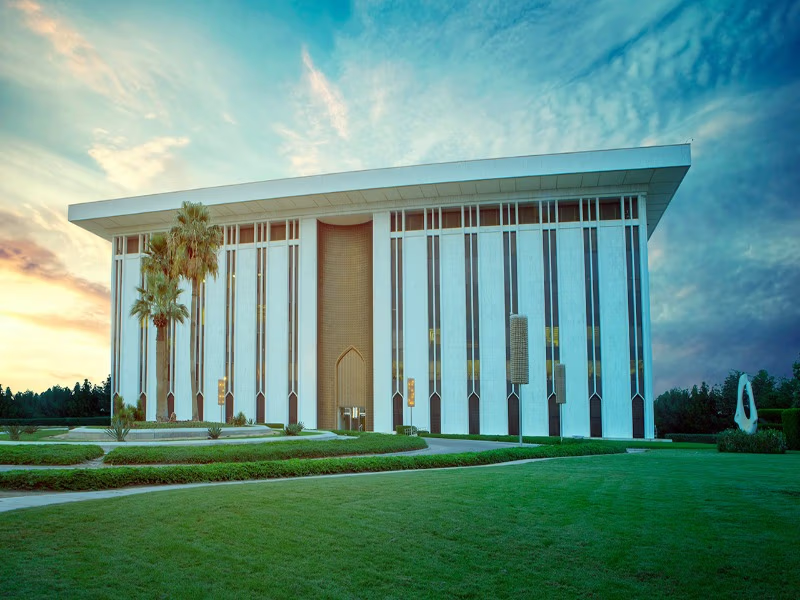
The central bank, also referred to as SAMA, holds the Kingdom’s reserves, which include foreign securities, foreign currency, and bank deposits, and its reserve position at the International Monetary Fund, Special Drawing Rights, and monetary gold.
The increase in reserves is a reflection of the financial position of the Kingdom and its liquidity, as well as in line with Saudi Arabia’s objective of further enhancing its financial safety net as it proceeds to diversify its economy under the Vision 2030.
Foreign currency reserves, representing about 95 percent of total holdings, grew by approximately 10 percent in January 2026 relative to the same period in 2025, reaching SR1.68 trillion.
The reserve value at the IMF expanded 9 percent to stand at SR13.1 billion. Meanwhile, SDRs rose by 5 percent during the period to reach SR80.5 billion.
The amount of the Kingdom’s gold reserves stayed at SR1.62 billion, which is the same amount that the Kingdom has had since January 2008. The Central Bank of Saudi Arabia reports that the Kingdom experienced an increase of 5 percent in its foreign reserve assets monthly in November, reaching SR1.74 trillion.
The overall trend of the reserve assets development demonstrates the robustness of the Saudi Arabian fiscal and monetary buffers. These resources contribute to the stability of the national currency, to ensure the stability of the financial system, and allow the country to overcome economic instability in the world market.
The long-term presence of foreign reserves is an important pillar of the economic stability of the Kingdom. It has a direct positive effect of enhancing investor trust in the peg of the riyal against the US dollar, which is a key monetary policy, as it gives the SAMA sufficient resources to protect the currency whenever required.
Thus, this financial buffer improves the sovereign credit rating of the country, reduces national borrowing rates, and affords a much-needed fiscal buffer to ride the global economic turbulence and still afford its ambitious Vision 2030 transformation programme.