
Official data indicate that Saudi Arabia’s non-oil exports have increased to the highest quarterly level since 2017, recording SR97.5 billion ($25.9 billion) in the fourth quarter of 2025.
According to figures published by the General Authority for Statistics, the figures had increased by 114 percent compared to eight years before, and also surged 18.6 percent year-on-year.
The machinery, electrical equipment, and parts sector came out as the best performer during the last three months of the year 2025, with 23.2 percent of the total non-oil exports and a growth of 78.6 percent year-on-year.
The increase in non-oil exports highlights development in accordance with the vision 2030 of Saudi Arabia, which focuses on diversifying the economy by minimizing the impact of crude oil revenues as well as by enhancing the proportion of non-oil exports to the non-oil gross domestic product to 50 percent by 2030.
The statistics of GASTAT revealed that the ratio of non-oil exports to imports in the Kingdom rose to 39.4 percent in the last quarter of 2025, whereas it had been 34.8 percent in the previous year.
The second-largest non-oil exporter, chemicals, experienced a decline of 6.9 percent in the final quarter of 2025 versus the previous-year quarter, and 13 percent in December versus the previous year.
Whereas total merchandise exports rose by 7.9 percent during the fourth quarter of 2025, oil exports rose at a rate of 3.5 percent.
This reduced the proportion of oil in total exports to 67.5 percent, a decrease relative to 70.4 percent in the fourth quarter of 2024. Eventually, the re-exports increased by 67.4 percent in the quarter, and machinery and electrical equipment comprised almost half of the total.
The Kingdom is projected to advance its merchandise trade surplus by 26.3 percent in the final three months of 2025 relative to the same time in the year 2024, with the aid of a 4.7 percent rise in imports. The trade surplus increased by 7.1 percent year-on-year in December.
However, China remained the largest trading partner of Saudi Arabia, both in exports and imports. During the fourth quarter of 2025, China had 13.1 percent and 27.2 percent of total Saudi exports and imports, respectively.
Japan was the second biggest exporter destination in December, just surpassing China with 11.7 percent. The other major export destinations were the UAE, India, South Korea, and the US. The US and the UAE were in second and third position on the import side.
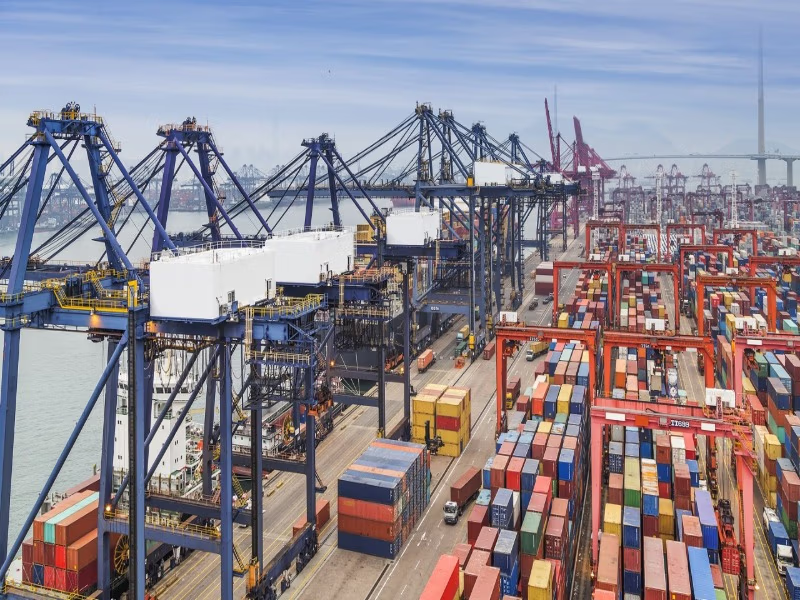
King Abdulaziz Seaport in Dammam has been the major point of imports into the Kingdom, with 25.1 percent of all imported goods being processed in the final quarter of 2025. In the case of non-oil exports, the most important outlet was King Abdulaziz International Airport in Jeddah, which contributed 16 percent of the total.