
The Asia-Pacific markets were down on Tuesday, with the war in Iran threatening to spill into a fourth day, deflating the risk sentiment.
The oil prices prolonged their profits after Iran allegedly declared that it had shut the Strait of Hormuz, with the U.S crude oil futures up 1.4 percent to $72.23 and Brent up 1.87 percent to 79.2 per barrel as of 9.49 p.m. ET Monday.
Kpler data reported that more than 14 million barrels per day transited through the Strait on average last year, representing almost a third of the total seaborne crude exports in the world.
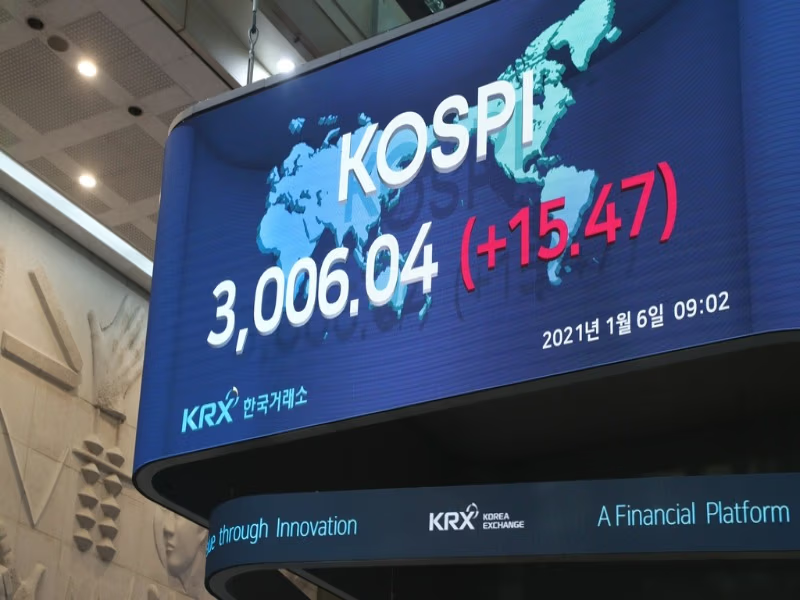
South Korea’s Kospi dropped 5.37 percent, pulled down by 6 percent-plus declines in Samsung Electronics and SK Hynix, while defense players witnessed huge gains, with some stocks up over 20 percent.
Kospi-200 futures contracts declined by over 5 percent, and this provoked a temporary trading curbs in the form of a sidecar, which halted the trade of the futures contract for five minutes.
Meanwhile, Australia’s S&P/ASX 200 declined 1.24 percent, after being one of the few markets on Monday to reach a marginal gain.
Japan’s Nikkei 225 continued losses from the previous session to drop 2.49 percent, weighed down by energy and consumer cyclicals, while the Topix slid 2.47 percent.
However, the Hong Kong Hang Seng index was 0.29 percent down, and the CSI 300 in mainland China declined 0.24 percent.
In the U.S., the S&P 500 rose 0.04 percent overnight and recovered towards the end of the day. The Nasdaq Composite was higher by 0.36 percent, coming back from a 1.6 percent decline.
Dow Jones Industrial Average dropped by 73.14 points or 0.15 percent, settling at 48,904.78. The lowest point of the Dow was almost a 600-point drop.