

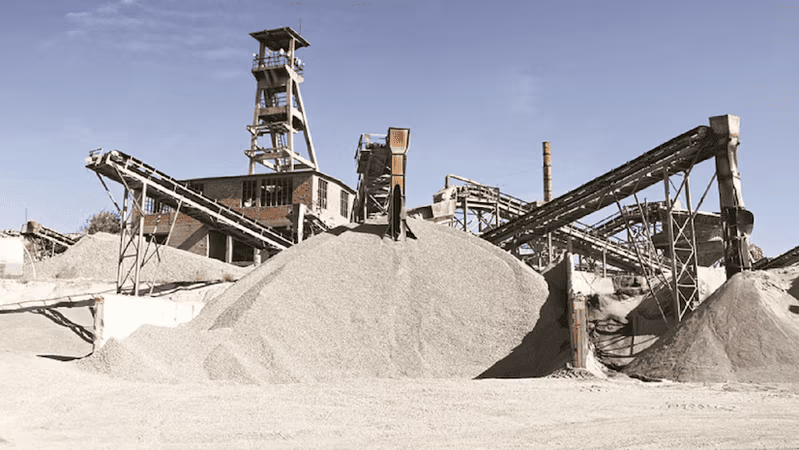
India’s steel and cement supply chain risk is emerging as a concern as escalating geopolitical tensions involving Iran raise the possibility of disruptions to shipping routes and logistics flows across the Gulf region, which plays a critical role in supplying key raw materials used by Indian manufacturers. Industry analysts warn that prolonged instability around strategic maritime corridors, such as the Strait of Hormuz, could affect shipments of limestone and gypsum, two essential inputs for steelmaking and cement production. This situation highlights the India Steel Cement Supply Chain Risk.
One of the most important export hubs for limestone used by Indian steel plants is Mina Saqr Port in Ras Al Khaimah, United Arab Emirates. The port handles large volumes of limestone mined from the emirate’s extensive deposits and shipped to steel producers in India. According to trade data cited in industry reports, the UAE accounted for nearly 79 percent of India’s limestone flux imports in 2023, underscoring India’s reliance on the Gulf region for specialized raw materials used in steel production.
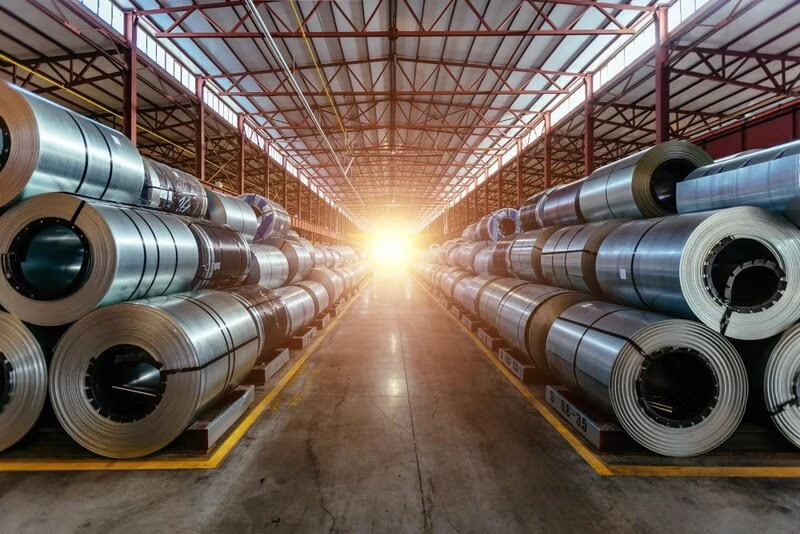
While India has significant domestic limestone reserves, steel producers often import low-silica or specialized limestone used in blast furnace operations to maintain product quality and efficiency. Cement manufacturers, meanwhile, depend on imported gypsum to regulate cement’s setting time during the manufacturing process. Any disruption in maritime logistics, port operations, or shipping routes in the Gulf could therefore increase procurement costs and complicate supply chains for Indian manufacturers.
Companies operating large integrated facilities, including major steel producers and cement manufacturers, rely on predictable cargo movements and stable freight routes to maintain production schedules. If shipments are delayed or diverted due to geopolitical tensions, manufacturers may need to explore alternative sourcing options from countries such as Malaysia, Oman, or Indonesia, although such adjustments can raise transportation costs and extend delivery timelines.
Industry observers note that the situation currently represents a potential supply chain risk rather than an immediate shortage of raw materials. However, uncertainty in maritime logistics and higher shipping insurance premiums during periods of geopolitical instability can still translate into increased operational costs for manufacturers dependent on imported inputs.
The Iran crisis, therefore, underscores how geopolitical developments in the Middle East can ripple across industrial supply chains far beyond the region. With India continuing to expand infrastructure, construction, and manufacturing activity, ensuring stable access to critical raw materials remains an important factor for the country’s steel and cement sectors. Monitoring developments in Gulf shipping routes and maintaining diversified sourcing strategies will be key for companies seeking to mitigate potential disruptions in the months ahead.