
The U.S. crude oil prices on Thursday hit highs of over $80 per barrel, with the intensifying Iran war interfering with the world fuel supply, and traffic in the Strait of Hormuz is stalled with attacks on tankers.
The price of West Texas Intermediate oil rose 8.51 percent, or $6.35, to close at $81.01 per barrel in the biggest single-day gain since May 2020. Global benchmark Brent rises 4.93 percent, or $4.01, to settle at $85.41 per barrel. The U.S. oil prices have increased by approximately 21 percent this week.
The average U.S. gasoline prices in the retail sector have soared almost 27 cents higher than the previous week to an average of 3.25 per gallon, according to the motorist organization AAA. The group claimed that the last time gas prices shot this high was in March 2022 following the Russian invasion of Ukraine.
President Donald Trump stated on Thursday that “further action to reduce pressure on oil is imminent.” Trump said on Tuesday that the U.S. would offer political risk insurance and naval escorts for tankers.
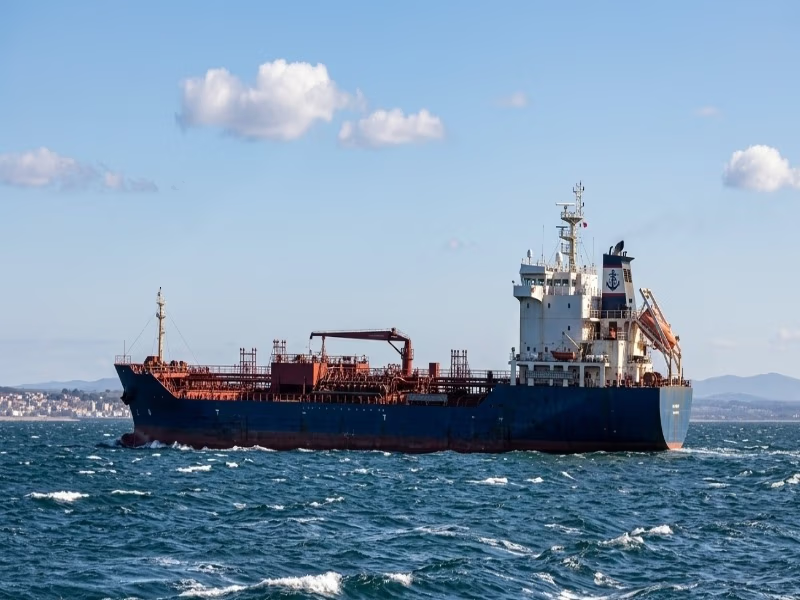
According to a state media report, Iran claimed to have struck an oil tanker with a missile. State media reported that the Revolutionary Guard of Iran issued an order to close the Strait of Hormuz earlier this week and threatened to assault tankers passing through it.
The British Navy on Thursday reported a huge explosion at a tanker at anchor in Iraqi territorial waters. The ship’s master reported seeing a small vessel flee the scene. The crew is safe, and there was no fire reported.
The U.S.-Israeli war against Iran has plunged tanker traffic through the Strait of Hormuz to a standstill as ship owners worry about the volatile security situation. The Strait exports approximately 20 percent of the world’s oil consumption.
White House press secretary Karoline Leavitt told reporters Wednesday that the Trump administration does not have a schedule for when the strait will be safe for commercial shipping again.
Leavitt said when asked during a briefing, “I don’t want to commit to a timeline, but certainly it’s something that is being calculated actively by both the Department of War and the Department of Energy.”