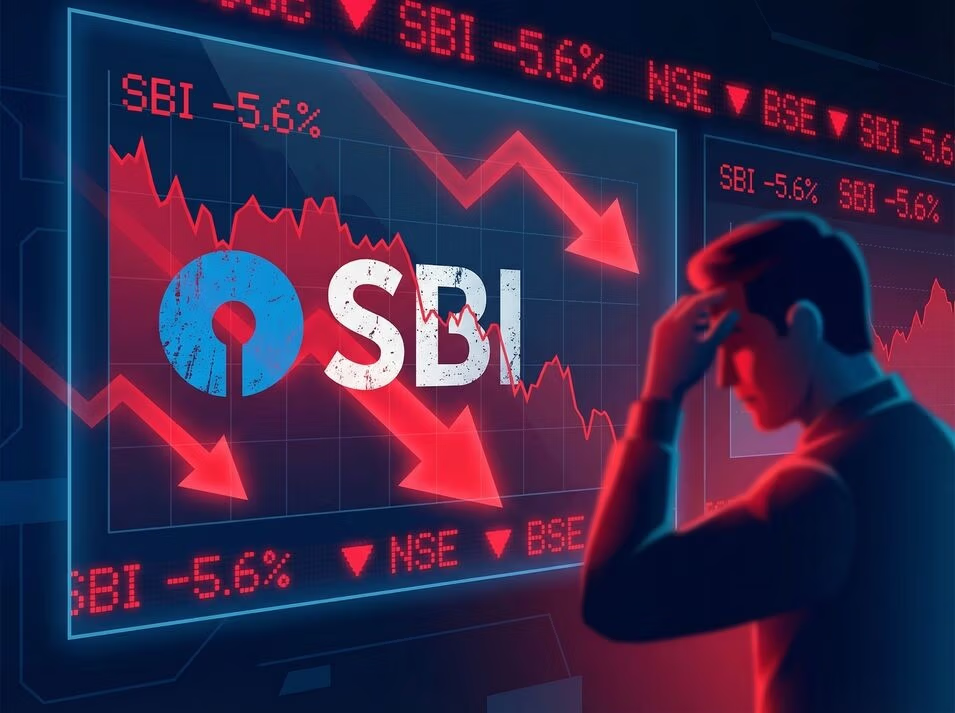
Shares of State Bank of India (SBI) plunged sharply on Monday. The drop has sparked fresh debate among investors on whether to sell or hold the country’s most valuable public sector bank stock.
SBI fell 5.60% to ₹1,079.40 on the National Stock Exchange (NSE). This erased about ₹62,352 crore in market value. The lender’s total market capitalisation slipped below the ₹10 lakh crore mark to roughly ₹9.93 lakh crore.
The slide came as broader Indian markets sold off on Monday. Geopolitical tensions involving Iran, Israel, and the United States triggered a risk‑off mood among traders. Rising crude prices further weakened sentiment.
What Drove SBI’s Sell‑Off
Most analysts link the fall to macroeconomic and global drivers, not a sudden drop in SBI’s fundamentals. The broader BSE PSU Bank index plunged about 5.65%, showing that state‑run bank stocks were hit across the board.
The geopolitical situation in West Asia has pushed crude oil prices above $100 per barrel. This raises concerns about inflation and puts pressure on emerging market stocks like those in India.
Oil importers such as India are particularly sensitive to crude price jumps. The country relies on imported oil for more than 80% of its needs. Spiking energy costs can weaken the rupee and squeeze corporate profits.
Motilal Oswal Still Bullish on SBI
Despite the recent weakness, brokerage house Motilal Oswal Financial Services remains positive on SBI for the long term. The firm has rated the stock “Buy” with a target price of ₹1,300, implying a potential upside of about 9.1% from current levels.
Motilal Oswal said SBI continues to stand out among PSU banks due to strong profit growth and improving asset quality. The recent price drop reflects broader market weakness rather than any deterioration in the bank’s core performance.
Trading Levels and Technical View
On Monday, SBI opened lower and traded as weak sentiment spread across Indian equities. The stock remained within its daily price bands of ₹1,029.20 to ₹1,257.90. Its 52‑week high is ₹1,234.80, while the low during the period was ₹719.20.
Some technical indicators show short‑term bearish pressure. Yet analysts note that the bank’s longer‑term moving averages remain intact, suggesting the downtrend may be temporary.
PSU Bank Stocks Under Pressure
The sell‑off was not limited to SBI. Most public sector bank stocks moved lower as market participants cut risk across banking counters. During the session:
- Union Bank of India lost over 5%
- Bank of India dropped more than 5%
- Indian Bank fell about 5%
- Canara Bank slid close to 5%
- Punjab National Bank and other PSU lenders also traded lower
Broad weakness in PSU banking stocks reflects a wider shift in investor risk appetite amid external headwinds.
What Investors Should Watch Next
Markets will closely watch ongoing geopolitical developments and energy prices in the coming sessions. Any signs of easing tensions or stabilising crude oil could support risk assets, including banking stocks.
Long‑term investors may also weigh SBI’s strong earnings track record and improving asset quality against short‑term volatility.
Disclaimer: This article is for informational purposes and does not constitute financial advice. Investors should consult a qualified financial advisor before making investment decisions.