

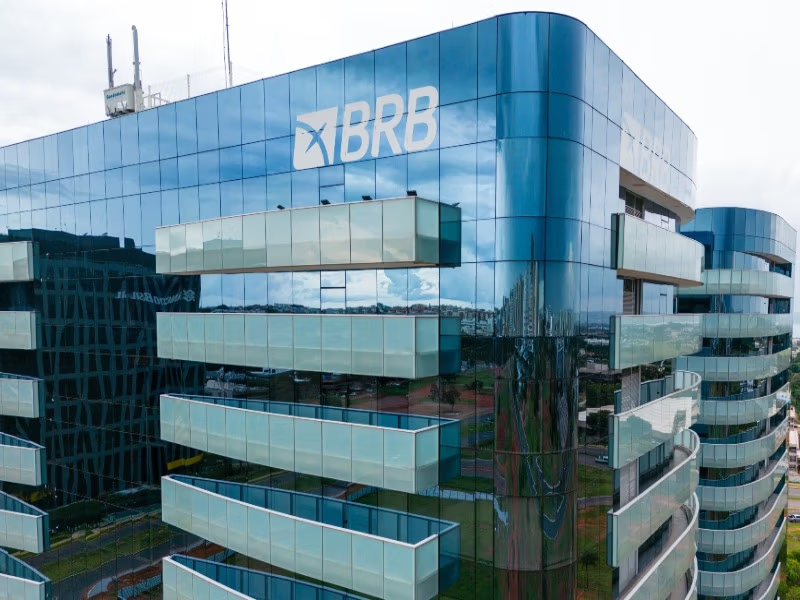
People familiar with the matter reported that Brazilian lender BRB intends to take a 3.3 billion reais ($637.37 million) loan from Brazil’s credit guarantee fund, FGC, by the end of the month to back its capitalization efforts.
BRB is government-controlled by the Federal District government, and it was the subject of the proposed acquisition of Banco Master, which was liquidated in November amid severe liquidity challenges.
The lender is hoping to increase 6.6 billion reais to cover losses associated with supposedly fraudulent credit portfolios acquired by Master, whose owner, Daniel Vorcaro, is already behind bars. Vorcaro has also refuted misconduct through his attorneys.
The FGC, a private agency that guarantees the security of depositor and investor funds in the Brazilian financial system, has already paid out 38.4 billion reais to Banco Master creditors and is currently trying to restore its reserves by getting 32.5 billion reais in advance payments to banks.
However, the BRB loan plan was first reported by the newspaper Valor Económico and independently confirmed by Reuters.
The sources said that the credit request to the FGC must be submitted by the Federal District’s government. In an email to Reuters, Federal District Governor Ibaneis Rocha declined to comment, stating such matters should be handled by BRB itself.
BRB and FGC did not immediately respond to requests for comment. Federal police investigators reported that Master sold BRB 12.2 billion reais in possibly fraudulent credit transactions. The former BRB head, who was the head of negotiations at that time, has refuted any form of wrongdoing.
BRB has already been given the legislative approval to carry out a series of transactions with the aim of stabilizing its finances.
People familiar with the BRB plan reported that the lender is also looking at other ways of capitalizing, such as the formation of real estate funds and divesting a portion of a credit-based subsidiary.
Thus, the loan would be like a line of credit, which would be withdrawn in case of need.