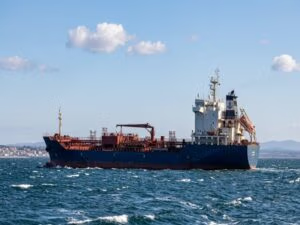

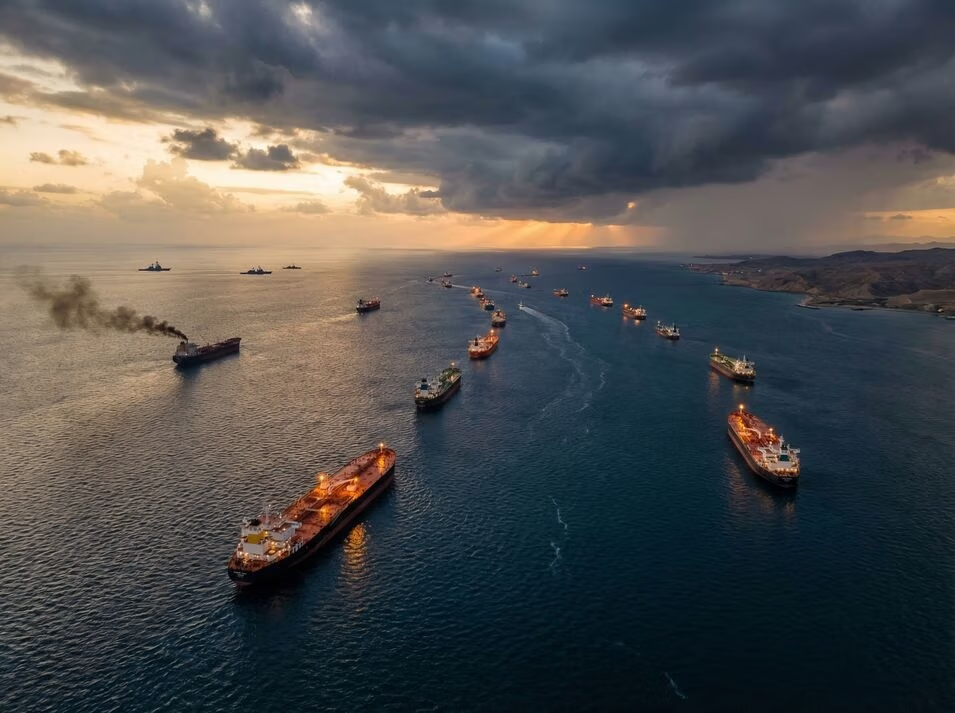
The world’s most important oil shipping route is facing renewed disruption.
Three vessels off Iran’s coast were struck by projectiles on Wednesday, according to the United Kingdom Maritime Trade Operations (UKMTO). The incidents mark the latest escalation in a series of attacks reported in or near the Strait of Hormuz.
The narrow waterway handles a significant share of global energy trade. Any disruption there can quickly ripple across oil markets, freight rates and global inflation expectations.
Three Ships Hit In Latest Maritime Incidents
According to the UKMTO, one vessel reported it had been struck about 11 nautical miles north of Oman while transiting the Strait of Hormuz.
The impact caused a fire onboard and forced the crew to evacuate.
Two other incidents were reported earlier on Wednesday morning. One vessel was struck by a projectile about 50 nautical miles northwest of Dubai. Another ship sustained damage off the coast of the United Arab Emirates.
UKMTO urged ships operating in the region to transit with caution and report any suspicious activity while authorities investigate the attacks.
Shipping Through Hormuz Slows Sharply
Shipping activity through the Strait of Hormuz has slowed dramatically since the United States and Israel launched airstrikes on Iran on February 28.
Iran has responded by targeting vessels attempting to pass through the strait. Several incidents have been reported in recent days, raising concern among shipping companies and energy traders.
The waterway connects the Persian Gulf with the Gulf of Oman and the wider Indian Ocean. It is one of the most critical energy chokepoints in the world.
Energy analysts estimate that roughly 20 percent of global oil and gas shipments normally pass through the corridor. Major exporters including Saudi Arabia, Iraq, the United Arab Emirates and Kuwait rely heavily on the route to reach international markets.
Even temporary disruptions can push oil prices higher and increase shipping insurance costs.
US Navy Escalates Maritime Response
Military activity in the region has also intensified.
On Tuesday, forces under United States Central Command sank several Iranian vessels near the Strait of Hormuz, including 16 minelayers.
The operation came amid growing fears that naval mines could be deployed in the shipping channel.
Earlier, Donald Trump warned that if Iran had placed any mines in the waterway, “we want them removed, IMMEDIATELY!”
Surge In Maritime Security Alerts
The latest incidents are part of a wider surge in maritime security alerts across the region.
The UKMTO said it had received 17 reports affecting vessels operating in the Persian Gulf, Strait of Hormuz and Gulf of Oman between February 28 and March 11.
These include 13 reported attacks and four cases of suspicious activity.
For global markets, the developments are closely watched. The Strait of Hormuz sits at the heart of global energy logistics. Any prolonged disruption could tighten oil supply, raise tanker costs and increase volatility in energy prices.
With tensions still high and investigations ongoing, shipping companies and energy traders are now bracing for further instability along one of the world’s most critical trade routes.