
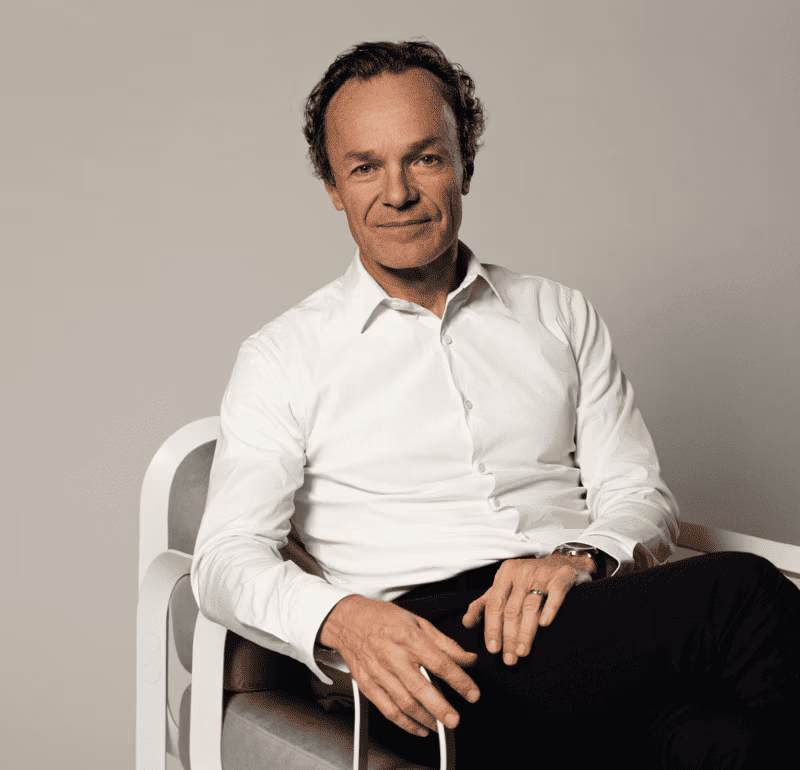
Dubai’s rapidly evolving creative economy is beginning to produce a new generation of homegrown brands that blend craftsmanship, engineering, and artistic vision. Among them is Yla, a UAE-based design atelier founded by Benoit Rondard, a long-time Dubai resident whose journey from mechanical engineering to contemporary furniture design reflects the city’s unique entrepreneurial spirit.
For Rondard, building Yla in Dubai is not just a business venture but a reflection of the opportunities the UAE offers founders who want to turn ideas into tangible creations.
“Building Yla from Dubai is both a responsibility and an opportunity,” he says. “The UAE has created an environment where entrepreneurship, design, and industry can meet in a very direct way.”
From Engineering Precision To Design Expression
Born in Lyon, France, Rondard grew up surrounded by creativity. With parents working in interior architecture and fashion design, artistic expression was a constant presence in his early life. Yet his professional path initially followed a technical direction. He earned a Master’s degree in mechanical engineering from École Centrale de Nantes before building a career in engineering and metalwork.
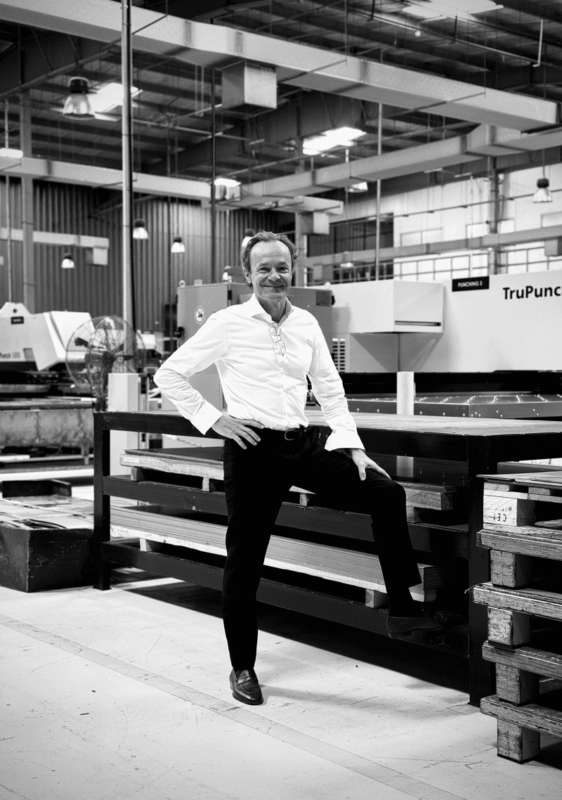
Today, Rondard serves as General Manager of Eurotech Dubai, a metalworking company where he later became a majority shareholder. Over time, his technical expertise began to intersect with a growing fascination for design.
That intersection ultimately led to the creation of Yla, a brand that explores how metal can serve not only as a structural material but also as an emotional and sculptural element in interior spaces.
The idea first took shape in 2020, when Rondard began sketching contemporary furniture concepts inspired by the expressive possibilities of metal. To advance the project, he initiated collaborations with design students and mentors at a leading French design school, then partnered with professional designers to refine the concept.
Crafting A Homegrown Design Brand In Dubai
What distinguishes Yla is its commitment to local production. Conceived and developed in Dubai, the brand produces its pieces in Jebel Ali using stainless steel and aluminium, bringing design, engineering, and manufacturing into close proximity.
This model allows the team to experiment rapidly, refine designs, and maintain a high level of craftsmanship.
“For us, being a homegrown brand means contributing to the ecosystem by producing locally and demonstrating that high-quality design can emerge from this region,” Rondard explains.
The approach mirrors the broader ambition of the UAE itself, a country that has increasingly positioned itself as a hub for innovation, culture, and entrepreneurship.
“We are grateful to build the brand here because the country genuinely supports new initiatives and creative industries,” he adds.
Designing Through Resilience
In a world shaped by shifting geopolitical dynamics and evolving global markets, adaptability has become a critical skill for founders.
Rondard believes resilience is essential not only for navigating uncertainty but also for maintaining long-term creative momentum.
“Resilience and adaptability are essential qualities for any company today,” he says. “The recent events remind us that businesses must remain focused, flexible, and grounded.”
For Yla, that means continuing to build steadily, nurturing collaborations with architects and designers, and remaining open to new creative partnerships.
Rondard also points to the UAE’s stability as a key factor enabling businesses to focus on long-term development.
“The country has consistently demonstrated its ability to manage complex situations while maintaining a strong environment for business and creativity.”
Dubai As A Global Platform For Creative Brands
Few cities offer founders the ability to design, manufacture, and present products to a global audience from a single location. Dubai’s international connectivity and entrepreneurial ecosystem have made it an increasingly influential hub for creative industries.
“Dubai offers a unique combination of infrastructure, international connectivity, and entrepreneurial energy,” Rondard says.
Designers, architects, investors, and entrepreneurs from across the world operate in the city, creating a fertile environment for collaboration and innovation.
For Yla, this international network is particularly valuable. The brand’s pieces are inspired by nature and contemporary living, yet they are presented to a global audience of architects, interior designers, and hospitality professionals who pass through Dubai every day.
“In that sense, the city naturally functions as a platform for international visibility,” Rondard notes.
Inside Yla’s Design Philosophy
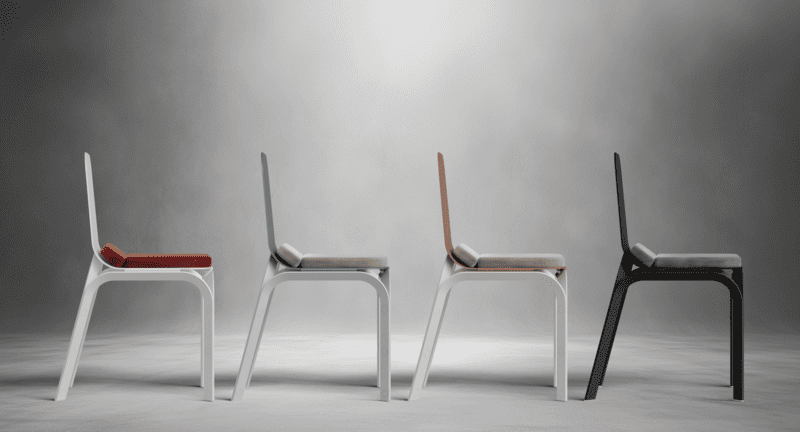
Yla positions itself at the intersection of engineering precision and artistic expression. The brand’s debut collection, Audace, reflects this philosophy through sculptural furniture pieces crafted from matte metals and tactile fabrics.
Rather than treating furniture purely as functional objects, the brand aims to transform them into visual anchors within interior spaces.
Rondard describes the project as a “transformative journey that is a testament to artistic vision and engineering ingenuity.”
His broader ambition is to explore how metal, traditionally associated with industrial design, can evoke emotion and atmosphere within contemporary interiors.
“I’m passionate about further revealing our technical know-how and excellence in sheet-metal transformation,” he says. “Furniture can become sculptural anchors for interior spaces.”
The Rise Of Homegrown Design In The Middle East
As the Middle East continues to invest heavily in architecture, culture, and design, locally developed brands are increasingly playing a more visible role in shaping the region’s creative identity.
Rondard believes that the next decade will see a new wave of design-driven companies emerging from the region, combining global ambition with local creativity.
“Homegrown brands will play an increasingly important role in defining the region’s creative identity,” he says.
For Yla, the journey is just beginning. With Dubai as its base and craftsmanship at its core, the brand aims to contribute to a broader movement of creative enterprises emerging from the UAE.
As the region continues to position itself as a global hub for culture and design, founders like Benoit Rondard are demonstrating that the Middle East is not only a marketplace for creativity but a place where new design languages can take shape and reach the world.