
The global food crisis is no longer a distant risk discussed in policy circles. It is quietly taking shape in the background of a conflict that, at first glance, appears to be about oil, territory, and geopolitical leverage.
But wars in today’s interconnected economy rarely stay confined to the battlefield. They ripple outward, often in less visible but more enduring ways. And one of the most consequential ripple effects now emerging is on the global food system.
Oil price spikes grab headlines instantly. Food crises do not.
They build slowly. First through rising input costs, then through delayed planting decisions, and eventually through lower harvests. By the time the impact becomes visible on supermarket shelves or in inflation data, the damage is already done.
What makes the current situation particularly concerning is that the stress is appearing at the very foundation of food production, not just in distribution.
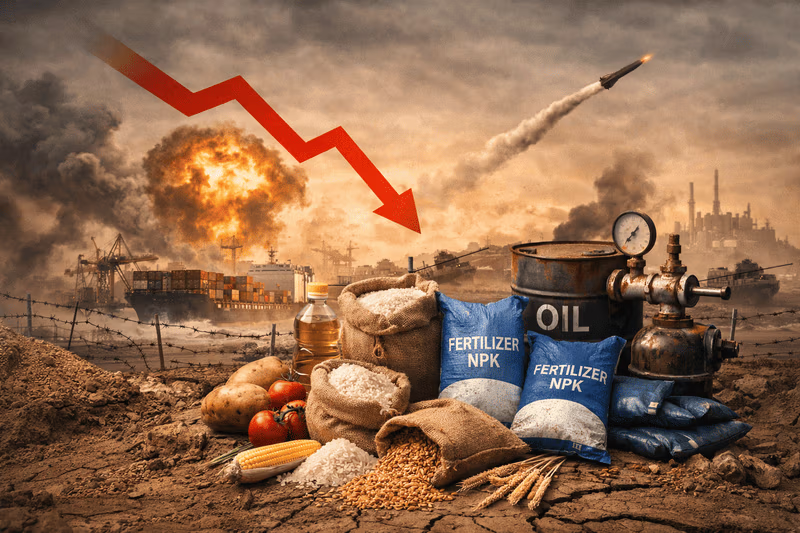
Modern agriculture is heavily dependent on fertilisers, and fertilisers are heavily dependent on energy.
When energy prices surge, fertiliser becomes more expensive to produce and transport. When supply chains are disrupted, availability itself becomes uncertain. Farmers then face a difficult choice: absorb higher costs or reduce usage.
Either way, the outcome is the same. Lower productivity.
This is how a geopolitical conflict thousands of kilometres away can quietly determine how much wheat is harvested, how much rice is exported, and ultimately how much food costs.
The world has seen food shocks before. But this one carries a different texture.
It is unfolding at a time when:
- Many economies are still recovering from previous supply disruptions
- Fiscal space in developing nations is limited
- Climate variability is already pressuring agricultural output
Layer a geopolitical shock on top of these existing stresses, and the system begins to look fragile.
The concern is not just about higher prices. It is about resilience. Or the lack of it.
Food inflation is not just an economic statistic. It is a deeply unequal force.
In wealthier economies, it may mean higher grocery bills. In lower-income countries, it can mean reduced consumption, nutritional deficits, and, in extreme cases, hunger.
For governments operating with limited fiscal flexibility, the ability to cushion these shocks through subsidies or imports is constrained. That is where the risk becomes systemic.
What begins as an energy shock can evolve into a broader economic cycle.
Higher oil prices raise fertiliser costs. Higher fertiliser costs reduce crop yields. Lower yields push up food prices. Rising food prices fuel inflation. And persistent inflation forces tighter monetary policy.
Each step feeds into the next.
This is not a short-term disturbance. It is a chain reaction.
For years, energy security has dominated strategic thinking. The current moment suggests that food security deserves equal urgency.
Countries may need to rethink:
- Strategic reserves beyond oil, including fertilisers and grains
- Diversification of supply chains
- Investment in more resilient agricultural systems
Because in a globalised economy, food security is not just a domestic issue. It is a geopolitical one.
The most dangerous crises are often the ones that unfold without immediate visibility.
While markets react sharply to oil and equities, the real test may lie months ahead, when harvest cycles reflect today’s disruptions and food prices begin to tell a more complete story.
For now, the signals are early but unmistakable.
The world is not just dealing with a war over energy. It may be entering a phase where access to food becomes the more defining challenge.