
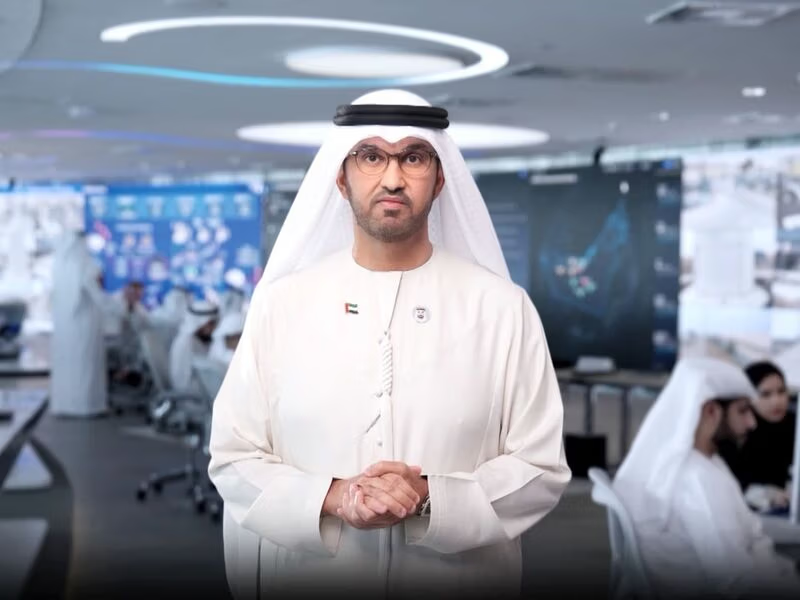
UAE Minister of Industry and Advanced Technology and ADNOC Group CEO Dr Sultan Al Jaber warned that any attempt to weaponise the Strait of Hormuz would amount to “economic terrorism against every nation,” underscoring the global stakes of escalating tensions in the region.
Speaking at CERAWeek in Houston, Al Jaber said the strategic waterway remains one of the most critical arteries of the global economy, with disruptions carrying consequences far beyond energy markets.
“Energy security is not just a slogan, it’s the difference between lights on and lights off,” he said, stressing that the Strait must remain open to ensure global stability.
Highlighting the scale of dependence on the route, Al Jaber noted that nearly a fifth of the world’s oil and gas, over a third of fertiliser supplies, and significant volumes of petrochemicals and industrial metals pass through the Strait.
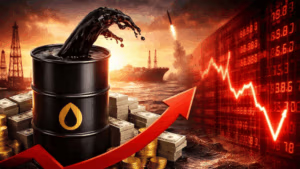
“When Hormuz is squeezed, the pressure is immediately felt around the world,” he said, adding that oil prices have already surged sharply in recent weeks, raising costs for households and businesses globally.
“So let me be absolutely clear. Weaponising the Strait of Hormuz is not an act of aggression against one nation. It is economic terrorism against every nation,” Al Jaber said, warning that no country should be allowed to disrupt the passage.
He added that the current crisis is not driven by supply constraints but by security risks, arguing that the only durable solution is to keep the Strait open.
Al Jaber said the UAE has taken extensive measures to safeguard its infrastructure and ensure continuity of supply, even as regional tensions have intensified. He noted that ADNOC has implemented extraordinary steps to protect operations and maintain commitments to customers.
The minister also pointed to the UAE’s long-term investments in infrastructure, diversification of supply routes, and strategic partnerships as key factors underpinning its resilience.
“For the UAE, partnership is not just something we do. It is who we are,” he said, adding that ADNOC, Masdar, and XRG have collectively invested more than $85 billion in US energy assets.
Looking ahead, Al Jaber said the crisis reflects a broader divide between instability and cooperation, urging global stakeholders to prioritise collaboration to ensure energy security.
“Stability does not happen on its own. It must be built deliberately and collectively,” he said, inviting industry leaders to continue discussions at ADIPEC later this year.
The remarks come amid heightened geopolitical tensions in West Asia, with markets closely watching developments around the Strait of Hormuz, a key chokepoint for global energy flows.
–Input WAM