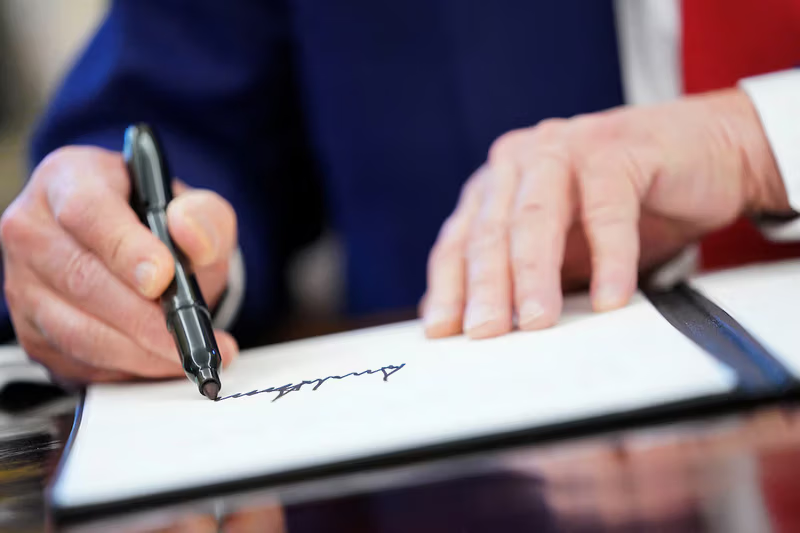
The United States will introduce a historic change to its paper currency, with President Donald Trump’s signature set to appear on new banknotes, marking the first time a sitting president’s name will feature on U.S. money.
The move, announced by the Treasury Department, will replace the long-standing practice of including the U.S. Treasurer’s signature on federal currency, ending a tradition in place since 1861.
Under the new design, Trump’s signature will appear alongside that of Treasury Secretary Scott Bessent. The first redesigned $100 bills are expected to be printed as early as June, with other denominations to follow gradually.
The decision is being framed as part of broader commemorations for the United States’ 250th anniversary in 2026, with officials describing the change as symbolic of the country’s economic strength and national identity.
“There is no more powerful way to recognize the historic achievements of our great country and President Donald J. Trump than U.S. dollar bills bearing his name, and it is only appropriate that this historic currency be issued at the Semiquincentennial,” Bessent said.
Traditionally, U.S. currency has carried the signatures of the Treasury Secretary and the Treasurer, a legal requirement tied to the authentication of Federal Reserve notes. The removal of the treasurer’s signature marks a significant institutional shift in how U.S. currency is designed and authorised.
The change is also part of a wider effort by the Trump administration to place the president’s name on national symbols and institutions, including proposals for commemorative coins and other federal initiatives.
While existing currency bearing previous signatures will remain in circulation, the new notes are expected to gradually enter the financial system over the coming months.
The development represents one of the most notable changes to U.S. currency design in decades, blending symbolic politics with monetary tradition at a time when the country prepares to mark a major historical milestone.