
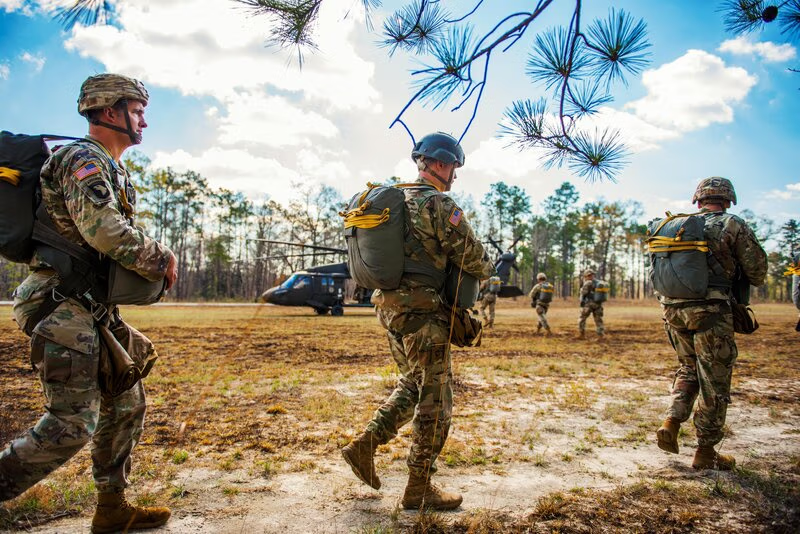
The United States has significantly expanded its military presence in the Middle East, deploying thousands of elite paratroopers in a move that underscores rising tensions and a growing readiness for potential escalation in the region.
The deployment, led by elements of the 82nd Airborne Division, adds a highly mobile, rapid-response force to an already expanding U.S. footprint that includes naval assets, Marines, and air support. The reinforcement reflects a strategic shift toward heightened operational preparedness as geopolitical risks intensify.
Officials indicate the deployment is designed to provide flexibility across a range of potential scenarios, from securing critical infrastructure to supporting broader contingency operations. The positioning of such forces enhances the United States’ ability to respond quickly to developments in a region that remains central to global energy flows and security dynamics.
The buildup comes amid escalating tensions involving Iran, with recent developments raising concerns about the stability of key transit routes and energy infrastructure. Of particular importance is the Strait of Hormuz, a narrow but vital corridor through which a significant share of the world’s crude oil supply passes. Any disruption to this route would have immediate and far-reaching implications for global markets.
Military analysts note that the addition of airborne troops strengthens the U.S. capacity to conduct rapid deployment operations, including securing strategic sites or reinforcing allied positions. The presence of such forces also serves as a deterrent, signaling readiness without necessarily committing to immediate offensive action.
The troop movement follows a series of incremental deployments over recent weeks, including amphibious forces and additional naval assets in the Gulf. Together, these steps point to a coordinated effort to establish layered military capabilities across land, sea, and air, ensuring that multiple strategic options remain available.
Despite the escalation in military posture, diplomatic signals have not disappeared. Donald Trump has indicated that discussions with Iran may still be possible, suggesting that Washington continues to pursue a dual-track approach that combines negotiation with strategic pressure.
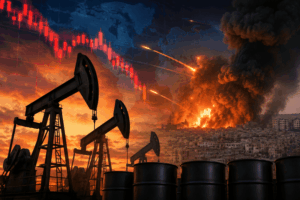
The evolving situation has already begun to influence global markets, particularly in energy, where concerns over supply disruptions have pushed oil prices higher. Investors are closely monitoring developments, with any further escalation likely to amplify volatility across commodities, equities, and currencies.
For policymakers and market participants alike, the deployment marks a critical juncture. As military readiness increases alongside diplomatic uncertainty, the balance between deterrence and escalation will shape both regional stability and the broader economic outlook in the weeks ahead.