

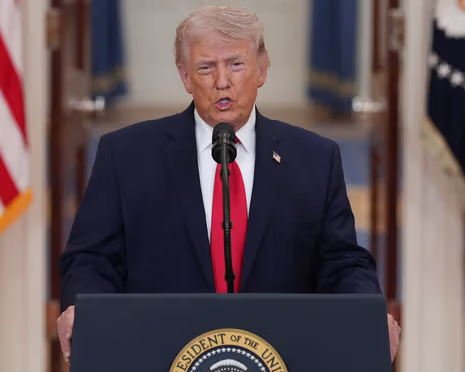
Oil prices surged, and Asian equity markets declined after U.S. President Donald Trump signaled an escalation in military operations against Iran, unsettling investors who had been anticipating a clearer path toward de-escalation.
In his first major address since the conflict began, Trump said the United States would “hit [Iran] extremely hard” over the next two to three weeks, while indicating that core military objectives were nearing completion. However, the speech fell short of outlining a concrete timeline for ending hostilities, triggering renewed uncertainty across global markets.
#WATCH | Addressing the nation, US President Donald Trump says, "World War I lasted one year, seven months, and five days. World War II lasted for three years, eight months, and 25 days. The Korean War lasted for three years, one month, and two days. The Vietnam War lasted for 19… pic.twitter.com/2HdnnOszTk
— ANI (@ANI) April 2, 2026
Brent crude prices rose sharply, climbing nearly 5 percent to around $106 per barrel, as concerns over prolonged supply disruptions intensified. The lack of clarity about reopening the Strait of Hormuz, a critical global oil transit route, heightened fears of sustained pressure on energy markets.
Asian equities reacted negatively. Japan’s Nikkei 225 fell close to 2 percent, while South Korea’s Kospi dropped more than 3 percent, reflecting a broad risk-off sentiment across the region. Markets in Hong Kong, China, and Australia also recorded losses, underscoring the global impact of renewed geopolitical uncertainty.
The reaction marked a reversal from earlier optimism, when markets had rallied on expectations that the conflict could wind down within weeks. Trump’s latest remarks, which emphasized continued military pressure rather than imminent withdrawal, dampened those hopes and reignited concerns over inflation and growth.
Analysts noted that investors had been looking for a clear ceasefire framework or diplomatic roadmap. Instead, the speech reinforced the likelihood of an extended conflict, with potential implications for energy prices, supply chains, and global economic stability.
The U.S. dollar strengthened following the address, reflecting a shift toward safe-haven assets, while commodities saw mixed movement, with gold easing even as oil prices surged.
For global markets, the episode highlights the sensitivity of asset prices to geopolitical signaling. While earlier comments suggesting a near-term exit had supported equities and eased oil prices, the latest rhetoric underscores how quickly sentiment can reverse when uncertainty returns.
As the conflict enters a critical phase, market direction is likely to remain closely tied to developments in the Middle East, particularly any signals around military escalation, supply disruptions, and the future of key energy corridors.