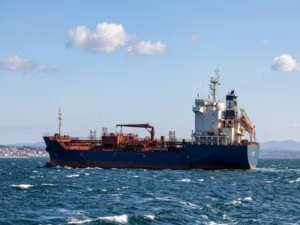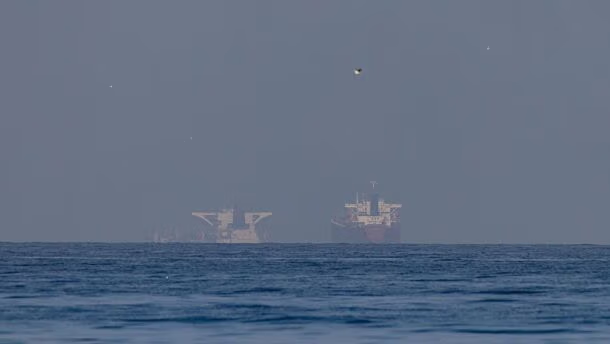
Hormuz Strait ceasefire developments offered a degree of relief to global markets after Iran signaled that safe passage through the critical shipping corridor could remain possible, even as a temporary two-week pause in hostilities takes shape.
The indication comes amid heightened tensions in the Middle East that had raised concerns over potential disruptions to oil flows through the Strait of Hormuz, a vital artery for global energy trade. Any threat to this route typically reverberates quickly across crude markets, freight costs, and insurance premiums.
Iran’s messaging that transit may continue appears calibrated to steady markets and avoid a sharp escalation in oil prices. For energy traders and shipping operators, the immediate takeaway is that the worst-case scenario of a full disruption remains off the table for now, though risks have not disappeared.
The ceasefire itself is limited in scope and duration, underscoring its role as a temporary de-escalation rather than a lasting solution. With a two-week window in place, attention is likely to shift toward whether the pause can be extended or whether tensions could re-emerge once it lapses.
Oil markets reacted cautiously, with prices stabilizing after recent volatility driven by geopolitical risk. The Strait of Hormuz carries a substantial portion of the world’s seaborne crude, making even the perception of disruption enough to trigger sharp movements in global benchmarks.
The current situation reflects a familiar pattern in energy markets, where short-term diplomatic signals can ease immediate pressure but do little to resolve underlying uncertainties. Traders remain sensitive to any shift in tone or positioning, particularly in a region where escalation risks can materialize quickly.
For now, the combination of a ceasefire framework and assurances around shipping lanes has provided some breathing room. However, the broader outlook remains contingent on how the situation evolves, with markets likely to stay reactive to developments affecting one of the world’s most strategically important maritime routes.