

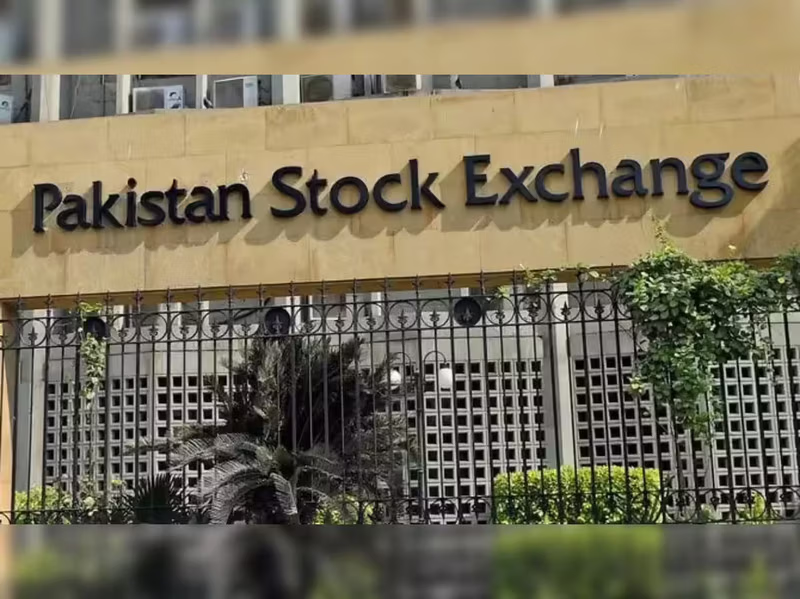
Pakistan stock market rally gathered extraordinary momentum on Wednesday, with the benchmark KSE-100 index jumping more than 12,000 points in intraday trade, triggering a temporary halt as buying pressure surged across sectors.
The sharp move followed easing geopolitical tensions in the Middle East after a ceasefire agreement reduced fears of prolonged disruption to global oil supply chains. Investors reacted swiftly, shifting back into risk assets after weeks of volatility driven by conflict-related uncertainty.
The rally, one of the largest single-day gains in the market’s history, saw the index rise by more than 8 percent within hours of opening, with broad-based participation across banking, energy, and industrial stocks.
Trading was briefly suspended in line with market safeguards designed to curb excessive volatility, underscoring the scale and speed of the surge.
The rebound marks a sharp reversal from recent declines, when escalating tensions had triggered heavy sell-offs and eroded investor confidence. In previous sessions, the market had experienced significant swings, including one of its steepest single-day losses as geopolitical risks intensified.
Analysts said the ceasefire has helped ease concerns around oil prices and inflation, both of which are critical for Pakistan’s macroeconomic stability. Lower energy costs tend to relieve pressure on the country’s external balances, while improving sentiment can attract renewed investor participation.
The scale of the rally also reflects how closely frontier markets such as Pakistan are tied to global risk cycles. With limited insulation from external shocks, shifts in geopolitical risk often translate quickly into market movements, both on the downside and the upside.
Beyond the immediate trigger, domestic factors also contributed to the rebound. Stable foreign exchange reserves, recent debt repayments, and expectations of continued multilateral support have provided a degree of underlying confidence, amplifying the impact of improving global sentiment.
Even so, the rally’s sustainability remains uncertain. Market participants caution that the current momentum is largely sentiment-driven and dependent on the durability of the ceasefire. Any renewed escalation could quickly reverse gains, particularly in a market that has shown sensitivity to external developments.
For now, the surge highlights a rapid shift in investor positioning, with risk appetite returning as geopolitical pressures ease, even if only temporarily.