
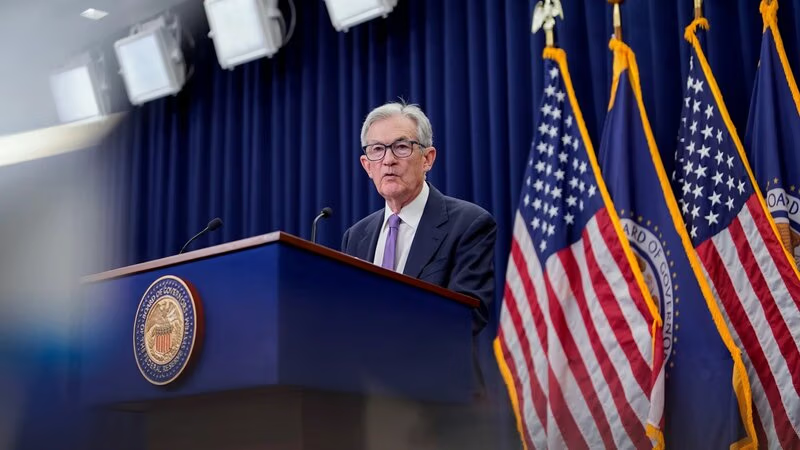
The Federal Reserve is widely expected to keep interest rates unchanged this week, as policymakers navigate a complex mix of elevated energy prices, geopolitical tensions, and persistent inflation risks in what could be Jerome Powell’s final meeting as chair.
The Federal Open Market Committee is likely to maintain its benchmark rate in the 3.50%–3.75% range, where it has remained since December, reflecting a cautious stance as uncertainty clouds the economic outlook. The decision comes against the backdrop of the ongoing US-Iran standoff and disruptions around the Strait of Hormuz, which have kept energy markets volatile and inflation pressures elevated.
Powell’s tenure appears to be nearing its end, with a May 15 exit increasingly likely following progress in the confirmation process of his successor, Kevin Warsh. While central bank chiefs typically step down from the board alongside their chairmanship, Powell has indicated he may remain a governor, a decision that could extend his influence through early 2028.
The upcoming policy meeting is expected to focus less on immediate action and more on forward guidance. While a rate hold is largely priced in, markets will be closely watching for any shift in tone, particularly whether the Fed signals openness to rate hikes if inflation continues to accelerate.
The inflation outlook has become more uncertain following a sharp rise in oil prices. Brent crude has surged roughly 50% since late February, pushing up fuel costs and contributing to the largest increase in US consumer prices in nearly four years. With supply disruptions persisting, policymakers are increasingly concerned about the risk of inflation becoming entrenched.
At the same time, the Fed faces a delicate balancing act. While inflation risks are rising, there are also signs of softening in the labor market, raising the specter of a stagflation-like scenario. Officials have acknowledged that such a combination complicates monetary policy decisions, potentially requiring the central bank to hold rates steady for longer than previously anticipated.
Recent commentary from Fed officials suggests a shift in internal debate. While earlier expectations leaned toward rate cuts later this year, the current environment has reduced that likelihood, with markets now anticipating that borrowing costs could remain elevated well into 2027.
The key question heading into the meeting is whether the Fed adjusts its policy language to reflect a more balanced risk outlook, acknowledging that the next move in rates could be upward rather than downward. Such a shift would mark a notable change in tone and could significantly influence market expectations.
For Powell, the meeting carries added weight. Beyond the policy decision, his post-meeting press conference may offer insight into both the Fed’s evolving strategy and his own future at the central bank, as questions linger about whether he will remain at the institution beyond his term as chair.
With geopolitical tensions unresolved and inflation pressures still building, the Fed’s message this week is likely to emphasize caution, flexibility, and a readiness to respond as risks evolve.