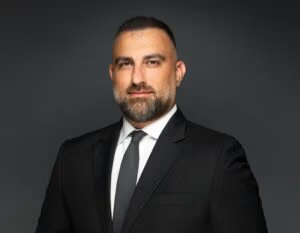
In an era marked by geopolitical instability, economic uncertainty, and constant disruption, leadership is increasingly being tested not during periods of stability but in moments where information is incomplete and pressure is overwhelming.
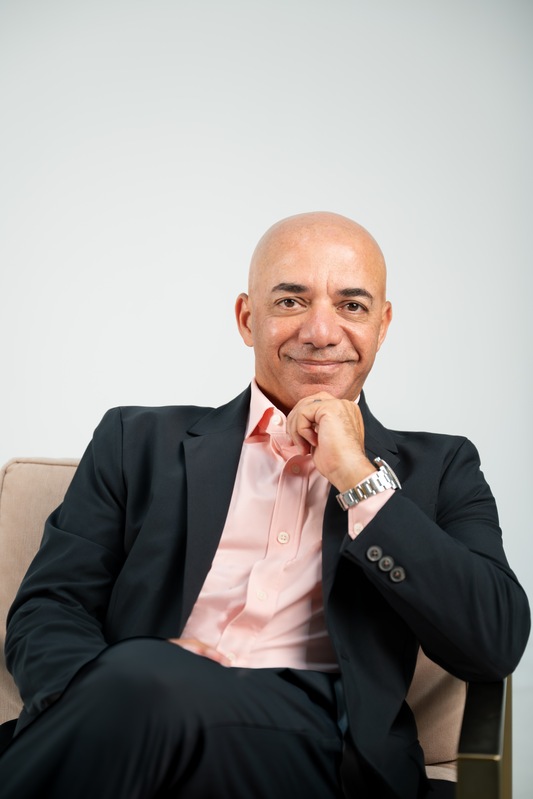
For Ayman Gomaa, those lessons were learned far from corporate boardrooms.
The U.S. Special Operations veteran, leadership educator, and founder of Acacia Innovations Technology has spent years operating in some of the world’s most high-pressure environments, experiences that now shape his approach to crisis leadership, decision-making, and organizational resilience.
In an interview with The Finance 360, Gomaa discussed why many executives struggle under pressure, how trust is built amid uncertainty, and why emotional regulation may become the defining leadership skill of the future.
Q: You’ve operated in some of the most high-pressure environments globally. How do you define a crisis, and where do most leaders get it wrong?
A crisis is what happens when time, information, and certainty collapse at the same moment. That is different from a problem. A problem you can solve with effort. A crisis demands that you act before you have the facts you would want.
Where most leaders get it wrong is that they skip straight to action. Most executive failures in crisis are not failures of courage. They are failures of clarity. People act on assumptions they never name, then defend the resulting decision rather than the truth.
Q: Many leaders are well-trained but struggle under real pressure. What is the gap between leadership theory and execution?
Theory assumes you have time, information, and emotional bandwidth. Real pressure removes all three.
I have watched senior executives freeze on decisions they had rehearsed a hundred times in slide decks because the moment the consequences became personal, the framework evaporated and only the human was left.
The fix is not more reading. It is reps under load. You have to know exactly where your thinking breaks.
Q: You describe a crisis as a source of data and opportunity. How can leaders practically shift their mindset during uncertainty?
The shift starts with one question. Instead of asking, “Why is this happening to me?” ask, “What is this telling me?”
Most leaders skip the step of identifying assumptions, and that is where most bad decisions are born. Crisis exposes what was already broken, whether that is weak processes, untested assumptions, or misaligned teams.
People accept changes during a crisis that they would have resisted for years before it. Stay composed long enough to see the opening, and you can fix in ninety days what would have taken three years in calm water.
Q: Your experience during a life-threatening mission in Africa became central to your philosophy on trust. What did that moment teach you?
I was shot, bleeding out, alone on the side of a road in an African country. A local security guard emerged from a compound toward me. I had a single decision: shoot him or trust him. I trusted. He saved my life.
That moment gave me what I call the 3Ps of Trust: Predictability, Purpose, and Principles.
Boardrooms run on the same three. Teams are constantly reading leaders for predictability. They are scanning for purpose alignment. And they are watching whether principles hold under pressure or only when convenient.
Trust is not built in the moment. It is deposited in advance and withdrawn under fire.
Q: In corporate crises, many leaders default to damage control. What should they focus on in the first 24 hours instead?
Damage control protects yesterday. Leadership shapes tomorrow.
In the first twenty-four hours, three things matter: stabilize, communicate, and keep decisions reversible until you have facts. Premature commitment is one of the most expensive mistakes leaders make early in a crisis.
Most executives confuse activity with progress. The first twenty-four hours are a posture, not a deliverable. Get the posture right, and the rest of the playbook works.
Q: You often say self-control is more important than controlling the situation itself. Why?
You cannot lead an environment you cannot lead yourself in. Calm is contagious. So is panic.
Teams calibrate to their leader’s nervous system. If you are spinning, they are spinning. If you are genuinely composed, they get permission to think clearly.
Self-control is not suppression. It is converting pressure into focused output instead of an emotional reaction.
Q: What separates teams that merely survive crises from those that emerge stronger?
The surviving team has a hierarchy. The stronger team has trust.
Stronger teams have people who can make decisions independently because they understand intent, not just instructions.
And after the crisis, they debrief honestly, including what leadership got wrong. Crises do not bond teams. Honest debriefs do.
Q: As organizations face increasing uncertainty globally, what leadership capabilities will matter most in the future?
Four capabilities matter most: decision-making under incomplete information, emotional regulation under sustained pressure, building teams that operate without you in the room, and strategic clarity.
Most organizations are drowning in optionality. The leader who can say no with conviction creates more value than the one who says yes a hundred times.
These are learnable skills, but only through deliberate stress, honest reflection, and refusing to confuse activity with progress.
The conversation highlights a broader shift taking place across modern leadership. In a world increasingly shaped by uncertainty and rapid disruption, technical expertise alone is no longer enough.
The leaders who stand out will likely be those capable of maintaining clarity, emotional steadiness, and trust when certainty disappears.