

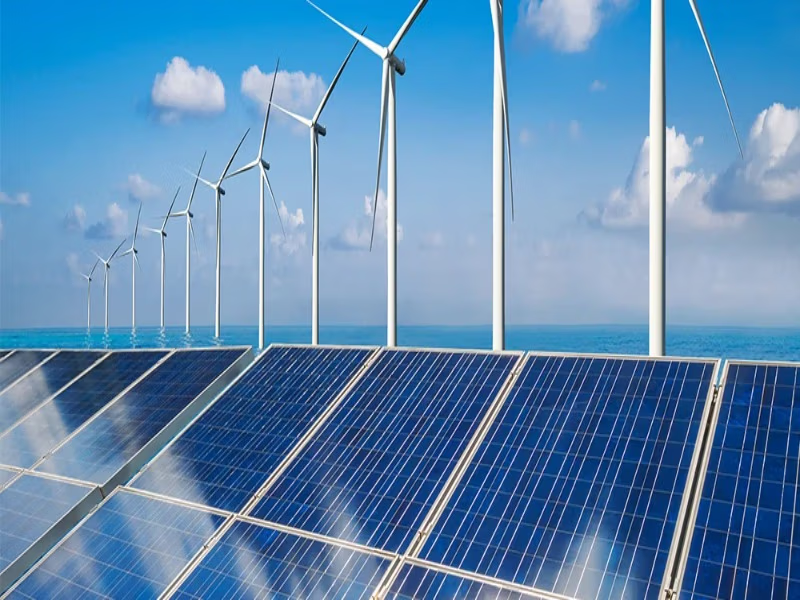
The Abu Dhabi Department of Energy (DoE) has initiated the Solar (Photovoltaic) Energy Self-Supply Policy in Abu Dhabi, which allows customers to enhance the efficiency of daytime electricity consumption and the use of clean and renewable energy sources by introducing smart and adaptable energy-consumption solutions.
The policy launch is part of Abu Dhabi’s attempts made by the Department in the delivery of a qualitative change in energy production and consumption in accordance with the Abu Dhabi Energy and Water Efficiency Strategy 2030.
It further seeks to educate the public about the need to be responsible in the consumption of electricity and help a nation move towards depending more on green and renewable energy sources, especially in the critical sectors of the economy that use electricity in their day-to-day needs.
Simultaneously with the implementation of the policy, the Department of Energy will also introduce a guide manual on high-efficiency appliances to facilitate the rationalization and optimization of energy use in all spheres.
The manual offers a practical, user-friendly model to guide households, businesses, and institutions in choosing, buying, and operating energy-efficient systems and appliances using performance information and life-cycle cost considerations.
The manual addresses the major end-uses of cooling, water heating, lighting, electrical equipment, motors, pumps, and irrigation systems, and encourages best-practice operational behaviours, intelligent control solutions, and data-driven decisions to cut energy and water use, peak demand, and provide long-term cost benefits, to facilitate emissions reduction and system-wide efficiency.
However, the new policy will also give customers the option of either adopting flexible solutions or remaining on the grid and using electricity.
The installation of photovoltaic panels to ensure self-supplies and self-consumption of electricity, solar-powered water heaters, and the possibility to support systems with battery energy storage solutions are also flexible solutions. Therefore, this facilitates increased dependency on photovoltaic energy to consume electricity.
The policy will help enhance the efficiency of the grid, improving the security of the supply, and supporting the growth plans of the energy sector in Abu Dhabi, as the Emirate is inclined towards using more renewable energy produced by clean and environmentally-friendly sources, deploying international best practices, adding value to consumers, and ensuring security of the supply.
The new policy will also be implemented initially in the agricultural sector and the owners of rest houses and ranches, so that they are given a tangible value by allowing them to access renewable energy sources.
The consumers will manage to save a lot of money as they can use the solar energy solutions, such as photovoltaic panels and solar-powered water heaters, besides battery storage systems, to supply power to their facilities in the evening hours as well.
Abdulaziz Al Obaidli, Director General of Regulatory Affairs at the Abu Dhabi Department of Energy, said, “We are pleased to announce the launch of the Photovoltaic Energy Self-Supply Policy in Abu Dhabi, which represents one of the most significant policies governing the sector. The policy reinforces our efforts to establish a strategic mix of energy generation sources, particularly renewable energy, and enables the local community to play a key role in supporting national efforts to achieve the ambitious targets set out in the Abu Dhabi Energy and Water Efficiency Strategy 2030.”
He stated, “At the Department of Energy, we design policies and introduce solutions that deliver direct value to the sector and are scalable over the long term. Through these solutions, we ensure the efficiency, resilience, and future readiness of infrastructure, while also contributing to increased public awareness of the importance of environmentally sound, socially responsible, and economically viable energy consumption.”
The new policy is embedded within a wider range of enabling policies and guidelines that cover various consumer segments and target the sustainability of the sector. These will consist of the Energy Efficiency Appliances Policy and other policies that will be announced in the course of the year 2026.
TradeArabia News Service/OGN reported that it also complies with the Abu Dhabi Climate Change Strategy, which is aimed at becoming more dependent on clean and sustainable energy sources, minimizing emissions, maximizing the efficiency of the sector to hold the highest levels of reliability and resiliency, and ensuring that the services are offered at a reasonable cost.