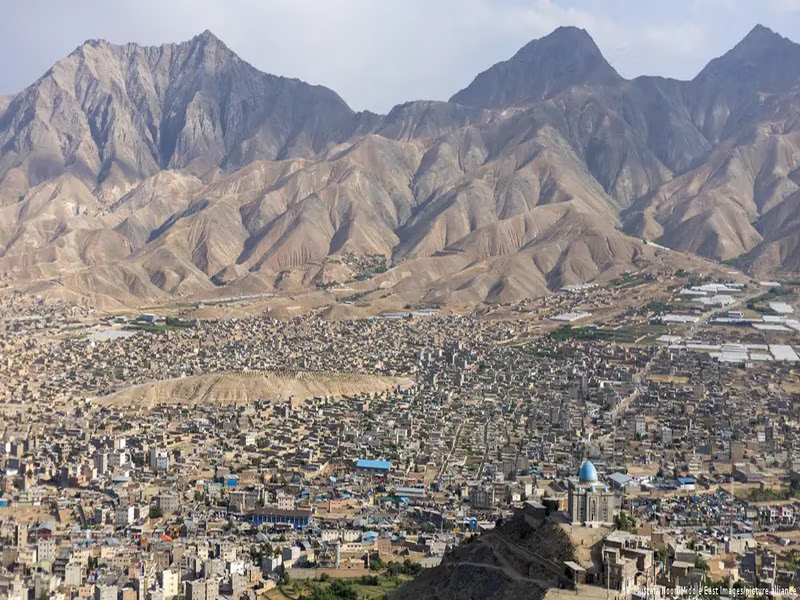
A moderate earthquake struck Afghanistan’s mountainous northeast, killing at least eight people and sending tremors across parts of South Asia, highlighting the region’s persistent exposure to seismic risk.
The quake, measuring close to magnitude 5.9, originated in the Hindu Kush region, an area known for frequent tectonic activity due to the collision of the Indian and Eurasian plates. Despite its moderate intensity, the tremor was felt across a wide geography, including cities in Pakistan and northern India.
Authorities said the fatalities occurred near Kabul, where a residential structure collapsed, trapping members of a family inside. Emergency services were deployed to the affected area, though damage reports remained limited outside the immediate zone.
The earthquake’s depth appears to have mitigated wider destruction. Deeper quakes tend to disperse energy over a broader area, resulting in noticeable shaking across long distances but comparatively less surface damage. This dynamic was evident in neighboring countries, where residents reported tremors but no significant losses.
Afghanistan’s vulnerability to such events is well established. The country lies along one of the world’s most active seismic belts, and its mountainous terrain, combined with limited infrastructure, increases the risk of casualties even during lower-magnitude earthquakes.
Construction practices also play a role. Many homes, particularly outside major urban centers, are built with materials that offer limited resistance to seismic activity. As a result, even isolated structural failures can prove fatal.
The broader context adds to the challenge. Afghanistan continues to face economic and humanitarian pressures, which constrain both preparedness and response capabilities. Access to remote areas remains difficult, and emergency resources are often stretched.
While the latest quake caused relatively contained damage compared to past disasters, it serves as a reminder of the country’s structural fragility. In regions where resilience infrastructure is limited, even moderate natural events can have significant human consequences.
For South Asia more broadly, the tremor underscores the interconnected nature of seismic risk. Earthquakes originating in the Hindu Kush frequently reverberate across borders, reinforcing the need for regional awareness and preparedness.
As aftershocks remain possible, authorities continue to monitor the situation, focusing on ensuring safety in affected areas and assessing any further structural damage.