
Source : WAM
Mohamed Khalifa Al Mubarak, Chairman of the Department of Culture and Tourism – Abu Dhabi (DCT Abu Dhabi), stated that culture remains central to the nation’s identity and future, highlighting that the revival of historic institutions like the Al Ain Museum honors the vision of the late H.H. Sheikh Zayed bin Sultan Al Nahyan.
Since its reopening in October, the museum has become a key link to the deep heritage of the Al Ain Region, which Al Mubarak described as the historic heart of the emirate and a global contributor to human heritage.
The Al Ain Region’s international importance is reinforced by its status as home to the UAE’s first UNESCO World Heritage Sites. Al Mubarak noted that the museum’s redevelopment, now covering over 8,000 square metres, serves as a gateway to understanding these sites, blending historical memory with modern innovation.
The museum features artifacts spanning more than 8,000 years and highlights ancient irrigation systems and archaeological findings, showcasing the ingenuity and sustainability of the region’s ancestors.
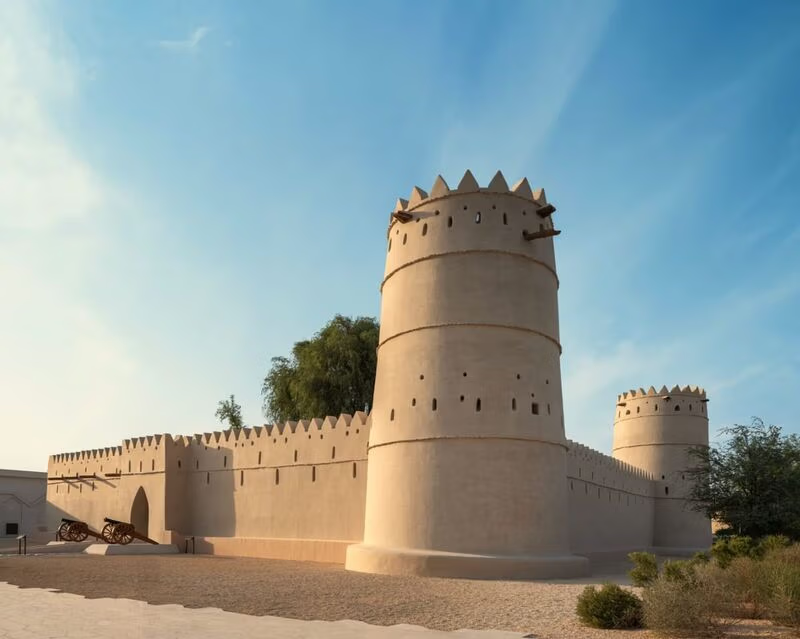
Under the Tourism Strategy 2030, Abu Dhabi aims to attract around 520,000 overnight leisure hotel guests annually to the Al Ain Region by 2030. This target is supported through the promotion of key landmarks, including Qasr Al Muwaiji, Al Jahili Fort, and the Al Qattara Arts Centre. These efforts helped the Al Ain Region earn the title of Gulf Capital of Tourism this year, recognized for its hospitality and diverse offerings in culture, wellness, and adventure.
Al Mubarak also highlighted major initiatives such as Louvre Abu Dhabi, the first universal museum in the Arab world, and Bait Al Oud, both of which reinforce Abu Dhabi’s position as a global cultural capital. While Louvre Abu Dhabi promotes intercultural dialogue, Bait Al Oud preserves intangible heritage through traditional music education.
Together with a broad programme of festivals, including the Al Hosn Festival and the Culture Summit, these initiatives aim to strengthen the UAE’s reputation as a hub for creativity and learning.
Data shows growing interest in the emirate’s cultural offerings, with Abu Dhabi heritage sites attracting over 4 million visitors from January to June 2025, a 47 percent increase compared to the same period in 2024.
Looking ahead, Al Mubarak confirmed that the Al Ain Museum will serve as a centre for international collaboration, with research and educational facilities designed to welcome scholars and visitors from around the world to preserve and advance global heritage knowledge.