
Saudi Arabia’s Aramco, the world’s largest oil exporter, stated on Tuesday that there would be “catastrophic consequences” for the world’s oil markets if the Iran war continues to disrupt shipping in the Strait of Hormuz.
Aramco CEO Amin Nasser told reporters on an earnings call that the disruption has not only overthrown the shipping and insurance sectors, but it also intends to have drastic domino effects on aviation, agriculture, automotive, and other industries.
Nasser observed that oil inventories in the world were at a five-year low and stated that the crisis would result in drawdowns at an accelerated pace, and further added that it was important that shipping in the strait resumed.
He said, “There would be catastrophic consequences for the world’s oil markets, and the longer the disruption goes on, and the more drastic the consequences for the global economy.”
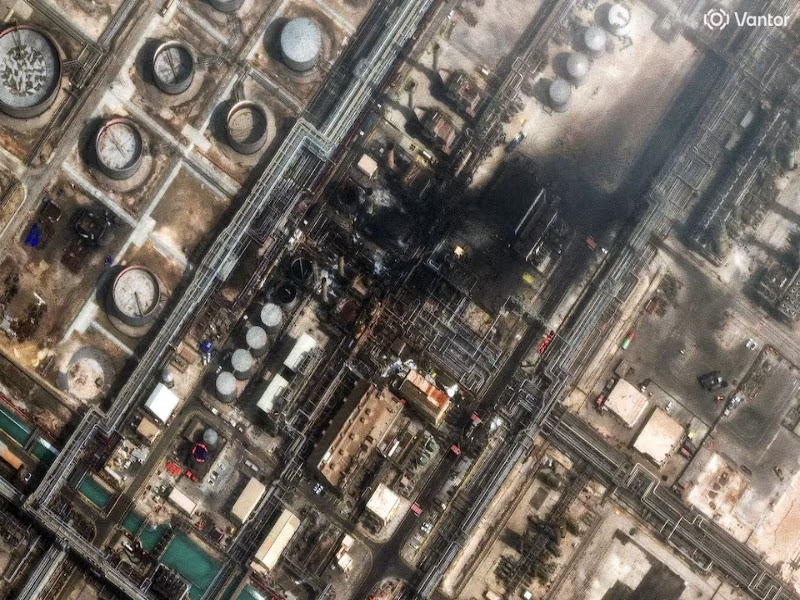
Nasser also added that a small fire from last week’s attack on Aramco’s Ras Tanura refinery, its largest domestically, was quickly extinguished and later brought under control, citing that the refinery was in the process of resuming operations.
Iran’s Revolutionary Guards reported on Tuesday that they would not allow “one liter of oil” to be shipped from the Middle East in case the US and Israeli attacks persist, a statement that the US President Donald Trump responded to by threatening to strike Iran far harder should it block export out of the energy-producing region.
His remarks follow the report by Aramco that it had decreased its annual profit by 12 percent, largely because of reduced crude prices. It also declared that it would repurchase up to $3 billion worth of its shares in the first-ever buyback.
US President Donald Trump warned that Washington would retaliate far more forcefully if Iran interfered with the flow of crude through the strategic waterway.
The Strait of Hormuz has been significant for energy exports from Gulf producers, such as Saudi Arabia, Iraq, Kuwait, Qatar, and the United Arab Emirates.
However, approximately 84 percent of the crude passing through the strait is destined for Asian markets, leaving major importers such as China, India, Japan, and South Korea especially vulnerable to supply disruptions.