
The transformation of the MENA logistics sector is no longer a forward-looking ambition; it is an operational necessity. As the region strengthens its position at the centre of global trade flows, warehouse infrastructure is being pushed to its limits by rising demand, cost pressures, and structural shifts in supply chains. Sitting along critical corridors such as the Red Sea, which carries nearly 12 percent of global trade, GCC economies are rapidly expanding their role in global commerce. But with that expansion comes a fundamental question: can traditional warehouse models keep pace?
The answer is increasingly clear. They cannot.
Automation is emerging not just as a tool for efficiency, but as a strategic requirement for survival in a logistics environment defined by volatility, scale, and precision. The five core challenges facing warehouse operators across MENA illustrate why.
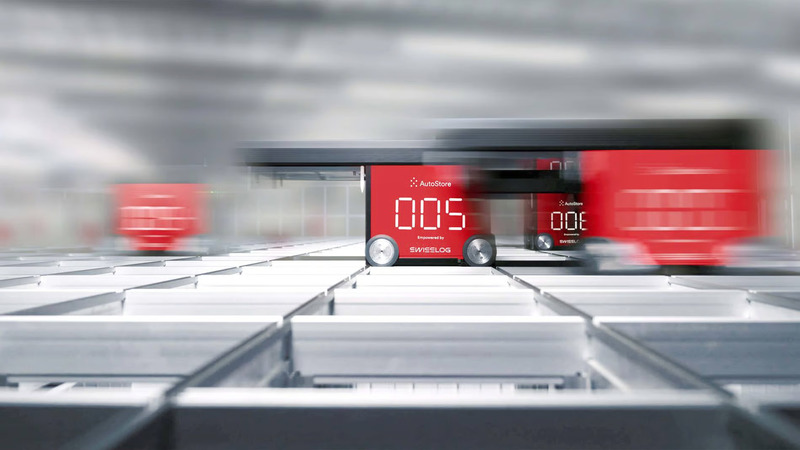
Labour, historically the backbone of warehouse operations, is becoming both scarce and expensive. Manual processes such as picking and palletising already account for a significant share of operational costs, and rising wage expectations coupled with high turnover are intensifying pressure on margins. Automation offers a structural shift rather than a temporary fix. By replacing repetitive tasks with robotic systems capable of delivering near-perfect accuracy, operators are not simply reducing headcount but fundamentally redesigning workflows. The future warehouse workforce will not disappear, but it will evolve toward supervision, systems management, and technical expertise.
At the same time, the explosive growth of e-commerce is exposing the limitations of manual fulfillment models. Seasonal peaks driven by events such as White Friday or Eid are no longer exceptions but recurring stress tests for supply chains. Hiring additional labour during these periods is neither scalable nor sustainable. Automated systems, on the other hand, allow warehouses to flex capacity dynamically. The ability to compress fulfilment timelines from hours to minutes is not just a competitive advantage; it is fast becoming a customer expectation.
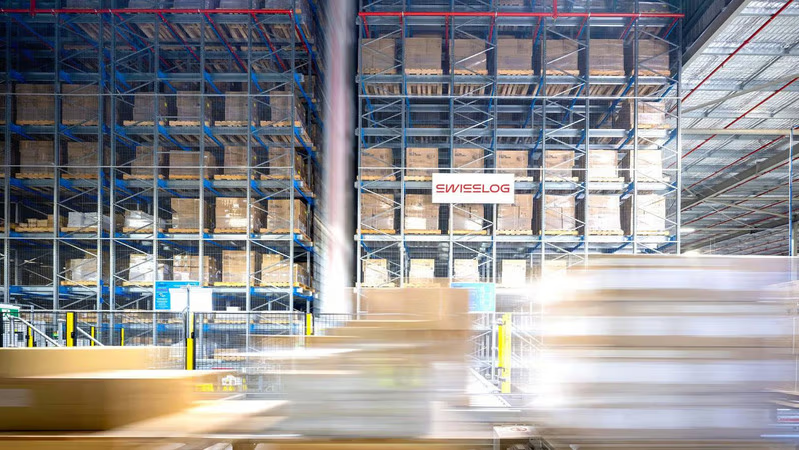
Space is another constraint that is forcing a rethink of warehouse design. In cities such as Dubai and Riyadh, where industrial real estate is both scarce and costly, expansion is often not an option. Automation shifts the equation from horizontal growth to vertical optimisation. High-density storage systems and grid-based robotics enable operators to multiply capacity within the same footprint, effectively turning space into a strategic asset rather than a limitation. In a region where logistics hubs are tightly integrated with urban infrastructure, this shift is particularly significant.
Beyond efficiency and cost, automation is also playing a critical role in addressing broader economic priorities such as food security. With governments across the GCC investing heavily in reducing dependency on imports and improving supply chain resilience, the need for precision logistics has never been greater. Automated cold chain solutions are enabling higher accuracy, reduced waste, and better traceability, ensuring that perishable goods reach consumers with minimal loss. As temperature-controlled logistics expands into pharmaceuticals and biotech, the importance of such systems will only increase.
Sustainability adds another layer of urgency to this transition. National agendas such as the UAE’s Net Zero 2050 and Saudi Arabia’s Vision 2030 are redefining expectations for industrial operations. Warehouses are no longer evaluated solely on throughput and cost, but also on energy efficiency and environmental impact. Automation technologies, particularly when combined with renewable energy sources, offer a pathway to lower carbon intensity without compromising performance. Compact designs, reduced energy consumption, and smarter resource utilisation are aligning logistics operations with broader sustainability goals.
What ties these trends together is a fundamental shift in how warehouses are perceived. They are no longer passive storage facilities but active, intelligent nodes within global supply chains. In this context, automation is not just about machines replacing manual labour; it is about creating systems that can adapt, scale, and respond in real time to changing market conditions.
For MENA, the stakes are particularly high. The region’s ambition to become a global logistics powerhouse depends on its ability to build infrastructure that keeps pace with the speed and complexity of modern trade. Automation is the bridge between that ambition and reality.
By 2026, the question for warehouse operators will not be whether to adopt automation, but how quickly they can implement it. Those who move early will define the standards of efficiency and resilience in the region. Those who delay risk being left behind in a supply chain evolving faster than ever.