

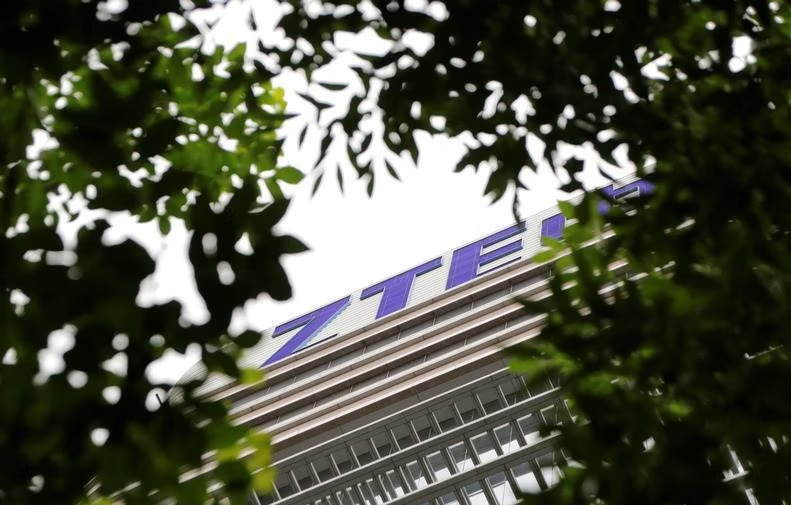
China’s telecom sector is entering a new phase of consolidation, with capital expenditure by major operators set to fall to its lowest level in more than a decade, a shift that is expected to weigh heavily on equipment makers such as ZTE Corporation.
After years of aggressive investment to build out 5G infrastructure, China’s leading carriers are now scaling back spending as network deployment reaches maturity and returns on investment come under closer scrutiny. The pullback marks a structural transition from expansion to optimisation, with operators focusing more on efficiency and profitability rather than large-scale infrastructure rollouts.
Recent data shows a steady decline in capital expenditure across major players, including China Mobile, China Telecom, and China Unicom, with forecasts indicating further reductions through 2026. This downward trend reflects both a saturation of 5G networks and a strategic reallocation of resources toward emerging areas such as cloud computing and artificial intelligence infrastructure.
For vendors like ZTE, the shift presents a significant challenge. The company, which derives a substantial portion of its revenue from supplying network equipment to domestic carriers, is particularly exposed to fluctuations in telecom spending. Lower capex directly translates into reduced demand for core network hardware, pressuring both revenue growth and margins.
Analysts note that the expected drop in spending could push China’s telecom investment cycle to its weakest point in 15 years, underscoring the end of a high-growth phase driven by successive generations of network upgrades. The transition is also likely to intensify competition among equipment providers, as companies look to offset domestic weakness by expanding into international markets.
At the same time, the evolving landscape is creating new opportunities. Telecom operators are increasingly investing in digital infrastructure, enterprise services, and computing capabilities, areas that could provide alternative avenues for growth for equipment vendors willing to adapt their business models.
However, the near-term outlook remains challenging. The slowdown in traditional telecom spending, combined with geopolitical pressures and heightened scrutiny of Chinese technology firms in global markets, adds another layer of complexity for companies like ZTE.
The broader implication is a recalibration of the telecom sector’s growth trajectory. While demand for connectivity remains strong, the investment cycle is becoming more selective, with capital flowing toward next-generation services rather than large-scale network expansion.
For investors and industry participants, the shift signals a more mature phase for China’s telecom market, where efficiency, innovation, and diversification will increasingly define competitive advantage.