
Source : WAM
Citizen-owned farms across the UAE are increasingly becoming key contributors to sustainable domestic tourism, attracting nature lovers to tranquil landscapes that highlight the country’s resilience and agricultural innovation.
The expanding variety of farm produce is supporting a more sustainable agricultural sector, enhancing local food production, and reducing dependence on imports.
The UAE now has over 38,000 farms, employing diverse agricultural methods and production systems, including organic farming and soil-free hydroponics. These farms benefit from national initiatives aimed at empowering farmers and accelerating the adoption of modern farming techniques.
Hydroponic farming stands out as a leading model, offering yields nearly four times higher than conventional protected agriculture due to smaller land use and increased plant density. Such ventures have demonstrated economic viability, with cost recovery typically achieved within five to ten years.
Vertical farms are also leveraging advanced technologies to provide fresh produce year-round. Local vegetable production currently meets more than 20 percent of market demand.
The UAE has placed strong focus on promoting domestic tourism to citizen-owned farms, enabling visitors to explore successful entrepreneurial models and learn about sustainable practices. This year’s “World’s Coolest Winter” campaign, themed “Our Winter is Entrepreneurial”, highlights pioneering Emirati farms contributing to sustainability and local tourism.
Agritourism plays a vital role in the UAE, showcasing the richness of local farms and innovative agricultural projects developed by Emirati entrepreneurs with government support. Many farms offer recreational activities and sell fresh produce directly to visitors, generating additional income and fostering community engagement in agriculture.
One leading example is the Al Dhaid strawberry farm in Sharjah, managed by Eissa Khoury of Mirak. Established in 1985, it was the first company in the UAE to grow strawberries and remains one of the earliest agricultural enterprises. The farm exports thousands of tonnes of strawberries annually across the Gulf and internationally and has expanded to produce a variety of premium crops that were previously imported.
Another notable example is the Hatta Model Strawberry Farm, owned by Emirati Khalfan Al Mutaiwei. Established in 2022, it has become a popular destination for investors and tourists seeking sustainable agritourism experiences. The farm includes an open field with 6,000 plants and a greenhouse with 1,870 plants, designed to conserve water, energy, and time while protecting the environment. Visitors can enjoy quiet seating areas and freshly prepared strawberry drinks, as well as products such as figs and natural juices. Located near Hatta Dam, the farm represents a pioneering green tourism investment, showcasing efficient use of natural resources and advanced farming technologies. It offers families and visitors a peaceful retreat while reducing carbon emissions and promoting sustainable water and energy use.
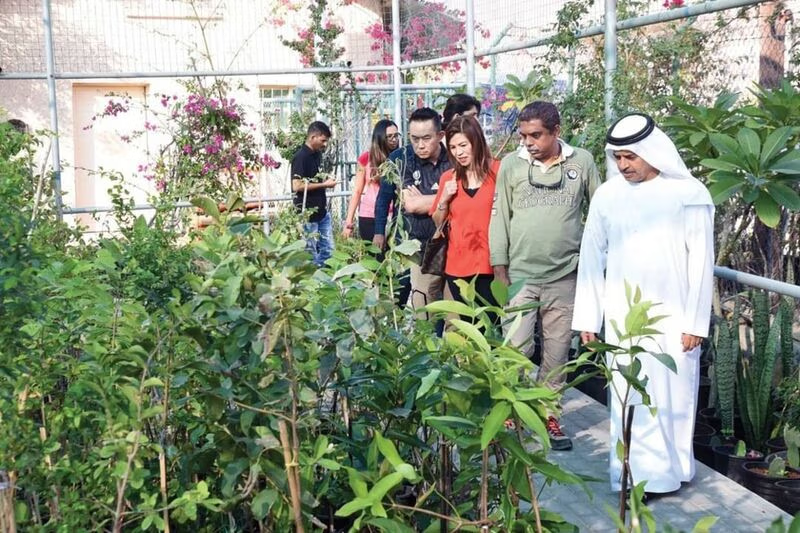
A standout project is the cocoa farm established by Emirati farmer Ahmed Al Hafeeti in Fujairah. Located in the Waid Diftah nursery, the farm has already produced over 1,000 saplings for sale, while three premium cocoa varieties were imported from Uganda for future planting. About 5,000 saplings are expected to grow in the next season. The farm’s success relies on a low-cost model, avoiding expensive greenhouses or cooling systems. Instead, cocoa plants thrive under agricultural shade netting, supported by Fujairah’s clay soil and humid climate, ideal for young cocoa trees that require shaded conditions. Saplings grow rapidly, becoming ready for sale within two to three months.
These initiatives reflect the UAE’s growing commitment to sustainable agriculture, agritourism, and environmental stewardship, offering both economic opportunities and immersive experiences for visitors.