
As Iran’s conflict with the United States and Israel widens, a new question is echoing through global markets and capitals: could nuclear‑armed Pakistan be drawn into this war?
The answer may lie in a defence pact it signed with Saudi Arabia in late 2025. This alliance now sits at the heart of a major strategic dilemma that could reshape Middle East geopolitics and energy markets.
A Strategic Pact Under the Spotlight
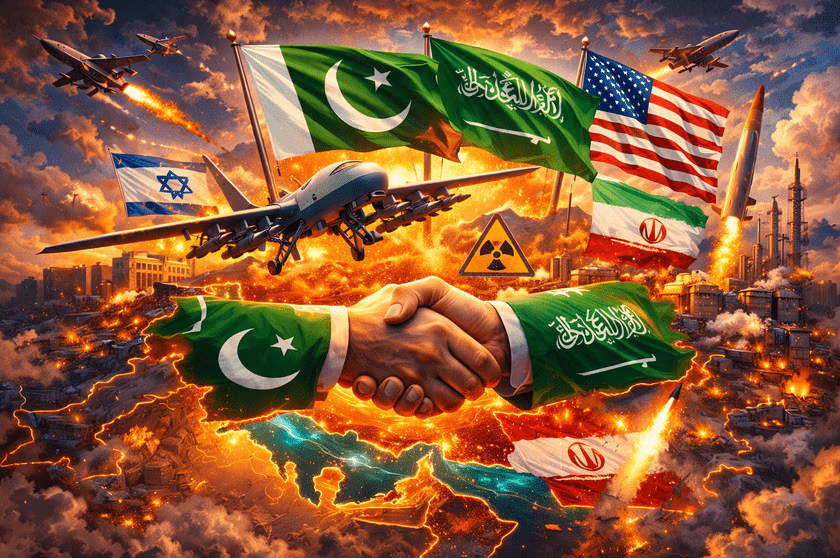
In September 2025, Pakistan and Saudi Arabia signed a Strategic Mutual Defence Agreement in Riyadh. The treaty commits both nations to treat any armed attack on one as an attack on both. Analysts say this pact represents one of the most significant shifts in Gulf security arrangements in decades.
Until this week, the agreement remained largely academic. That changed when Pakistan’s Foreign Minister Ishaq Dar publicly referenced the pact in discussions with Iranian officials. Dar said he warned Iran that Pakistan had a defence obligation to Saudi Arabia, marking the first time a senior Pakistani official tied the pact to the Iran‑linked conflict.
Dar said the existence of the pact has already influenced Iran’s targeting strategy, suggesting it helped deter heavier Iranian strikes on Saudi territory compared with other Gulf states.
Drone and Missile Attacks Shift Calculus
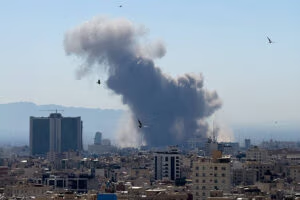
Diplomatic tensions are rising against a backdrop of Iran’s recent barrage of drone and missile strikes across the Gulf. Saudi air defenses have repeatedly intercepted projectiles targeting Riyadh, the Ras Tanura oil refinery and other strategic sites.
One strike hit near the U.S. Embassy in Riyadh, prompting shelter‑in‑place orders and temporary embassy closures. Another condition warning was issued for Dhahran, the eastern energy hub home to oil facilities and expatriate communities.
Saudi authorities have warned that further Iranian aggression would trigger defensive responses, underlining terror threats not just to diplomatic sites but to critical energy infrastructure.
The attacks have already impacted oil markets. Ras Tanura, one of the world’s largest oil‑loading facilities, was temporarily shut down after debris from intercepted drones caused a fire, contributing to recent oil price spikes and logistical rerouting of exports.
Nuclear Dimension Fuels Concern
Pakistan is one of a handful of nuclear‑armed states outside the Nuclear Non‑Proliferation Treaty framework. This has sparked speculation that its pact with Riyadh could amount to a form of extended nuclear deterrence for Saudi Arabia, even if no formal “nuclear umbrella” was declared. Some experts warn that this could set new precedents in defence partnerships outside traditional Western alliances.
Arms control analysts from institutes including Chatham House and the International Campaign to Abolish Nuclear Weapons have said the pact may represent a new form of extended deterrence.
Pakistan’s Delicate Position
Pakistan’s own security situation complicates matters. It is already engaged in intense clashes with Taliban factions across its western border. Islamabad has also carried out air operations against militants in Afghanistan.
Diplomatically, Pakistan must balance its relations with Iran and Saudi Arabia—two powerful, often rival, players in the Muslim world. Domestically, tens of millions of Shia Muslims could shape public opinion toward Tehran, adding pressure on policymakers.
Economically, Pakistan is deeply tied to the Gulf. More than four million Pakistanis work in Gulf states, and the remittances they send home are vital to Pakistan’s economy. Any conflict escalation affecting Gulf stability could rattle these flows and weigh on the rupee and markets.
Historical Context and Future Risks
Pakistan has traditionally tried to avoid direct involvement in Middle Eastern wars. A decade ago, it declined to join a Saudi‑led campaign against Iran‑linked Houthi forces in Yemen. Today’s formal defence pact changes the strategic equation.
The crucial question investors and policymakers are watching now is whether the pact will be formally invoked. If Islamabad is drawn into the conflict, it could have wide‑ranging implications for regional security, energy markets, and global stock and commodity prices.