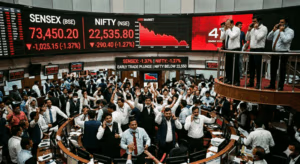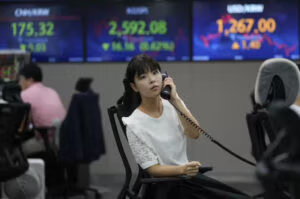

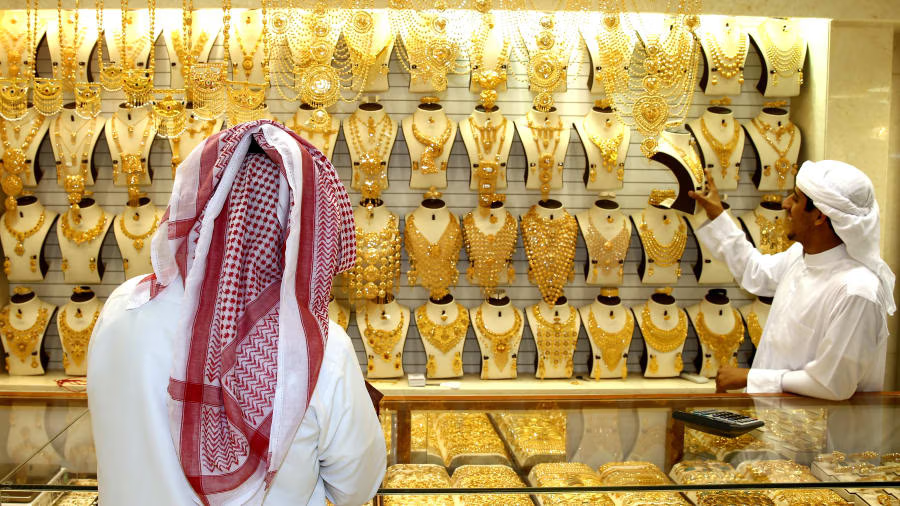
Gold prices in Dubai inched higher on March 31, tracking gains in international markets as investors sought refuge in safe-haven assets amid rising geopolitical tensions and heightened financial market volatility.
According to data from the Dubai Jewellery Group, 24K gold was trading in the range of Dh545 to Dh550 per gram, while 22K gold hovered around Dh500 to Dh505 per gram, reflecting a modest but steady price uptick.
The move comes as global markets remain unsettled by escalating tensions in the Middle East, which have driven oil prices higher and weighed on risk assets. In such conditions, gold typically benefits from increased demand as investors look to hedge against uncertainty and preserve value.
Dubai’s gold market, one of the most active physical bullion hubs globally, closely mirrors international price movements due to the UAE dirham’s peg to the U.S. dollar. As a result, fluctuations in global gold prices, currency strength, and macroeconomic sentiment are quickly transmitted to local rates.
The latest rise follows a period of volatility, where earlier price dips had attracted retail buyers, particularly ahead of seasonal demand cycles. However, the current upward trend appears to be driven more by macroeconomic factors than consumer demand alone, with investors reacting to shifting global risk dynamics.
Analysts point to a combination of geopolitical uncertainty, inflation concerns, and evolving expectations around global interest rates as key drivers supporting gold’s trajectory. A more cautious stance from central banks, particularly in the United States, has also contributed to the metal’s appeal by reducing the opportunity cost of holding non-yielding assets.
At the same time, a stronger U.S. dollar and elevated bond yields continue to act as counterweights, creating a complex near-term environment for gold prices.
For buyers in Dubai, the current price movement highlights the importance of timing, as volatility remains a defining feature of the market. As global uncertainties persist, gold is likely to remain in focus, balancing its dual role as both a consumption commodity and a financial hedge.